
Reviewed · COFFEE EXPERIENCES
Ethiopian Culinary Tour – Market, Food, Coffee Ceremony & more
Come hungry, curious, and ready for the market. This Addis Ababa food tour links everyday cooking with city life, from produce stalls and spice sellers to injera making, an old coffeehouse, and a countryside coffee ceremony. I especially like the hands-on bread lesson and the meal at historic Taitu Hotel. The main drawback is pace: five to six hours can feel tight when traffic, crowded markets, and several major stops all share the same day.
The experience costs $85 per person, including transport, lunch, drinks, and guides. That is a fair price if you want one organized day to cover several parts of Addis Ababa without arranging separate taxis and visits. Just confirm your pickup details carefully, since the information gives both hotel pickup and Edna Mall as the starting point.
In This Review
- Key points to know before you book
- Why this Addis food tour works
- Atkilt Tera and the produce markets
- The spice section inside Merkato
- Learning to make injera with local cooks
- Lunch at Taitu Hotel in Piassa
- A brief look at Piassa and old Addis
- Tomoca Coffee and a taste of Addis coffee culture
- The road to Sululta
- The full Ethiopian coffee ceremony
- Honey wine, tej, and optional tastings
- Guides, drivers, and the human side of the day
- Is $85 a good value?
- Who should book this experience?
- Final verdict: should you book it?
- FAQ
- How long does the Ethiopian Culinary Tour last?
- What is included in the $85 price?
- Where does the tour visit?
- Is lunch included?
- What is the minimum age?
- Can I cancel for a full refund?
Key points to know before you book
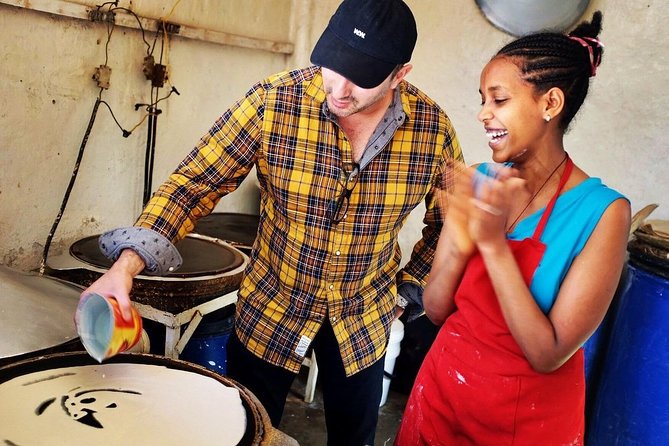
- Injera making is hands-on: You meet women who demonstrate how Ethiopia’s famous sourdough flatbread is prepared, then you get a chance to try it yourself.
- Merkato requires a guide: The spice section sits inside Africa’s largest open-air market, a crowded place where local help adds comfort and context.
- Tomoca is a short but worthwhile stop: At this old Addis coffee institution, you can order coffee or a macchiato and buy beans to take home.
- Lunch is served at Taitu Hotel: Ethiopia’s oldest hotel provides a historic setting for an assortment of Ethiopian dishes.
- Sululta changes the pace: Outside the city, you watch a full coffee ceremony and taste tej, Ethiopia’s honey wine.
- Guide flexibility is a major asset: Guides such as Zerefa, Seya, Samuel, and Emmanuel have adjusted the day when visitors had already seen part of the planned route.
Why this Addis food tour works
Many city tours give you a quick look at monuments, churches, and museums. This one uses food as the organizing idea, then lets food lead you into markets, neighborhoods, family work, old cafés, and rural customs.
I like that the day is not limited to eating at restaurants. You see where ingredients are bought, how injera is made, how coffee is prepared, and how honey wine fits into Ethiopian hospitality. The result is a useful introduction to Addis Ababa for someone with only one free day.
The schedule is described as a full-day outing, but the detailed timing adds up to roughly five to six hours. That makes it a substantial half-day or compact full-day experience, depending on traffic and pickup arrangements. Addis can take time to cross, and a crowded market visit does not always run by the clock.
The tour is capped at 30 people, though the actual feel may depend on the departure date. A smaller group will make the injera lesson and market walk easier. If you care about this, ask about the expected group size before booking.
More coffee ceremonies:
- Market Tour and Cooking Class with a Coffee Ceremony at a Home in Addis Ababa
★ 5.0 · 32 reviews - Ethiopian Cooking Class and Coffee Ceremony with a Local in Addis with transfers
★ 5.0 · 14 reviews - Ethiopian Culinary Tour – Market, Coffee Ceremony and More
★ 5.0 · 10 reviews
Atkilt Tera and the produce markets
Your morning begins with transport from your Addis Ababa accommodation, house, or airport. The route heads toward Atkilt Tera, the city’s major fruit and vegetable market, located between Piassa and Merkato.
This is a good opening because it places food in its daily setting. Instead of first hearing a lecture about Ethiopian cooking, you begin with the raw materials. You might find piles of produce, sellers working through the morning trade, and the practical bustle of a market that supplies local kitchens.
The point is not simply to take photographs. Your guide can explain what you are seeing and help you move through an unfamiliar setting. A guide also helps you avoid treating the market like a stage set. Ask before photographing people, and keep your belongings close in crowded areas.
The route then continues toward Merkato. The market is famous for its size and variety, but it is not a polished shopping center. Expect crowds, uneven movement, noise, and the possibility of a quick change in plans.
The spice section inside Merkato
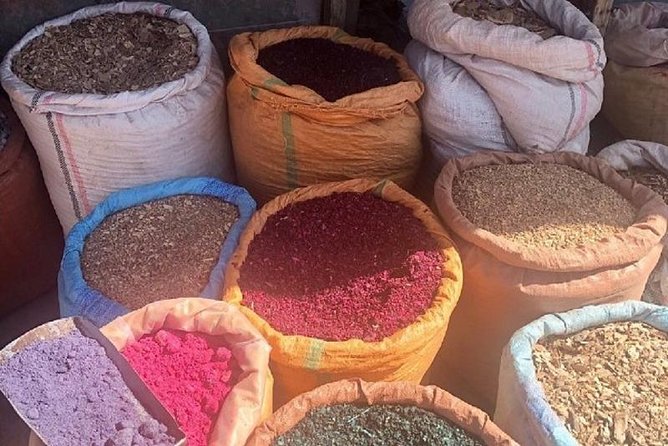
The dedicated spice stop is one of the strongest parts of the day. The smells do much of the teaching. You can inspect the ingredients that give Ethiopian food its heat, color, and depth, then connect them with the dishes served later at lunch.
The visit is scheduled for about an hour, with no separate admission fee. That time is long enough for a guided walk, though not enough to see every corner of a market this large. I would treat it as a focused introduction rather than a complete tour of Merkato.
This is also where a good guide matters most. One visitor specifically praised guide Zerefa and driver Tamirsat for taking care of safety in the crowded market. That does not remove the need for common sense, but it shows why walking Merkato with local support is more practical than trying to find the spice area alone.
If you want souvenirs, the market can be useful for coffee, spices, and other small purchases. Guide Desale was praised for helping a visitor find suitable souvenirs at a fair price. Still, agree on prices before buying and do not feel pressured to purchase anything.
Learning to make injera with local cooks
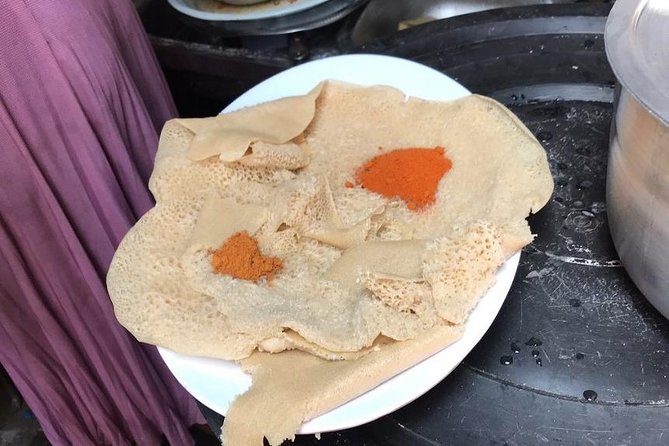
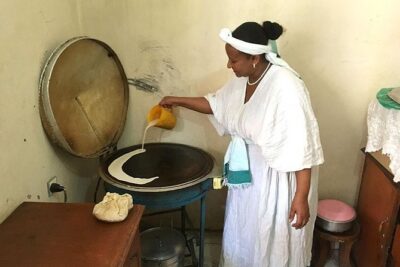
After the market, the food becomes hands-on. You meet a group of women who show you how injera is prepared, from the batter to the cooking process. The bread is central to Ethiopian meals, both as food and as the surface used to pick up stews and other dishes.
This is not a formal cooking school with a long recipe booklet. It is a short, practical encounter with a food made in homes and working kitchens. You get to try making the bread yourself, and the best part is that you eat what you make.
Do not worry about producing a perfect circle on your first attempt. Several people enjoyed the chance to try, and one described the experience as exhilarating despite the expected beginner mistakes. That is part of the charm. The lesson gives you a better feel for the skill involved, even if your injera looks more like a map than a plate.
If you are especially interested in Ethiopian cooking, ask your guide how the spices are used in the stews served over injera. One suggestion for improving the experience was a kitchen demonstration focused on preparing the dishes that accompany the bread. That is useful to keep in mind: the tour explains injera well, but it is not a full Ethiopian cooking class.
More coffee experiences:
- Vintage Coffee Shops, Restaurants, Sightseeing in Addis Ababa
★ 5.0 · 17 reviews - Ethiopia coffee cupping class/Ethiopian food injera making
★ 5.0 · 10 reviews - Unique Ethiopian Cooking Class and Coffee Ceremony with a Local in Addis Ababa
★ 4.5 · 7 reviews - Coffee Cupping Tour in Addis Ababa
★ 5.0 · 5 reviews
Lunch at Taitu Hotel in Piassa
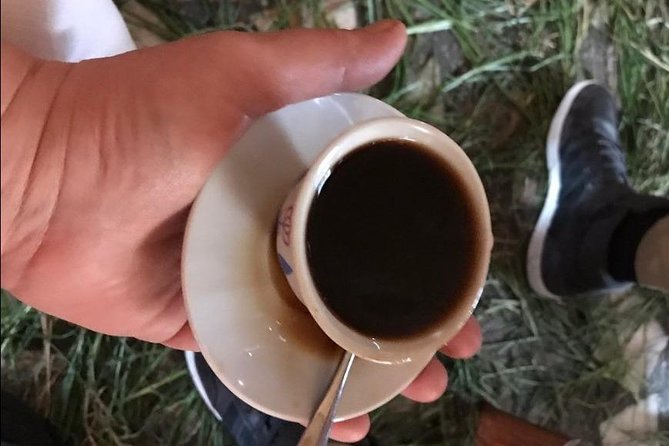
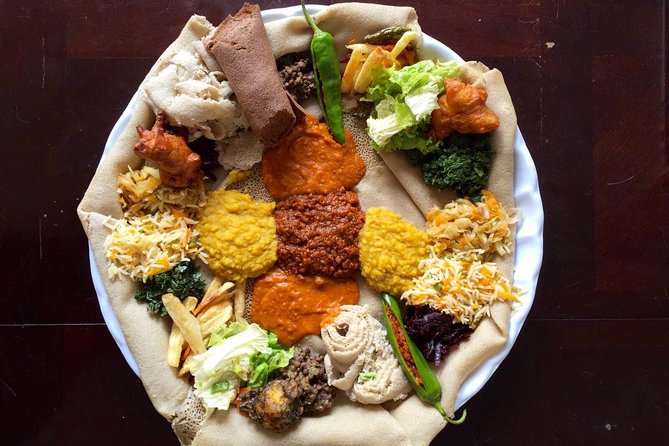
Lunch takes place at Taitu Hotel, described as Ethiopia’s oldest hotel. The setting adds a bit of historical character to the meal, while the food is served as an assortment of Ethiopian dishes in buffet style.
A buffet works well here because you can sample several preparations instead of committing to one unfamiliar dish. It also suits people with different appetites. Portions have been described as generous, and lunch includes a bottle of water and hot drinks.
Expect the food to be shared and eaten in the Ethiopian style, with injera playing an important role. If you have never eaten this way, ask your guide to show you how to tear a piece of injera and use it to pick up the food. It is simple once you try, and there is no need to worry about doing it perfectly.
Lunch is included in the $85 price, which helps the overall value. You are not paying only for transport and sightseeing, but also for a substantial meal and several tastings. Alcoholic drinks beyond the included honey wine are not covered, so budget separately if you order anything extra.
A brief look at Piassa and old Addis
After lunch, the route includes sightseeing in Piassa. This part of the day helps connect the food stops with the wider city.
The amount of sightseeing can vary. Guides have adjusted the route for people who had already visited some planned stops, sometimes replacing them with an art gallery or another local sight. That flexibility is useful, especially if this is not your first day in Addis Ababa.
I would tell the guide early if you have already seen Tomoca, Piassa, or another scheduled location. The strongest experiences seem to come when the guide knows what you want and can shape the spare time around it.
Tomoca Coffee and a taste of Addis coffee culture

Tomoca Coffee receives about 30 minutes. It is presented as the oldest Tomoca café, with more than half a century of coffee-making experience.
This is a short stop, but it gives you a chance to taste coffee or a macchiato in a long-running local institution. Ethiopia’s coffee culture is too important to treat as an afterthought, and Tomoca provides a city-based counterpoint to the longer ceremony in Sululta.
You can also buy roasted or ground coffee as a souvenir. That makes the stop more useful than a simple drink break. If you have room in your luggage, packaged coffee is an easy way to carry a taste of the day home.
The limitation is time. Thirty minutes will not give you a full explanation of Ethiopian coffee production or café culture. Think of Tomoca as a concentrated tasting, followed later by the more detailed ceremony.
The road to Sululta
The final major stop takes you out of Addis Ababa to Sululta, a mountain village outside the city. The drive provides a change from city traffic and markets, with mountain scenery along the route.
The tour description allows about two hours here, making Sululta the longest scheduled stop. That is sensible because the coffee ceremony is not just a cup poured at a table. It includes several stages and is meant to be watched and enjoyed at an unhurried pace.
The drive also means the day is not confined to urban Addis. If you want only restaurant visits, this may feel like extra travel. If you want to see how city food customs connect with Ethiopian rural life, the trip gives the day a wider frame.
The full Ethiopian coffee ceremony
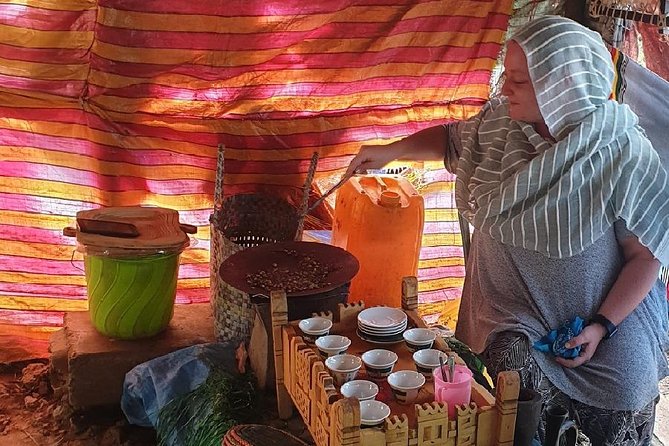
In Sululta, you watch the beans being washed and roasted live, then follow the preparation through to the finished cup. The process is central to the experience. You are not simply handed coffee; you see the care and ceremony around it.
The coffee is served after the roasting and preparation, and the setting gives you time to ask questions. The coffee ceremony was one of the most consistently praised parts of the day, along with the injera lesson and the guides’ personal attention.
The tour calls this a full demonstration, but keep your expectations realistic. The exact setting and length may vary, particularly if the group is large or the day is running late. Still, the two-hour Sululta visit gives the ceremony more room than the brief Tomoca stop.
Honey wine, tej, and optional tastings
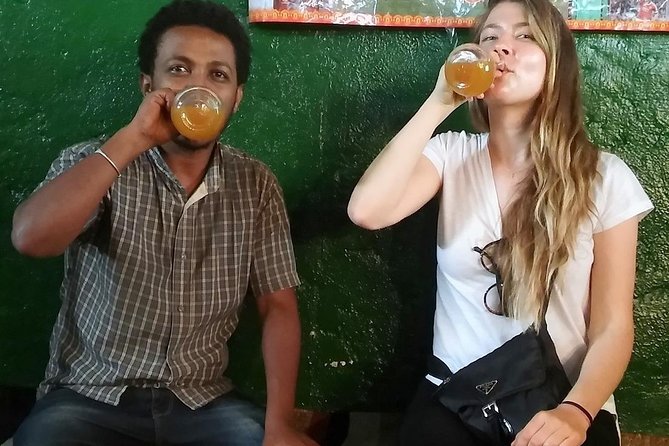
The Sululta visit also includes a lesson about making honey wine, known locally as tej, followed by a glass to taste. This is one of the more unusual elements of the tour and gives you another way to understand Ethiopian food traditions.
The taste may not suit everyone. Tej is distinct from ordinary wine, and the flavor can be unfamiliar. Approach it as a cultural tasting, not as a drink you must finish.
Some experiences have also included discussion or tasting of locally made vodka and beer, but only honey wine is specifically included in the tour details. Do not count on other alcoholic drinks being part of the price. The formal exclusions make clear that additional alcohol costs extra.
Guides, drivers, and the human side of the day
The guide can make or break a market and food tour. The strongest names associated with this experience include Zerefa, Seya, Samuel, Emmanuel, Abiy, and Desale. Assignments vary, so you may not receive one of these guides, but the feedback gives you a useful idea of what to value.
Look for someone who explains customs clearly, handles the market with care, and listens when you have already seen a planned stop. Seya was praised for detailed explanations of Ethiopian history and culture. Samuel was appreciated for explaining where the group was going and what was happening. Zerefa received repeated praise for flexibility, English, and personal attention.
Transport includes a car, driver, fuel, and an English-speaking guide, with local guides at certain stops. Pickup is offered anywhere in Addis Ababa, including a hotel, house, or airport. Since the meeting information also names Edna Mall on Cameroon Street, confirm the exact pickup point and time before the morning begins.
Is $85 a good value?
For a visitor with one free day in Addis Ababa, I think the price is reasonable. You receive round-trip transport, a guide, local assistance, lunch, water, hot drinks, the injera activity, the coffee stops, and honey wine tasting.
Booking separate taxis to Atkilt Tera, Merkato, Piassa, Tomoca, and Sululta would take planning and could create delays. More important, the market walk and coffee ceremony would be harder to understand without local help.
The value is lower if you have already arranged city transport, visited Merkato, and plan to eat independently. In that case, you may prefer a shorter cooking class or a dedicated coffee experience. The tour is strongest when you want several connected activities in one organized outing.
Who should book this experience?
I would choose this tour if you:
- Have one spare day in Addis Ababa
- Want food, markets, and daily life rather than only monuments
- Enjoy trying unfamiliar dishes and drinks
- Want help navigating Merkato
- Like hands-on activities more than passive sightseeing
- Are comfortable with a busy schedule and car travel
It is suitable for most people age eight and older. Dress for the weather because the tour operates in all conditions, and wear practical clothing for walking through markets and moving between city and countryside.
The experience may be less suitable if you need a slow, quiet day or want detailed instruction in preparing several Ethiopian dishes. The injera lesson is the main cooking activity, while the other stops focus on tasting, observing, and learning.
Final verdict: should you book it?
I would book this Ethiopian culinary tour if I had limited time in Addis Ababa and wanted a useful first look at the city through food. The mix is strong: produce, spices, injera, historic lunch, coffeehouse culture, a full ceremony, and tej outside the city.
The main thing to confirm is the practical side. Ask about pickup, group size, and which stops can be adjusted. If you do that, the $85 fee buys a well-filled day with transport and meals included, plus access to places that are more rewarding with a local guide.
The one serious warning is operational reliability. One past booking ended badly when pickup did not happen and the emergency phone went unanswered during a period of severe disruption in Ethiopia. That appears to have been an exceptional situation, but it is still sensible to confirm your booking and pickup shortly before the tour.
FAQ
How long does the Ethiopian Culinary Tour last?
The experience lasts approximately five to six hours, although it is also described as a full-day tour. Traffic and the timing of the market, lunch, and Sululta visit can affect the schedule.
What is included in the $85 price?
The price includes pickup and drop-off in Addis Ababa, ground transport with a car, driver, and fuel, an English-speaking guide, local guides, lunch, a bottle of water, hot drinks, and the included honey wine tasting.
Where does the tour visit?
The route includes Atkilt Tera, Merkato, Tomoca Coffee, Piassa, Taitu Hotel, and Sululta.
Is lunch included?
Yes. Lunch is served at Taitu Hotel and includes an assortment of Ethiopian dishes, a bottle of water, and hot drinks.
What is the minimum age?
The minimum age is eight years old.
Can I cancel for a full refund?
Yes. You can cancel at least 24 hours before the local start time for a full refund. Cancellations or changes made less than 24 hours before the start time are not refunded or accepted.
More food experiences
- Local Ethiopian Food Tour
★ 4.0 · 7 reviews - Half Day Food Tour Addis Ababa With Airport pickUp And Drop-Off
★ 5.0 · 4 reviews - Addis Food Tasting Tour
★ 5.0 · 4 reviews - Local Ethiopian Food Tour
★ 4.0 · 4 reviews
More food and drink experiences
- Hidden Treasures of Addis Ababa – Food, Culture and History Tour
★ 5.0 · 57 reviews - Addis Ababa City Tours With Cocking Class of Ethiopian Food
★ 5.0 · 20 reviews - Food tours in Addis Ababa tastever with lunch
★ 5.0 · 9 reviews - city tour of Addis Ababa ( history ,culture , food and more)
★ 5.0 · 7 reviews
Just added around Addis Ababa
- 10 Days in Northern Ethiopia Tours★ 4.5 · 3 reviews
- Day Trip to Tiya UNESCO Site & Melka Kunture Archaeological Site★ 4.5 · 3 reviews
- Two days Lake Wenchi and Menagesha Forest★ 5.0 · 3 reviews
- 6 days 5 nights Addis Abeba sightseeing & Lalibela Rock-Hewn Churches★ 5.0 · 3 reviews
- Addis Ababa Half Day Shopping Tour★ 5.0 · 3 reviews
- 6 days Omo valley cultural Tour★ 5.0 · 3 reviews
- 12- Day Historical Route of Ethiopia★ 5.0 · 3 reviews
- Northern Ethiopia (Historic route)★ 5.0 · 3 reviews
Coffee Experiences, compared.
Market Tour and Cooking Class with a Coffee Ceremony at a Home in Addis Ababa
Read our review →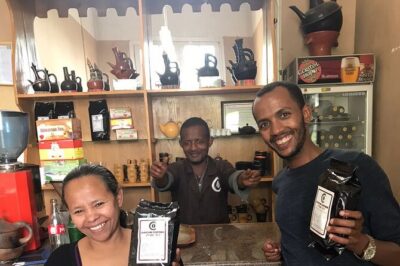
Vintage Coffee Shops, Restaurants, Sightseeing in Addis Ababa
Read our review →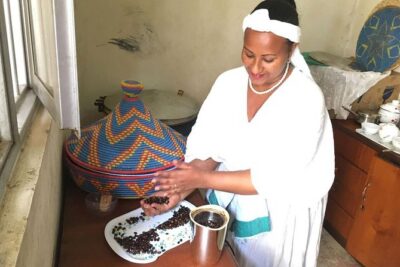
Ethiopian Cooking Class and Coffee Ceremony with a Local in Addis with transfers
Read our review →
Ethiopia coffee cupping class/Ethiopian food injera making
Read our review →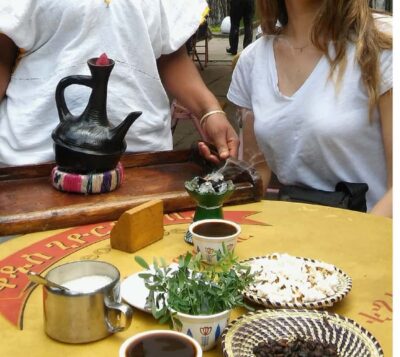
Ethiopian Culinary Tour – Market, Coffee Ceremony and More
Read our review →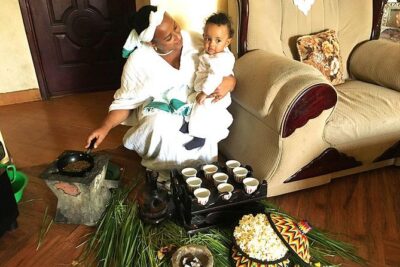
Unique Ethiopian Cooking Class and Coffee Ceremony with a Local in Addis Ababa
Read our review →
Addis Ababa City Experience : Markets, Coffee & Local Life
Read our review →
Lalibela: Churches Full-Day Private Tour w/Coffee Ceremony
Read our review →Browse the lists this tour appears in