
Reviewed · HISTORICAL TOURS
12- Day Historical Route of Ethiopia
Ethiopia rewards patient sightseeing. This 12-day route links Addis Ababa, Lake Tana, Gondar, Axum, Tigray, and Lalibela, giving you a strong introduction to the country’s churches, royal sites, mountain scenery, and Christian traditions. I like the way it combines major UNESCO sites with less familiar places such as Yeha, the Simien Mountains, and the rock-cut churches of Gheralta.
I also like the small maximum group size of four, the included domestic flights, and the presence of an English, Spanish, French, German, or Italian-speaking guide. The main drawback is the amount of time spent on the road, especially between the Simien Mountains, Axum, Mekele, and Lalibela. This is a serious historical tour, not a relaxed holiday.
In This Review
- Key points before you book
- What this 12-day route does well
- Day 1: Addis Ababa and the story of Lucy
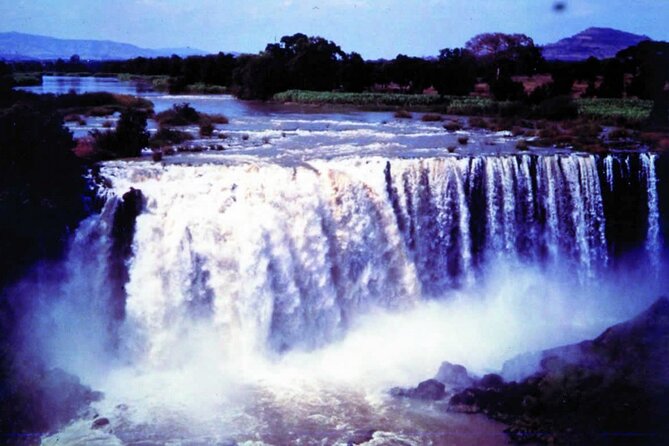
- Day 2: Lake Tana, Ura Kidane Mihret, and Tisissat Falls
- Day 3: Gondar’s castles and imperial setting
- Day 4: High country in the Simien Mountains
- Day 5: The long road to Axum
- Day 6: Axum, ancient power, and sacred tradition
- Day 7: Yeha, Adwa, and Gheralta
- Day 8: Tigray’s cliff churches and the road to Mekele
- Day 9: The long journey to Lalibela
- Day 10: Lalibela’s first church cluster
- Day 11: Yemrehana Krestos and Lalibela’s remaining churches
- Day 12: Entoto, Shiro Meda, and departure
- Transport, group size, and the real cost
- Who should book this tour?
- Should you book the 12-Day Historical Route of Ethiopia?
- FAQ
- How long is the Ethiopia historical route?
- Where does the tour begin?
- Are domestic flights included?
- How large is the tour group?
- What level of fitness is required?
- Are meals included?
- Can the tour be canceled for a full refund?
Key points before you book
- Lucy in Addis Ababa: The National Museum introduces you to Ethiopia’s ancient past, including the 3.5-million-year-old hominid remains known as Lucy.
- Monasteries on Lake Tana: A boat trip reaches Ura Kidane Mihret, where religious paintings and Ge’ez manuscripts offer a close look at Ethiopia’s Orthodox Christian tradition.
- Gondar’s royal castles: The Royal Enclosure and Fasilides’ Bath bring Ethiopia’s imperial past into clear view.
- Gelada baboons in the Simien Mountains: A walk near Sankaber may bring you close to endemic wildlife, with the route reaching about 3,250 meters.
- Tigray’s rock-cut churches: Abune Yemata Guh and other churches reveal a part of Ethiopia that sees far fewer international visitors.
- Lalibela’s carved churches: Two full visits allow time for both main clusters, along with nearby Yemrehana Krestos Church.
What this 12-day route does well
The strength of this trip is its range. In less than two weeks, you move from a modern capital to lakeside monasteries, castles, high mountain country, ancient ruins, and churches cut directly into rock. Each area feels distinct, so the route never becomes a long repeat of the same kind of sight.
I especially like that the program does not stop at Lalibela and Gondar. Yeha and Adwa add political and pre-Christian context, while Tigray’s churches show how varied Ethiopian religious architecture can be. The route gives you more than postcard sights.
The tour costs $2,597 per person. That price includes private transportation, an air-conditioned vehicle, domestic flights, accommodation with breakfast, listed lunches and dinners, entrance fees, and a professional guide. For a private or very small group trip covering this much ground, the package can offer fair value, although the long drives and simple overnight conditions in the Simien Mountains are worth considering.
Some meals are included, but not all dinners. Personal expenses and gratuities are also extra. Read the meal details carefully, since the package specifies eight breakfasts, ten lunches, and two dinners rather than every meal during the 12 days.
More history-first tours:
- Day Trip From Addis Ababa See Historical Monastery,Stunning Nature,Animals,Birds
★ 5.0 · 303 reviews - Hidden Treasures of Addis Ababa – Food, Culture and History Tour
★ 5.0 · 57 reviews - Northern Ethiopia Historic Route
★ 5.0 · 12 reviews
Day 1: Addis Ababa and the story of Lucy
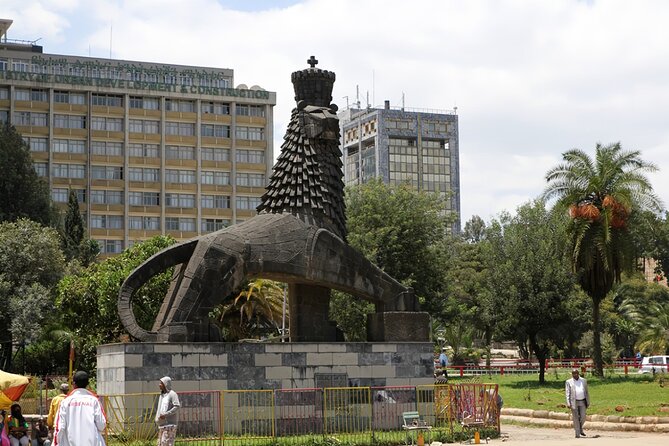
Your arrival begins with an airport pickup and transfer to the hotel. The day then turns toward Addis Ababa, a high-altitude capital founded by Menelik II in 1886 and located at about 2,438 meters above sea level.
The National Museum is the key stop. Its collection includes the remains of Lucy, an early hominid dating back around 3.5 million years. This is not just a quick museum visit. It gives you useful context for Ethiopia’s place in the story of human origins before you head north into the country’s religious and imperial past.
The city tour lasts about eight hours, so you should expect a full first day. The stated meeting point is the Skylight Hotel parking area on Africa Avenue, but airport pickup is offered on arrival. The listed start time is 12:00 am, so confirm the exact pickup time and location before departure. That detail matters, especially if your flight arrives at an unusual hour.
Day 2: Lake Tana, Ura Kidane Mihret, and Tisissat Falls
A domestic flight takes you to Bahir Dar, a well-planned city on the shore of Lake Tana. The lake is Ethiopia’s largest, and its islands and shores hold churches and monasteries tied to the country’s Orthodox Christian traditions.
The boat trip is the highlight. At Ura Kidane Mihret on the Zeghie Peninsula, you can see colorful religious paintings beneath a thatched roof. The site also displays illuminated religious books written in Ge’ez, the old liturgical language from which Amharic developed.
That combination is especially valuable because the visit connects art, language, and worship. You are not simply looking at an old building. You are seeing how religious ideas were preserved through painting, manuscripts, and active church life.
Later, the tour visits Tisissat Falls, a name translated as water that smokes. The day is full, and the falls are located some distance from Bahir Dar, so this is another day when you will spend time in the vehicle. Still, the lake, monasteries, and waterfall provide a good change of pace from city sightseeing.
Day 3: Gondar’s castles and imperial setting
The drive from Bahir Dar to Gondar takes about three to three and a half hours over roughly 185 kilometers. Gondar was once Ethiopia’s capital and is now known for its Royal Enclosure, a walled collection of castles and ceremonial buildings.
The best-known structure is the castle of King Fasilides, built of stone with round turrets and wooden balconies. The design feels practical and monumental at the same time. It does not resemble a European palace, and that is part of its appeal. The buildings reflect Ethiopia’s own royal traditions and its connections with neighboring regions.
You will also visit Fasilides’ Bath, located about a mile outside town. The bathhouse is associated with the Timkat festival held each January, when large crowds gather for the Ethiopian Orthodox celebration of Epiphany.
Gondar works well in this route because it helps explain the political power that shaped northern Ethiopia before you reach the older sacred centers farther north. Allow yourself time to look closely at the masonry, courtyards, and setting rather than treating the Royal Enclosure as a fast photo stop.
A few more tours of this kind worth a look:
- Full Day Tour of Addis Ababa with Hotel Pickup and Drop-off
★ 5.0 · 430 reviews - Taste of Ethiopia
★ 5.0 · 406 reviews - Addis Ababa: Debre Libanos, Blue Nile Gorge, and Cave Tour
★ 4.5 · 256 reviews - Addis Ababa Guided City Tour With Airport & Hotel Pick Up
★ 5.0 · 237 reviews
Day 4: High country in the Simien Mountains
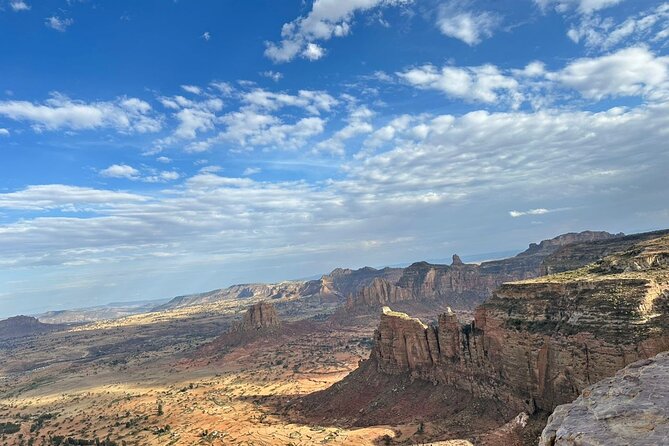
The drive continues to Debark and then into Simien Mountains National Park. The park is a UNESCO World Heritage site, and the views near Sankaber are among the most memorable parts of the trip.
The planned elevation reaches about 3,250 meters. A mostly flat or downhill walk of about an hour and a half is optional, but the day still calls for moderate physical fitness. You may see gelada baboons, klipspringers, lammergeyer vultures, and bushbuck.
The gelada is a particular prize. It is endemic to Ethiopia, and seeing it in its mountain environment adds a wildlife dimension to a route otherwise focused on monuments and churches. The steep terrain and altitude also provide a useful reminder that Ethiopia is not only an archaeological destination.
Overnight accommodation is listed as Simien camping. That could be a major part of the experience for someone who enjoys mountain settings, but it may feel basic if you expect hotel comfort every night. Ask what camping arrangements are provided, and pack for cooler conditions at altitude. This is one of the tour’s clearest comfort tradeoffs.
Day 5: The long road to Axum
This is one of the most demanding days. After breakfast, you drive for a full day toward Axum, passing through the lower parts of the Simien region and along the Tekeze River gorge.
The drive is long, but the route offers dramatic mountain views and photo stops. You should see this day as a scenic transfer rather than a sightseeing day with many formal visits. Bring water, keep your camera ready, and expect the road to take much of your energy.
Late arrival in Axum leaves time to check in and rest. That pause is welcome because Day 6 is devoted to one of Ethiopia’s most important ancient centers.
Day 6: Axum, ancient power, and sacred tradition
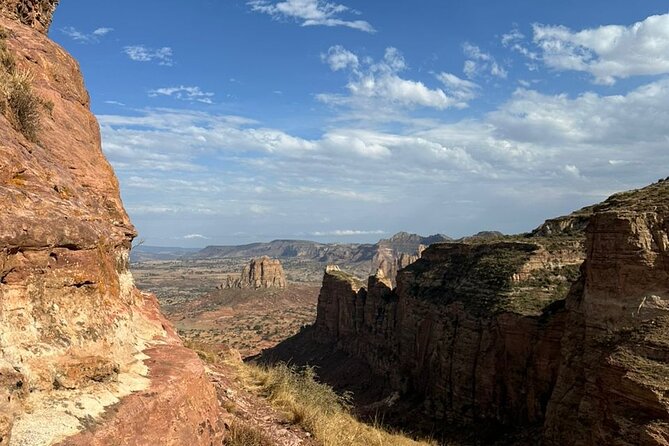
Axum was the capital of a major kingdom positioned on trade routes between the Mediterranean and India. Its influence once reached across both sides of the Red Sea, with the port of Adulis supporting trade and political power.
The city is also central to Ethiopia’s Christian identity. It is associated with the arrival of Christianity in Ethiopia and with the tradition that the Ark of the Covenant is kept there. The old Church of St. Mary of Zion is linked to the first church built in sub-Saharan Africa, around 330 AD.
These claims and traditions are best approached with respect and curiosity. The value of Axum is not limited to what can be proven through surviving stone. It is also a place where religious belief, national identity, and ancient political history meet.
The visit gives you a needed rest from the road, though the overall day still lasts about eight hours. Wear practical shoes and allow time for the guide to explain the connections between the ruins, church precincts, and the former kingdom.
Day 7: Yeha, Adwa, and Gheralta
The route turns east from Axum to Yeha, described as one of Ethiopia’s oldest settlements, with roots reaching back nearly 3,000 years. The large temple there was dedicated to the moon god Ilmuqah and shows early connections across the Red Sea with Yemen.
The building was later converted into a church, but its ibex carvings and older architectural details remain. Yeha is valuable because it pushes your understanding of Ethiopian history earlier than the Christian period. You see evidence of older religious practices alongside later Christian use.
The next stop is Adwa, set among rugged mountains. Adwa is remembered as the place where Ethiopia defeated an invading colonial power, making Ethiopia the first African nation to repel a European colonial force in the modern period.
This is a packed day with a lot of driving, but it brings together archaeology and modern national history. You then continue toward Gheralta, the base for some of the trip’s most unusual churches.
Day 8: Tigray’s cliff churches and the road to Mekele
Tigray is one of the most distinctive sections of the route. Around 150 rock-cut churches are known in the region, most still used by Orthodox Christian communities. The program visits churches and clusters around Gheralta and Wukro, including Abreha We Atsbeha, Degum Selassie, and Chirkos.
Chirkos at Wukro is made from sandstone and includes cruciform pillars and a barrel-vaulted ceiling. Abreha We Atsbeha and Degum Selassie add different examples of the region’s religious architecture.
The schedule also lists Abune Yemata Guh among the churches to explore. You should clarify the walking and climbing requirements for each church before you go. The tour states that you need moderate fitness, and some Tigray churches are reached through rugged terrain, even though exact access details are not provided here.
This day ends with a drive to Mekele. The scenery is a major part of the experience, but the combination of church visits and road time makes it physically demanding.
Day 9: The long journey to Lalibela
The drive south to Lalibela takes a full day. You pass between mountain areas to the west and the beginning of the Danakil Depression to the east before reaching the town.
There is no major monument visit scheduled for this day. Treat it as a scenic road journey and a chance to watch the countryside change. The distance also explains why the route uses domestic flights at the beginning and end. Even with flights, northern Ethiopia requires patience and plenty of time on the road.
Arriving in Lalibela late in the day prepares you for two substantial days of church visits. This is a sensible arrangement. Trying to see Lalibela’s churches after a long drive would make the experience rushed.
Day 10: Lalibela’s first church cluster
Lalibela is often called the New Jerusalem. Its churches were carved from solid rock about 800 years ago during the reign of King Lalibela.
The method is astonishing. Builders excavated around large blocks of stone, leaving the structure isolated, then shaped both the exterior and interior. The result is not a church built from separate blocks, but a church released from the surrounding rock.
The first cluster is visited on this day. You can expect carved passages, unusual exterior details, and interiors that feel closely tied to the stone around them. The artistry is best understood slowly. Look at the doorways, windows, pillars, and surface work instead of rushing from one building to the next.
The visit lasts about seven hours and entrance is included. Religious sites remain active, so dress respectfully and follow the guide’s instructions inside the churches.
Day 11: Yemrehana Krestos and Lalibela’s remaining churches
The morning visit goes to Yemrehana Krestos Church. Its construction combines stone and wood in an Axumite style, with a decorated wooden coffer ceiling containing hexagons, medallions, figurative designs, and geometric patterns.
Back in Lalibela, you visit the remaining churches, including Bete Gabriel and Rafael, Merkorous, Emanuel, and Abba Libanos. Bete Emanuel is singled out for its careful carving and Axumite features. Look for wall indentations, false windows, monkey-head details, and forms inspired by Axumite stelae.
This second day is essential. Lalibela is too important and too detailed for a single hurried visit. Having two days also lets you separate the major clusters and include Yemrehana Krestos, which offers a different style from the rock-hewn churches in town.
The day is shorter at about six hours, giving you some breathing room after the previous day. Even so, the stone floors, passages, and religious setting call for comfortable shoes and a respectful pace.
Day 12: Entoto, Shiro Meda, and departure
A domestic flight brings you back to Addis Ababa. The final city tour climbs Entoto Mountain, the former capital before Addis Ababa developed below it.
From Entoto, you get broad views over the capital, along with the cooler air and eucalyptus forests of the mountain. The route then descends through Shiro Meda, known as the city’s largest market for traditional clothing.
The closing event is a farewell dinner at a traditional restaurant, with cultural songs, dances, food, and drinks. Two dinners are included in the package, and this is the one clearly identified as the farewell meal. Afterward, the operator transfers you to Bole International Airport.
The final day lasts about five hours, but confirm your flight departure time. The program is designed around a departure, yet an additional Addis Ababa hotel night can be arranged on request if you need more time in the city.
Transport, group size, and the real cost
The tour uses private transportation and an air-conditioned vehicle, along with domestic flights between Addis Ababa and the northern route. That saves considerable time compared with traveling entirely by road.
The maximum group size is four, which is a major advantage on long drives and at churches where quiet attention matters. A small group also makes it easier to adjust the pace, although the exact flexibility of the daily schedule should be confirmed with Enat Ethiopia Tours.
The price is strongest if you value convenience. Private road transport, several internal connections, accommodation, guides, entrance fees, breakfasts, lunches, and two dinners are bundled into one payment. If you prefer to arrange every hotel and transfer yourself, you may find the price high. If you want a single operator to coordinate a complicated route across northern Ethiopia, the cost is easier to justify.
The operator can provide guides in English, Spanish, French, German, or Italian. Ashu, the owner, receives particular praise for planning, kindness, and flexibility. That personal support may matter most on a route with long drives and changing conditions.
Who should book this tour?
I would choose this trip if you want Ethiopia’s major historical sights in one organized journey and you are comfortable with early starts, long road days, altitude, and basic camping in the Simien Mountains.
It suits people who care more about churches, archaeology, sacred traditions, and scenery than nightlife or free time. Families and small groups may appreciate the private format, while solo participants should confirm whether the maximum group size means a private departure or a shared small group.
I would hesitate if you dislike long transfers, need a soft bed every night, or want a slow schedule. The route covers a great deal, and its rewards depend on accepting the travel time between sites.
Cancellation is free if you cancel at least 24 hours before the local start time. Last-minute changes are not accepted, and the experience requires a minimum number of participants. Confirm those details before paying for flights outside the tour.
Should you book the 12-Day Historical Route of Ethiopia?
Book it if you want a serious first look at northern Ethiopia, especially if Lalibela, Axum, Gondar, and the Tigray churches are high on your list. The combination of small-group transport, domestic flights, multilingual guiding, and a route that includes both famous and lesser-known sites gives the trip real value.
Do not book it expecting an easy holiday. The Simien camping night, high altitude, full-day drives, and repeated eight-hour touring days demand stamina. If that sounds like a fair exchange for castles, cliff churches, ancient kingdoms, mountain wildlife, and Lucy, this is a well-rounded way to see Ethiopia’s historical heart.
FAQ
How long is the Ethiopia historical route?
The experience lasts approximately 12 days, beginning and ending in Addis Ababa.
Where does the tour begin?
The stated meeting point is the Skylight Hotel parking area on Africa Avenue in Addis Ababa. Airport pickup is also offered for arriving participants.
Are domestic flights included?
Yes. The package includes all domestic flights, including the flights between Addis Ababa and the northern route.
How large is the tour group?
The activity has a maximum of four participants.
What level of fitness is required?
A moderate level of physical fitness is recommended. The route includes mountain walking, high altitude in the Simien Mountains, church visits, and many long driving days.
Are meals included?
Breakfast, lunch, and two dinners are included. The package specifies eight breakfasts, ten lunches, and two dinners. Other dinners, personal needs, and gratuities are not included.
Can the tour be canceled for a full refund?
Yes, you can cancel for a full refund up to 24 hours before the experience start time. If the minimum number of participants is not reached, the operator offers another date or experience, or a full refund.
Just added around Addis Ababa
- 10 Days in Northern Ethiopia Tours★ 4.5 · 3 reviews
- Day Trip to Tiya UNESCO Site & Melka Kunture Archaeological Site★ 4.5 · 3 reviews
- Two days Lake Wenchi and Menagesha Forest★ 5.0 · 3 reviews
- 6 days 5 nights Addis Abeba sightseeing & Lalibela Rock-Hewn Churches★ 5.0 · 3 reviews
- Addis Ababa Half Day Shopping Tour★ 5.0 · 3 reviews
- 6 days Omo valley cultural Tour★ 5.0 · 3 reviews
- Addis Ababa City Tour★ 4.5 · 3 reviews
- Northern Ethiopia (Historic route)★ 5.0 · 3 reviews
Historical Tours, compared.
Day Trip From Addis Ababa See Historical Monastery,Stunning Nature,Animals,Birds
Read our review →
Hidden Treasures of Addis Ababa – Food, Culture and History Tour
Read our review →

5 Days Tour to World Heritage–listed Harrar, Dire Dawa and Awash NATIONAL PARK
Read our review →
DAY TRIP TO THE UNESCO HERITAGE SITE TIYA & Melka Kunture
Read our review →
Experience a Cultural and Historical Journey through Addis Ababa
Read our review →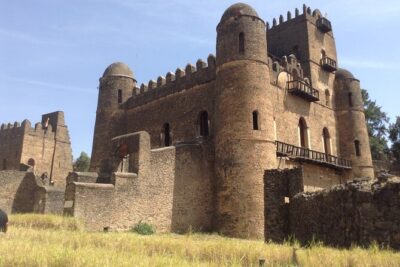
Historical tours – in five days, Addis Ababa, Axum, Laliebla and Gonder
Read our review →
city tour of Addis Ababa ( history ,culture , food and more)
Read our review →Browse the lists this tour appears in