
Reviewed · HISTORICAL TOURS
Northern Ethiopia Historic Route
Two days can open a very large door. This private Northern Ethiopia Historic Route combines Addis Ababa’s major cultural sights with Lake Tana and Blue Nile Falls, giving you museums, churches, markets, mountain views, and water-based excursions in a short time. I especially like the included local guide and the chance to see Lake Tana by boat, not just from shore. The main caution is simple: the schedule covers a lot of ground, and the title suggests a broader northern route than the listed stops actually provide.
I also like that pickup, an air-conditioned minivan, lodging, breakfast, park fees, bottled water, and a boat ride are included. Those details remove much of the usual planning work. Still, the stated two-day duration, three included breakfasts, and the long distance between Addis Ababa and Bahir Dar deserve clarification before you pay.
This is best for someone who wants a private introduction to Ethiopia and values an arranged trip over independent planning. It is less suited to anyone hoping to see Lalibela, Gondar, or the Simien Mountains in this particular two-day program.
In This Review
- Key points to know before booking
- Addis Ababa in four sharply different stops
- Holy Trinity Cathedral and Ethiopia’s imperial past
- The National Museum and Lucy
- Mercato, where the city gets practical
- Mount Entoto for the city from above
- Lake Tana by boat, with churches on the islands
- Blue Nile Falls and a village walk
- What the two days really cover
- The $1,000 price and what it buys you
- The service style and guide support
- Timing, comfort, and practical preparation
- Who should choose this tour
- Should you book the Northern Ethiopia Historic Route?
- FAQ
- How long is the Northern Ethiopia Historic Route tour?
- Where does the tour start?
- Is hotel pickup included?
- Is the tour private?
- What is included in the price?
- Are meals included?
- Does the tour visit Simien Mountains National Park?
- Is the Blue Nile Falls visit included?
- Is vegetarian food available?
- Can I cancel for a full refund?
Key points to know before booking
- Addis Ababa begins the cultural tour: You visit Holy Trinity Cathedral, the National Museum, Mercato Market, and Mount Entoto.
- Lake Tana takes four hours: The boat outing includes ancient churches and monasteries on the lake’s islands, along with the possibility of seeing birds and hippos.
- Blue Nile Falls adds a full half-day: You walk through a village, cross the Blue Nile by boat, and continue toward the falls.
- The $1,000 price buys convenience: Transport, lodging, guide service, admissions, breakfast, and the boat ride are included.
- The route is private: Only your own group participates, with a minimum of two and a maximum of 20 people.
- The schedule needs confirmation: Ask how transport between Addis Ababa and Bahir Dar is handled and why three breakfasts are included in a two-day trip.
Addis Ababa in four sharply different stops
The first day gives you a quick introduction to Ethiopia’s capital. It moves from imperial memory to archaeology, then into daily commerce and highland views. Each stop has a different purpose, which helps keep the day from feeling like a string of similar monuments.
More history-first tours:
Holy Trinity Cathedral and Ethiopia’s imperial past
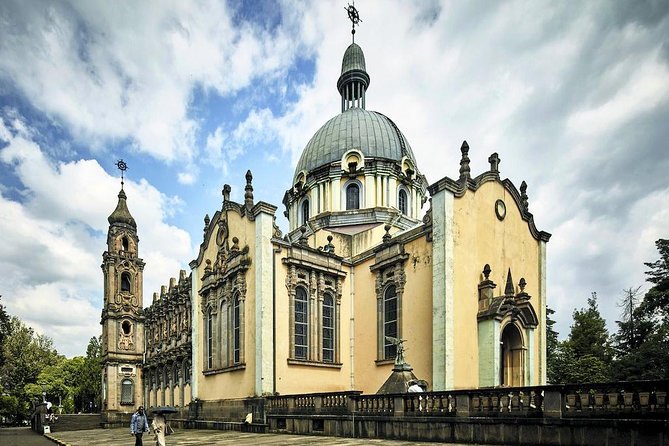
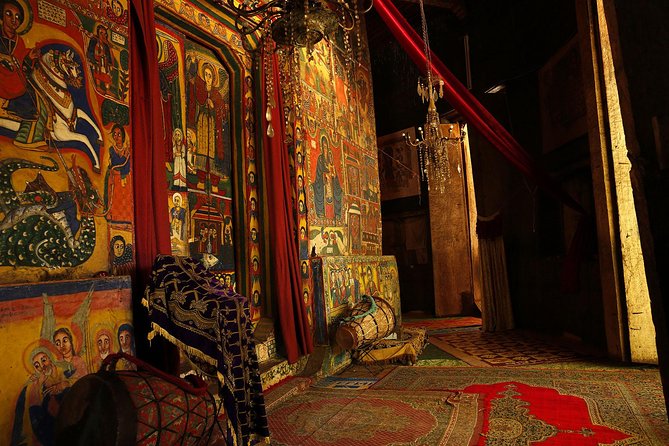
Holy Trinity Cathedral is the first stop, with about an hour set aside. You see the church’s distinctive architecture, religious paintings, museum displays, and the tomb of Ethiopia’s last emperor.
This is a useful opening because it places modern Ethiopian history beside the country’s long Christian tradition. You are not simply looking at a church interior. You are also seeing how religion, monarchy, art, and national memory meet in one place.
The formal dress requirement matters here. Wear clothing that is respectful for a religious site, and avoid treating the visit like a quick photo stop. An hour should allow time to look at the architecture and museum, though it may feel short if you want a slow visit.
The National Museum and Lucy
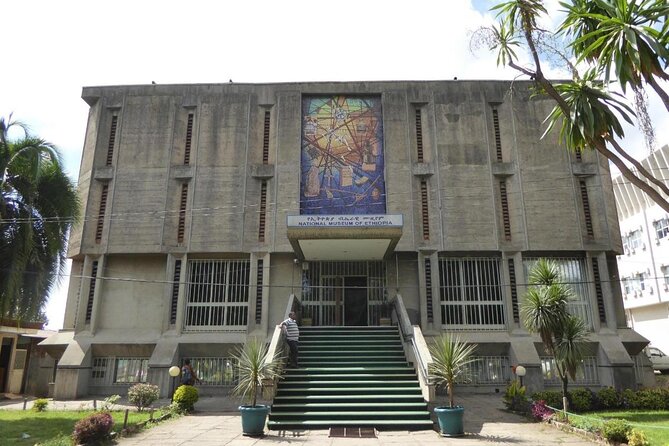
The National Museum of Ethiopia follows, with another hour inside. Its best-known attraction is Lucy, the famous female skeleton, along with objects connected to Ethiopia’s culture, history, and natural world.
For many people, Lucy is the emotional center of the museum. Seeing such an important early human fossil in the country where it was found gives the visit more weight than a standard museum display. The surrounding collections help place Lucy within a larger story about Ethiopia and human origins.
The one-hour allocation is practical but brisk. If archaeology is a major reason you are coming to Ethiopia, you may want to ask whether the guide can adjust the pace or explain which sections deserve the most attention.
Mercato, where the city gets practical
Mercato is scheduled for one hour. It is described as one of Africa’s largest open-air markets, and the plan is to walk through an interesting section and take photographs.
This stop is less polished than a cathedral or museum, and that is the point. You get a look at Addis Ababa as a working city, not only as a collection of official sights. The market can also be a good place to observe the ordinary rhythm of buying and selling.
An hour gives you a taste rather than a full market expedition. Keep your belongings secure, follow your guide’s instructions, and ask before photographing people or stalls. The market portion will suit you if you enjoy street-level scenes and do not need every stop to be tidy or quiet.
A few more tours of this kind worth a look:
- Full Day Tour of Addis Ababa with Hotel Pickup and Drop-off
★ 5.0 · 430 reviews - Taste of Ethiopia
★ 5.0 · 406 reviews - Addis Ababa: Debre Libanos, Blue Nile Gorge, and Cave Tour
★ 4.5 · 256 reviews - Addis Ababa Guided City Tour With Airport & Hotel Pick Up
★ 5.0 · 237 reviews
Mount Entoto for the city from above
The final Addis Ababa stop is Mount Entoto, where you can drive or climb for a panoramic view over the capital. The scheduled visit lasts about 30 minutes.
That short stop makes sense as a viewpoint. It gives you a chance to see the size and setting of Addis Ababa after spending the day at ground level. If you prefer walking, ask how much time is available for climbing, since the itinerary also allows you to reach the viewpoint by car.
The mountain is a useful change of pace, but weather can affect the view. The tour operates in all weather conditions, yet the experience is subject to favorable weather. If poor weather cancels the tour, you are offered another date or a full refund.
Lake Tana by boat, with churches on the islands
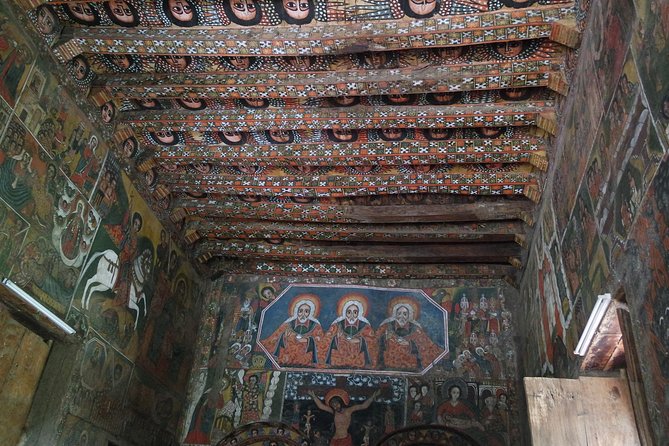
The second day shifts from the capital to Lake Tana, Ethiopia’s largest lake. The scheduled time is four hours, including a boat ride to some of the lake’s islands and their old churches and monasteries.
The lake is described as having 37 islands and around 22 ancient churches and monasteries. You will not see all of them in four hours, but visiting several gives you a clear sense of why the lake is important. These religious sites are isolated from ordinary roads, so reaching them by boat is part of the attraction.
The water also brings a natural side to the visit. You might see birds and hippos during the outing. Those sightings are not guaranteed, but they add variety to a morning otherwise focused on religious buildings and history.
I like this part of the route because it combines transport and sightseeing. The boat is not just a way to get from one place to another. It lets you understand the lake’s geography and the separation of its island communities.
The pace will depend on the chosen islands, boat conditions, and access to the sites. Ask your operator which churches are planned, how long you will spend at each one, and what footwear is sensible. The provided information does not specify the exact churches or the type of boat, so those details are worth confirming.
Blue Nile Falls and a village walk
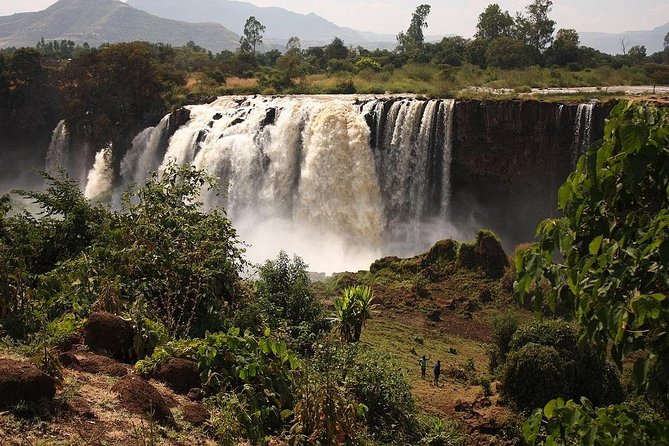
The second four-hour stop takes you to Blue Nile Falls, located about 36 kilometers from Bahir Dar. You walk through a village, take in the countryside, cross the Blue Nile by boat, and continue toward the falls.
This is a more active part of the tour. A moderate amount of walking is involved across the full experience, and this stop is where comfortable shoes matter most. The village walk adds context, since you are moving through a lived-in place rather than being dropped at a viewing platform.
Crossing the Blue Nile by boat also gives the visit a small sense of adventure. Conditions can affect the outing, and the tour notes that the plan depends on suitable weather. Bring clothing that can handle sun, dust, or rain, since the trip operates in changing conditions.
The four-hour allocation is generous enough to make the falls more than a rushed photograph, but it still includes transport, walking, the boat crossing, and time at the site. Ask how much of the period is spent driving and how much is available at the falls. The supplied itinerary does not specify the walking distance or the exact crossing arrangements.
What the two days really cover
The phrase Northern Ethiopia Historic Route may lead you to expect a wide circuit through the country’s famous northern sites. The overview refers to four World Heritage sites in the broader northern area, including Simien Mountains National Park, Ethiopia’s only natural World Heritage site.
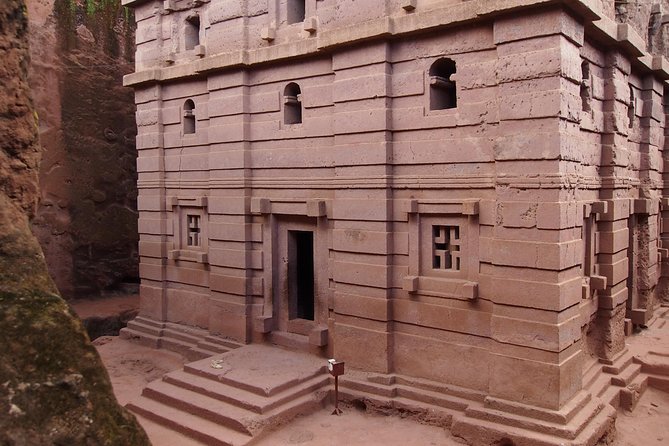
That wider region also includes places often associated with Ethiopia’s historic route, such as Lalibela and Gondar. They are not listed as stops in this two-day schedule. You should therefore treat this program as an Addis Ababa and Bahir Dar-focused introduction, not as a complete tour of northern Ethiopia.
This distinction is important when judging the price. If you want a short sample of Ethiopian culture, religion, archaeology, and nature, the plan is varied. If you want the main historic circuit, two days will not be enough, and you should ask for a longer custom itinerary.
The operator has arranged longer journeys that include Addis Ababa, Lalibela, Gondar, and the Simien Mountains. That suggests the company can plan beyond this compact route, but you should not assume those destinations are included here. Get the exact cities, nights, flights, and road transfers in writing.
The $1,000 price and what it buys you

At $1,000 per person, this is not a bargain-priced sightseeing day. It is a private, organized package that includes accommodation, a professional driver, an air-conditioned minivan, a local guide, hotel pickup and drop-off, breakfast, bottled water, coffee or tea, national park fees, admission tickets, and the boat ride.
Those inclusions can add up quickly in a country where arranging separate guides, transport, tickets, and local boat services may take time. The private format is also valuable if you want a flexible pace or direct help during a complicated transfer.
Meals are not included apart from breakfast, despite the inclusion of three breakfasts in the package details. Alcoholic drinks, tips, laundry, excess luggage charges, and international travel insurance are also your responsibility. Budget separately for lunch and dinner, and ask precisely how many nights and breakfasts the price covers.
The strongest value here is convenience, not the number of attractions. You are paying for a coordinated service with a driver, guide, lodging, and local arrangements. I would book at this price only after confirming the transport between Addis Ababa and Bahir Dar, the accommodation standard, the number of nights, and the reason for the three breakfasts.
The service style and guide support
The operator is Memento Ethiopia Tours. The company can use a multilingual guide, and the trip is private, so your group is not combined with strangers. Bookings require at least two people, and groups can be as large as 20.
Past clients have given especially strong praise to the planning and communication handled by Alex. Specific comments describe him as attentive with arrangements, careful about timing, and helpful before the trip. Another account gives special credit to Charlie, a driver-guide who accompanied a group through northern Ethiopia and stayed closely involved throughout the journey.
That kind of support matters in Ethiopia, where a well-organized driver and local guide can make the difference between a smooth day and a tiring one. You should still ask who will personally accompany your group, who will guide each site, and whether Alex or another coordinator will be available during the trip.
The guide may be multilingual, but the information does not identify the language options. State your preferred language when booking. Also provide dietary needs in advance, since vegetarian meals are available and specific food requirements should be communicated early.
Timing, comfort, and practical preparation
The listed start time is 5:30 am. That is early, and it suggests the operator is allowing for substantial transport or for making the most of the day. Confirm where pickup occurs and how long you should expect to be on the road.
An air-conditioned minivan is included, which is a useful comfort feature for long drives. Feedback about clean cars and friendly drivers adds confidence, but vehicle comfort can vary by group size. Ask what vehicle is planned if your group is near the maximum of 20.
You should pack modest clothing for the cathedral and monasteries, sturdy shoes for the village walk and Blue Nile Falls, sun protection, and a light layer for Mount Entoto. The formal dress instruction is stricter than ordinary sightseeing advice, so do not arrive dressed only for a casual outdoor outing.
The tour is not recommended for pregnant women. Most people can participate, but moderate walking is involved. The provider says the trip runs in all weather, with cancellation possible in poor conditions. If that happens, you are offered an alternative date or a full refund.
Visa requirements are your responsibility. Confirm entry rules before booking, especially if your wider plan includes border crossings or additional countries. The tour details also specify a minimum drinking age of 21.
Who should choose this tour

I would recommend this experience to you if you have two days, want a private arrangement, and prefer a guide to handle local transport and admissions. It is a good fit for first-time visitors who want several different sides of Ethiopia without planning every detail themselves.
It also suits couples, families, and small groups who value private participation. The chance to adjust attention between museums, churches, markets, and outdoor stops is more appealing than a fixed coach schedule.
I would not choose it if your main goal is the Simien Mountains, Lalibela’s rock-hewn churches, or Gondar’s royal sites. Those places are part of the wider northern story, but they are not part of the stated two-day route.
I would also hesitate if you dislike early starts, long transfers, or schedules that depend on weather and boat conditions. The plan is varied, but it is not leisurely.
Should you book the Northern Ethiopia Historic Route?
Book it if you want a short, private introduction that mixes Addis Ababa’s major sights with Lake Tana and Blue Nile Falls. The included guide, driver, boat trip, lodging, admissions, and hotel transfers make the arrangement practical, and Alex’s planning support receives particularly warm praise.
Before booking, ask for a day-by-day transport plan, the exact accommodation, the number of nights, the three-breakfast discrepancy, and the specific churches visited on Lake Tana. If those answers are clear, the $1,000 cost can be reasonable for a private package.
If you want the full northern circuit, ask Memento Ethiopia Tours to extend the trip to Lalibela, Gondar, or Simien Mountains National Park. This two-day version offers a useful first taste, but it should not be mistaken for the entire historic route.
FAQ
How long is the Northern Ethiopia Historic Route tour?
The experience is advertised as lasting approximately two days.
Where does the tour start?
The tour starts in Addis Ababa, Ethiopia, with a stated start time of 5:30 am.
Is hotel pickup included?
Yes. Hotel pickup and drop-off are included.
Is the tour private?
Yes. Only your group participates. Bookings require a minimum of two people, and the maximum group size is 20.
What is included in the price?
The price includes accommodation as arranged, national park fees, bottled water, a local guide, transport in an air-conditioned minivan, coffee or tea, a boat ride, professional driver service, breakfast, and admission tickets.
Are meals included?
Breakfast is included, but meals other than the listed breakfasts are not included. Alcoholic drinks are available to purchase.
Does the tour visit Simien Mountains National Park?
Simien Mountains National Park is mentioned in the wider description of northern Ethiopia, but it is not listed as a stop in this two-day schedule.
Is the Blue Nile Falls visit included?
Yes. The Blue Nile Falls visit lasts about four hours and includes a village walk and a boat crossing of the Blue Nile.
Is vegetarian food available?
Yes. A vegetarian option is available, but you should request it when booking and provide any other dietary requirements in advance.
Can I cancel for a full refund?
Yes, if you cancel at least 24 hours before the experience start time. Cancellations made less than 24 hours in advance are not refunded. Poor weather or failure to meet the minimum number of participants may result in an alternative date or a full refund.
Just added around Addis Ababa
- 10 Days in Northern Ethiopia Tours★ 4.5 · 3 reviews
- Day Trip to Tiya UNESCO Site & Melka Kunture Archaeological Site★ 4.5 · 3 reviews
- Two days Lake Wenchi and Menagesha Forest★ 5.0 · 3 reviews
- 6 days 5 nights Addis Abeba sightseeing & Lalibela Rock-Hewn Churches★ 5.0 · 3 reviews
- Addis Ababa Half Day Shopping Tour★ 5.0 · 3 reviews
- 6 days Omo valley cultural Tour★ 5.0 · 3 reviews
- 12- Day Historical Route of Ethiopia★ 5.0 · 3 reviews
- Addis Ababa City Tour★ 4.5 · 3 reviews
Historical Tours, compared.
Day Trip From Addis Ababa See Historical Monastery,Stunning Nature,Animals,Birds
Read our review →
Hidden Treasures of Addis Ababa – Food, Culture and History Tour
Read our review →
5 Days Tour to World Heritage–listed Harrar, Dire Dawa and Awash NATIONAL PARK
Read our review →
DAY TRIP TO THE UNESCO HERITAGE SITE TIYA & Melka Kunture
Read our review →
Experience a Cultural and Historical Journey through Addis Ababa
Read our review →
Historical tours – in five days, Addis Ababa, Axum, Laliebla and Gonder
Read our review →
city tour of Addis Ababa ( history ,culture , food and more)
Read our review →
Browse the lists this tour appears in