
Reviewed · OMO VALLEY TRIBAL TOURS
Omo Valley 4days 3nights Cultural Tour
Four days brings Ethiopia’s south into sharp focus. This private Omo Valley tour gives you access to Ari, Mursi, Hamer, and Karo communities, with a local guide, private air-conditioned Land Cruiser, park fees, and hotel stays included. I like the direct contact with distinctive customs, especially Hamer body decoration and Mursi lip plates. I also like the small-group format, which can make a sensitive cultural visit feel more personal. The main drawback is the pace: rough roads, early starts, domestic flights, and long transfers leave little room for rest.
This is a strong choice if you want a short introduction to one of Ethiopia’s most unusual regions. I would budget beyond the listed $1,307.70 because domestic flights and photography fees are not included. Guide names connected with the operator include Gashaw, Dr Turmi, Addis, and Zemariam, with particular praise for their local contacts, driving, and quick trip planning.
In This Review
- Key points at a glance
- What this four-day Omo Valley trip is really like
- Day one: Jinka, the Ari community, and a first look at southern Ethiopia
- Day two: Mago National Park and the Mursi
- Day three: the Omo lowlands and Karo country
- Day four: back to Addis Ababa
- Why the private Land Cruiser is important
- What the $1,307.70 price includes, and what it does not
- Cultural etiquette that will improve your visit
- Who will enjoy this trip most
- Booking advice and the cancellation rule
- Should you book the Omo Valley tour?
- FAQ
- Where does the tour start?
- How long does the experience last?
- Are domestic flights included?
- Which accommodations are listed?
- Are meals included?
- Are photography and camera fees included?
- Can I cancel for a full refund?
Key points at a glance
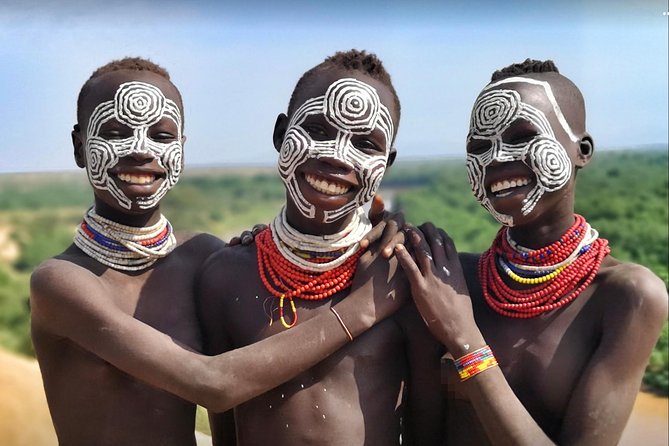
- Four days, four cultural groups: Visit the Ari, Mursi, Hamer, and Karo communities, each known for different clothing, decoration, ceremonies, or village traditions.
- A private vehicle matters: A late-model, air-conditioned Land Cruiser is included, useful on the rough roads around Mago National Park and the Omo lowlands.
- Flights are extra: The tour flies from Addis Ababa to Jinka and back, but domestic and international airfares are excluded from the price.
- Two nights in Jinka: Jinka Resort is used on the first and third nights, while Buska Lodge in Turmi is used on the second.
- Photography needs planning: Camera and photography fees are not included, so ask your operator about current local charges before taking portraits.
- A fast cultural snapshot: This tour suits you if time is limited, but a longer trip would allow more unhurried contact with communities and ceremonies.
What this four-day Omo Valley trip is really like

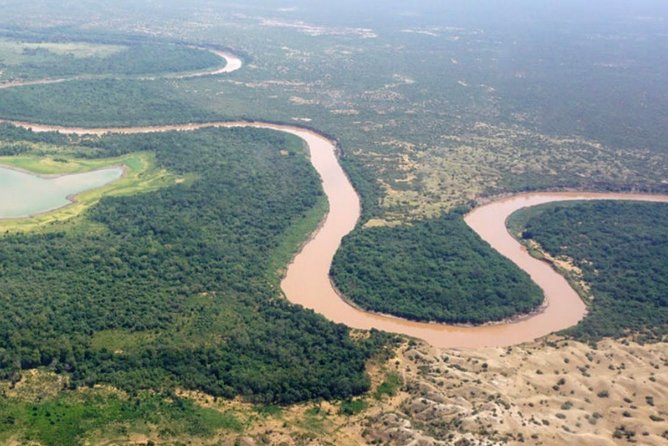
The Omo Valley is not a quick sightseeing circuit. It is a remote southern region where roads, weather, local events, and community access can shape the day. This program gives you a broad sample of several groups in only four days, but you should expect a demanding schedule rather than a leisurely holiday.
You begin at Bole Airport in Addis Ababa at 6:00 a.m. The program then takes you by air to Jinka, the practical base for visits in the area. Flying saves a great deal of overland time, which is the main reason this short version works at all.
The tour is private, so only your own group participates. That gives you more control than a large coach trip, and it allows questions to be handled as they arise. It also means the experience depends heavily on the guide’s judgment and local relationships. Gashaw, Dr Turmi, Addis, and Zemariam are names associated with positive service experiences from this operator, though the specific guide assigned to you should be confirmed before departure.
More Omo Valley tours:
- 6 Days Omo Valley Tribes Tours From Addis Ababa
★ 5.0 · 33 reviews - 3 Days Omo Valley Tour
★ 5.0 · 24 reviews - Danakil Depression, Lalibela, Omo Valley and Simien Mountains
★ 5.0 · 23 reviews
Day one: Jinka, the Ari community, and a first look at southern Ethiopia
After landing in Jinka, you check into Jinka Resort and begin the first cultural visit. The day is described under Konso Cultural Centre, but the detailed activity focuses on the Ari community. Confirm this point with the operator before you go, since the title and description do not perfectly match.
The Ari are known for pottery, jewelry, ear piercings, and skirts made from enset, often called the banana tree of Ethiopia. Enset is a major local plant, and its use in clothing gives you an immediate sense of how practical materials become part of personal style and identity.
Women may wear beads and bracelets around their arms and waists, while pottery provides another visible link between everyday work and artistic expression. This is not a museum display. You are seeing traditions connected to household life, dress, and local trade.
I would keep your first afternoon flexible. The supplied program does not give exact visiting hours or time at each stop, and the flight from Addis can affect how much of the day remains. A good guide should help you understand what is appropriate to photograph and when a purchase supports local makers rather than simply creating a staged encounter.
Jinka Resort is included for the first night. Breakfast is included during the tour, with three breakfasts listed in total. Other meals are not listed, so ask what is available at the hotels and what you should arrange during driving days.
Day two: Mago National Park and the Mursi
The second day begins with a drive from Jinka toward the Mursi through Mago National Park. This is one of the tour’s major draws, but it is also where the road conditions begin to matter. The program uses a Land Cruiser, not a standard city vehicle, and that is a useful inclusion for this part of the journey.
The Mursi are widely known for the geometric lip plates worn by some women. The plates are part of a cultural tradition, not a costume selected for visitors, so your approach matters. Ask before taking close photographs, listen to your guide’s explanation, and avoid reducing a person to one striking feature.
The visit can be visually powerful, but it may also feel confronting if you arrive expecting a simple photo stop. The best experience comes from giving attention to the wider setting, clothing, jewelry, village life, and the guide’s explanation of local customs. You are seeing a living community, not an exhibit arranged for tourists.
After the Mursi visit, you drive toward Turmi through smaller villages and Hamer territory. The road portion can be tiring, particularly after an early start and a rough park excursion. Still, the change in scenery and settlement patterns helps you understand that the Omo Valley is not one uniform culture.
You spend the second night at Buska Lodge in Turmi. The Hamer are known for body decoration, hair styling, dancing, and the bull-jumping ceremony associated with male initiation. The program also refers to Evangadi, a Hamer dancing ceremony. These events do not happen on a fixed schedule for every departure, so do not assume a ceremony will take place during your visit.
That distinction is important. A cultural tour can introduce you to a community, but it cannot guarantee that a particular rite will occur during four calendar days. If a ceremony is a priority, ask about current village events before booking and accept that local decisions may change the plan.
Day three: the Omo lowlands and Karo country

Day three starts early and includes rough roads into the Omo lowland area. The description presents this as a journey through wide Hamer territory before reaching a neighboring Karo village. You then return to Jinka for the night at Jinka Resort.
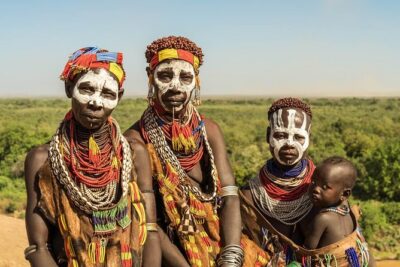
The Karo are known for body painting made with clay and locally available vegetable pigments. Designs may cover faces, chests, arms, and legs. The appeal is not only the color or pattern. It shows how artistic expression can be made from nearby materials and used for enjoyment, identity, and social display.
The description also refers to pierced lower chins decorated with nails and other sharp metal. This is another detail that can attract too much attention if handled poorly. Your guide should explain the practice in context, and you should follow local permission rules closely. Photography fees are excluded, and portrait charges may apply.
The program also names Dasenech Village as the day’s stop, although the written description emphasizes the Karo. Ask the operator to confirm whether the visit includes Dasenech, Karo villages, or both. This is one of the practical uncertainties worth clearing up before paying, especially because the day involves substantial driving.
I would treat day three as the tour’s most physically demanding stretch. The road is described as rough, the start is early, and you return to Jinka rather than staying near the lowlands. The payoff is a wider view of the region and a chance to see how Hamer and Karo traditions differ.
More history-first tours:
- Day Trip From Addis Ababa See Historical Monastery,Stunning Nature,Animals,Birds
★ 5.0 · 303 reviews - Hidden Treasures of Addis Ababa – Food, Culture and History Tour
★ 5.0 · 57 reviews - Northern Ethiopia Historic Route
★ 5.0 · 12 reviews - 5 Days Tour to World Heritage–listed Harrar, Dire Dawa and Awash NATIONAL PARK
★ 4.5 · 10 reviews
Day four: back to Addis Ababa

After breakfast, you transfer to the airport for the flight back to Addis Ababa. The schedule lists the final day as approximately 12 hours, though the actual length will depend on flight arrangements, airport procedures, and transfers.
There is no planned cultural stop on this day. That is sensible after the long road days, but it also means the four-day program gives you only two full touring days in the Omo Valley, with arrival and departure taking up the edges of the trip.
If you have an onward international flight from Addis, leave a generous buffer. The supplied information does not provide a guaranteed domestic flight time or a firm arrival time in the capital. Do not schedule a tight connection without checking the confirmed flight details.
Why the private Land Cruiser is important

The vehicle is one of the tour’s most useful inclusions. A late-model, air-conditioned Land Cruiser should be more comfortable and capable than a regular sedan on the roads to Mago National Park and the Omo lowlands.
You still need realistic expectations. Air conditioning does not remove the jolts, dust, or fatigue that come with rough roads. The vehicle helps, but this remains an overland expedition in a remote region, not a smooth transfer between city attractions.
A private vehicle also gives your group more flexibility. You can discuss when to stop, how long to spend at a village, and how to handle photography. The exact freedom depends on local access and the guide’s arrangements, but it is a real advantage over a large scheduled group.
What the $1,307.70 price includes, and what it does not
At $1,307.70 per person, this is not a budget add-on. The value depends on how much you place on private transport, local guiding, and saving overland travel time.
The price includes a local guide, a professional guide fee, the air-conditioned Land Cruiser, entrance fees for all destinations, and three breakfasts. It also covers the listed hotel stays at Jinka Resort and Buska Lodge.
The price does not include domestic flights. Since the trip depends on flying from Addis to Jinka and back, this is a major extra rather than a minor footnote. International flights are also excluded, as are camera and photography fees.
I would compare the total cost, not just the advertised tour rate. Add both domestic flights, portrait charges, meals beyond breakfast, and any personal purchases. Once those costs are included, you can judge the convenience fairly.
The private format improves the value for families, couples, or friends who want the vehicle and guide to themselves. For a solo visitor, the per-person cost may feel high, though the access and short duration could still make sense if you have limited time in Ethiopia.
Cultural etiquette that will improve your visit

The Omo Valley offers striking visual details, but the people you meet should never become scenery. Ask permission before photographing anyone, especially children and people wearing distinctive body decoration. Your guide can explain local expectations and photography fees.
Carry patience as well as a camera. Body paint, jewelry, lip plates, pottery, and ceremonial dress have cultural meaning, but the people you meet also have ordinary work, family life, and personal boundaries. A respectful greeting and a willingness to listen will make the encounter better than rushing from one portrait to the next.
You may find that a small purchase of pottery or locally made decoration is possible, particularly in Ari areas. Keep prices and arrangements clear, and ask your guide how buying works. The goal is to support local makers without turning every exchange into pressure to purchase.
The program describes the people as friendly and the region as peaceful, but remote travel always demands flexibility. Roads, village access, and ceremonies can change. Your guide’s local connections are among the most valuable parts of the trip because they help adjust expectations on the ground.
Who will enjoy this trip most
I would recommend this tour to you if you want a concentrated introduction to southern Ethiopia and do not have time for a longer Omo Valley route. It works especially well for photographers, culture-focused visitors, and small private groups who value a dedicated vehicle and guide.
It also suits people who prefer an organized trip over arranging flights, vehicles, entrance fees, and local contacts independently. Most people can participate, and service animals are allowed. The tour is near public transportation, although the main program begins with pickup at Bole Airport.
I would hesitate to recommend it if you dislike bumpy roads, early departures, uncertain timing, or close encounters that require careful cultural judgment. The four-day schedule is efficient, but it is not restful.
A longer Omo Valley trip may be better if you want more time with each community or hope to catch a particular Hamer ceremony. The supplied experiences connected with this operator also include three-day and 12-day Omo Valley trips, so it is worth asking about a slower option if your schedule allows.
Booking advice and the cancellation rule
Confirmation is provided at booking. Pickup is offered, and the stated meeting point is Bole Airport in Addis Ababa at 6:00 a.m. Confirm your domestic flight arrangements and exact pickup instructions before departure.
Free cancellation is available up to 24 hours before the experience starts for a full refund. Cancellations or changes made within 24 hours are not accepted for a refund, and the cut-off uses local time.
Before booking, I would ask three direct questions: Which community is covered by the day one Konso Cultural Centre entry? Does day three include Dasenech, Karo, or both? Which domestic flights and photography charges should you budget for? Clear answers will prevent the biggest surprises.
Should you book the Omo Valley tour?
Book it if you want a private, tightly planned taste of the Omo Valley, and you accept that the real cost will rise after flights and photography fees. The combination of Mursi, Hamer, Karo, and Ari encounters, a capable 4WD vehicle, and local guiding gives you a lot in a short time.
Skip it if you want slow travel, guaranteed ceremonies, or a polished resort-style break. I think the tour offers good value for a short introduction, provided you approach it with respect, keep your schedule flexible, and confirm the unclear day one and day three details before paying.
FAQ
Where does the tour start?
The stated meeting point is Bole Airport in Addis Ababa, Ethiopia. Pickup is offered, and the start time is 6:00 a.m.
How long does the experience last?
The tour lasts approximately four days and three nights. The final day is listed as approximately 12 hours.
Are domestic flights included?
No. Domestic flight fees are not included. International flight fees are also excluded.
Which accommodations are listed?
The first and third nights are listed at Jinka Resort in Jinka. The second night is listed at Buska Lodge in Turmi.
Are meals included?
Three breakfasts are included. The supplied details do not list other meals as included.
Are photography and camera fees included?
No. Photography and camera fees are excluded from the tour price.
Can I cancel for a full refund?
Yes, if you cancel at least 24 hours before the experience start time. Cancellations or changes made less than 24 hours before the start time are not refunded.
More four-day itineraries
- Arba Minch, Dorze Tribe, Konso, and Awasa Private 4 Days Tour from Addis Ababa
★ 5.0 · 3 reviews - 4-Day Tour: Tigray Churches & Danakil Depression Adventure.
★ 5.0 · 11 reviews - 4 days semien mountain national park trekking,
★ 5.0 · 11 reviews - Simien Mountains – 4 Days
★ 4.0 · 7 reviews
Just added around Addis Ababa
- 10 Days in Northern Ethiopia Tours★ 4.5 · 3 reviews
- Day Trip to Tiya UNESCO Site & Melka Kunture Archaeological Site★ 4.5 · 3 reviews
- Two days Lake Wenchi and Menagesha Forest★ 5.0 · 3 reviews
- Addis Ababa Half Day Shopping Tour★ 5.0 · 3 reviews
- 6 days 5 nights Addis Abeba sightseeing & Lalibela Rock-Hewn Churches★ 5.0 · 3 reviews
- 12- Day Historical Route of Ethiopia★ 5.0 · 3 reviews
- 6 days Omo valley cultural Tour★ 5.0 · 3 reviews
- Addis Ababa at a Glance★ 5.0 · 3 reviews
Omo Valley Tribal Tours, compared.

6 Days Omo Valley Tribes Tours From Addis Ababa
Read our review →
Lalibela, Axum, Danakil and Omo Valley 8 DAYS
Read our review →
Danakil Depression, Lalibela, Omo Valley and Simien Mountains
Read our review →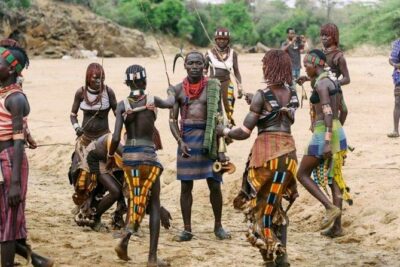


9 Days Tours To Danakil Depression, Simen MNP, Lalibela With Omo Valley Tribes
Read our review →Browse the lists this tour appears in