
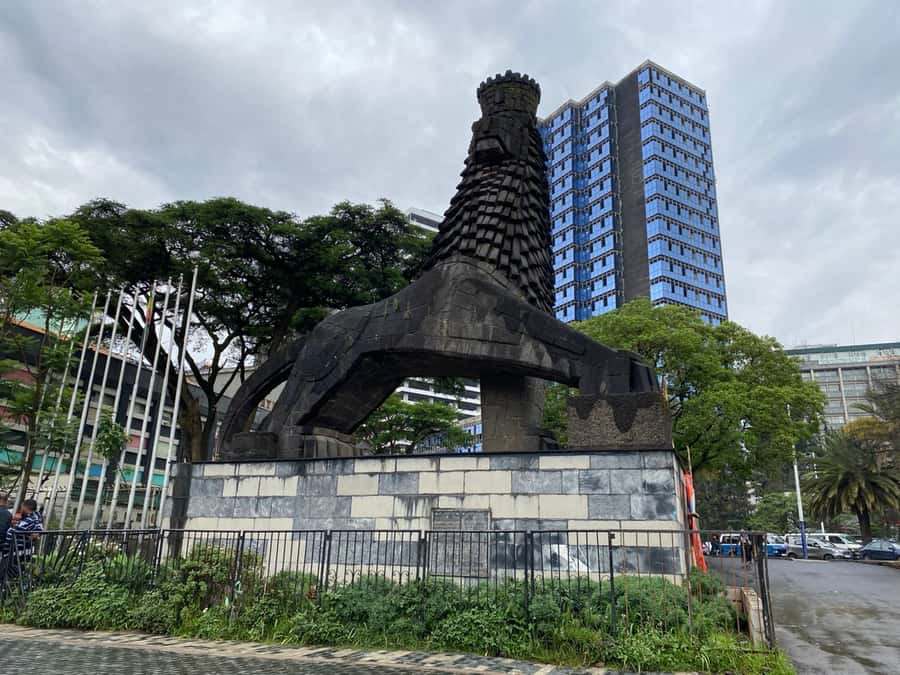
Reviewed · ADDIS ABABA TOURS
Addis Ababa at a Glance
Addis Ababa rewards a curious eye. This private six-hour tour packs the city’s key sights, local food culture, mountain views, and busy markets into one useful introduction to Ethiopia’s capital. I like the mix of Lucy at the National Museum and the very local walk through Mercato, where the city feels less polished and more like itself. I also like that hotel or airport pickup is included, a real help when you have only a day in town.
The main consideration is pace. You are covering a lot of ground in about six hours, and food is not included even though Ethiopian cuisine is part of the experience. The advertised schedule also mentions a 6.5-hour day, while the activity details list six hours, so confirm the exact timing when you book.
In This Review
- Key points to know before booking
- What this Addis Ababa tour does well
- Lucy and the National Museum of Ethiopia
- Entoto Mountain and the view over Addis Ababa
- Saint George Church and Ethiopia’s Orthodox tradition
- Mercato, where Addis Ababa gets practical
- Monuments, the old station, and Africa’s headquarters
- Coffee, juice, and Ethiopian food
- Private transport and the shape of the day
- Who will get the most from this experience
- Should you book the Addis Ababa day tour?
- FAQ
- How much does the Addis Ababa tour cost?
- How long does the experience last?
- Where can pickup and drop-off take place?
- Which languages are available?
- Is food included in the price?
- Is the tour private?
Key points to know before booking

- Lucy gives the tour an important starting point: The National Museum puts Ethiopia’s human story at the center of the day, with fossils, artifacts, and ethnographic displays.
- Entoto Mountain changes your view of Addis Ababa: From the high point above the city, you get a broad look at the capital and time for a short walk at Entoto Park.
- Mercato is the most hands-on stop: This huge open-air market offers a close look at trade, movement, bargaining, and daily life.
- The tour is private: You travel with your own group rather than joining a large coach party, which should make questions and timing easier.
- Coffee and fresh juice are included: Food is not included, but Ethiopian coffee, fresh seasonal juice, and bottled water are part of the price.
- The guide matters here: Gasha receives especially strong praise for being passionate and well informed, while another booking describes the guide as exceptional.
What this Addis Ababa tour does well
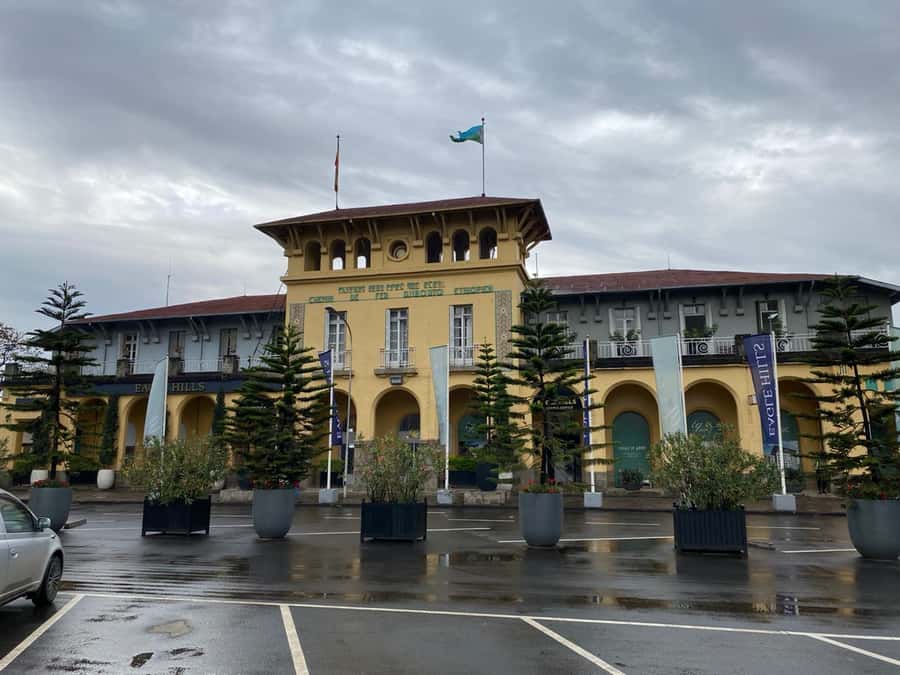
For a first look at Addis Ababa, the route has a sensible shape. It begins with national history, rises to the city’s highest viewpoint, moves through religious art and architecture, then drops into Mercato and finishes with major monuments and public buildings.
That order helps you understand the city in layers. You start with Ethiopia’s place in human history, see the capital from above, visit an important Orthodox church, then experience the practical business of modern Addis Ababa. It is not just a drive past landmarks.
At $78 per person, the value depends on how many people are in your private group. For one person or a couple, the price pays for private transportation, a guide, pickup, and a concentrated route that would be difficult to arrange comfortably in one day. For a larger group, the cost becomes more attractive because the private format spreads the price across several people.
The day is also useful for a long airport stopover. Pickup and drop-off are available at Bole International Airport and Ethiopian Skylight Hotel. The provider says the driver can collect you anywhere you are, with the guide or driver holding a sign with your name. Guides wait no longer than 10 minutes after the scheduled pickup time, so you should be ready in the hotel lobby or agreed pickup place.
A few more tours of this kind worth a look:
- Full Day Tour of Addis Ababa with Hotel Pickup and Drop-off
★ 5.0 · 430 reviews - Taste of Ethiopia
★ 5.0 · 406 reviews - Day Trip From Addis Ababa See Historical Monastery,Stunning Nature,Animals,Birds
★ 5.0 · 303 reviews
Lucy and the National Museum of Ethiopia
The National Museum is the tour’s strongest cultural anchor. You begin among fossil discoveries, archaeological objects, artifacts, and ethnographic displays, with the famous Lucy fossil as the headline attraction.
Lucy matters because she gives a human face to Ethiopia’s place in the story of human origins. Seeing the fossil in person is more memorable than hearing the name in a classroom. The museum also helps place that discovery alongside the wider material culture of Ethiopia, so the visit is not limited to one display case.
Your guide’s explanation is important here. Museum labels can only tell you so much, while a local guide can connect the fossils, objects, and customs to the country you are seeing outside. The tour is designed around storytelling, so this is the point where you should ask questions about Ethiopia’s past, peoples, and traditions.
Allow yourself to stay focused. The day contains many stops, and the museum has several collections. If Lucy is your main reason for booking, make that clear early so your guide can help protect enough time for the museum.
Entoto Mountain and the view over Addis Ababa

After the museum, the route climbs toward Entoto Mountain, the high point overlooking Addis Ababa. You will have time for a short walk at Entoto Park and a broad view of the capital below.
This stop gives you something the museum cannot: a sense of the city’s size and setting. Addis Ababa is easier to understand from above. Roads, neighborhoods, open areas, and distant buildings come together in one view, and you can see why Entoto has long been important to the city.
The air and temperature can also differ from the streets below. The tour description does not promise a long hike, so think of this as a viewpoint and shore walk rather than a mountain trek. Wear shoes that can handle a short walk, but you do not need to prepare for a demanding climb based on the information provided.
The high point is especially useful early in a visit because it helps you get your bearings. I would pay attention to the guide’s explanation of what you are looking at, rather than treating the stop as only a photo opportunity. The listed activities include photography, sightseeing, and free time, so you should have a little room to pause.
Saint George Church and Ethiopia’s Orthodox tradition
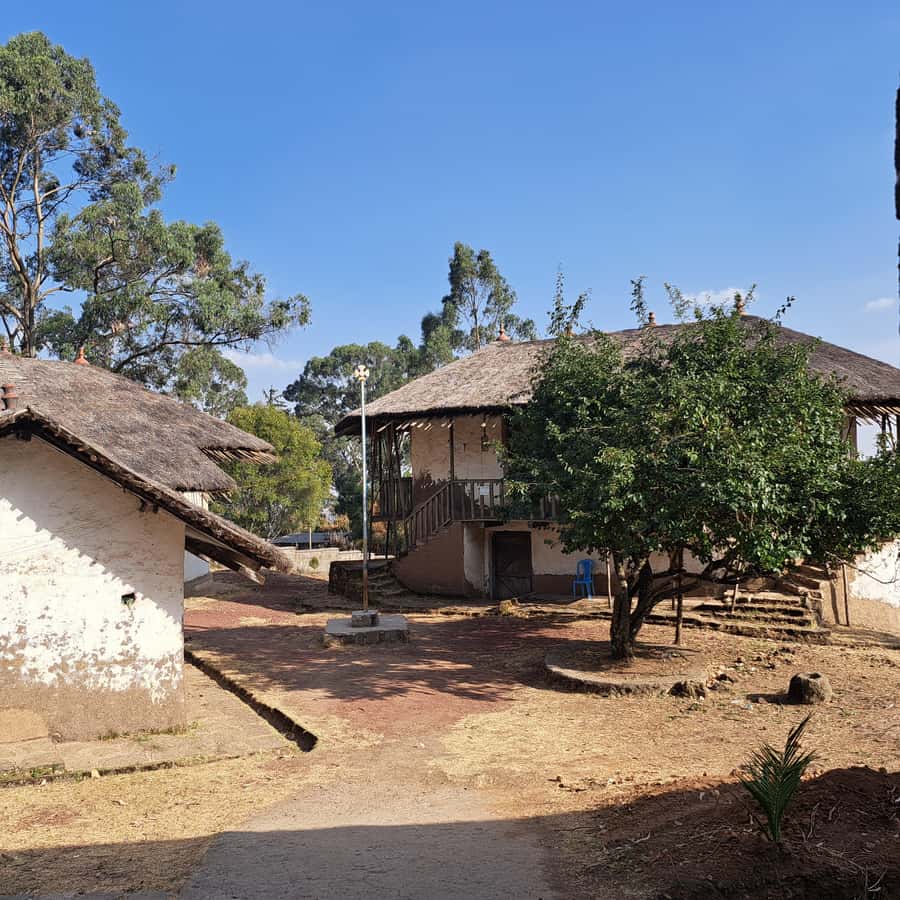
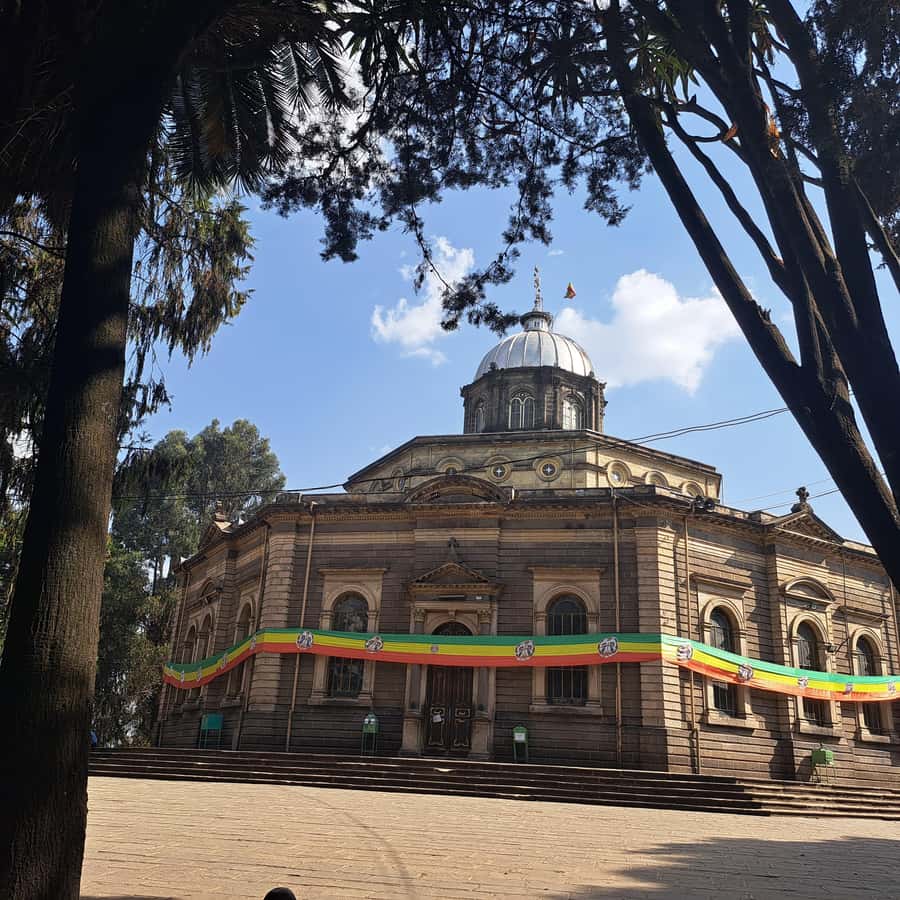
The route continues to the Pisa area and Saint George Church, an Orthodox church built by Menelik II. Its octagonal shape makes it easy to recognize, but the interior is the more rewarding part of the visit.
You can expect Ethiopian Orthodox religious art, including notable modern paintings inside the church. This adds a different side of the country’s culture to the day. The museum shows objects and evidence from the past, while the church shows a living religious tradition that still shapes Ethiopian identity.
The tour information also lists the Holy Trinity Cathedral as a possible church visit. The wording allows for Saint George Church and/or Holy Trinity Cathedral, so the exact choice may depend on the day’s timing and route. If one church matters more to you, ask about it before setting off.
Dress and behavior should be respectful at religious sites. The information provided does not give a formal dress code, so your safest approach is modest clothing and a quiet manner. Your guide can explain local customs and point out details in the paintings that you might otherwise miss.
Something different, still within Addis Ababa:
- Addis Ababa: Debre Libanos, Blue Nile Gorge, and Cave Tour
★ 4.5 · 256 reviews - Addis Ababa Guided City Tour With Airport & Hotel Pick Up
★ 5.0 · 237 reviews - Breathtaking Nature, Wildlife and Cave Church Tour – Free Pickups
★ 5.0 · 225 reviews - Full-Day Private City Tour of Addis Ababa
★ 5.0 · 147 reviews
Mercato, where Addis Ababa gets practical
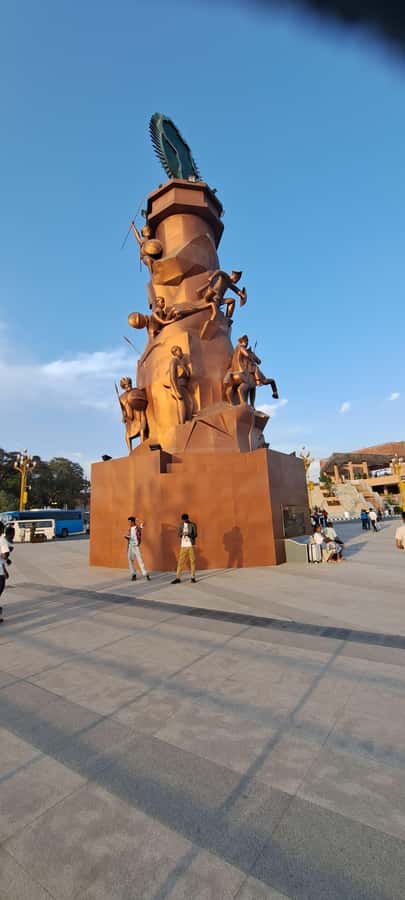
Mercato is the most energetic stop on the route. This massive open-air market is described as a place where vendors and shoppers move through tight trading areas, calling out and negotiating as business carries on around them.
You will walk rather than simply look from a vehicle. That matters. A market visit gives you contact with ordinary commerce, local products, and the rhythm of the city. It is also the place where the tour feels least like a standard sightseeing loop.
Expect movement, noise, and a lot to take in. The route description uses words such as shoved, jostled, yelling, and trading calls, so this is not a quiet shopping arcade. Keep your belongings secure, stay close to your guide, and ask before photographing people or stalls. These are sensible habits in any crowded market.
You may also want to decide in advance if you actually plan to shop. The itinerary lists shopping and free time, but it does not specify what products you will see or how much time is reserved for buying things. Mercato is better approached as a look at daily trade first and a souvenir stop second.
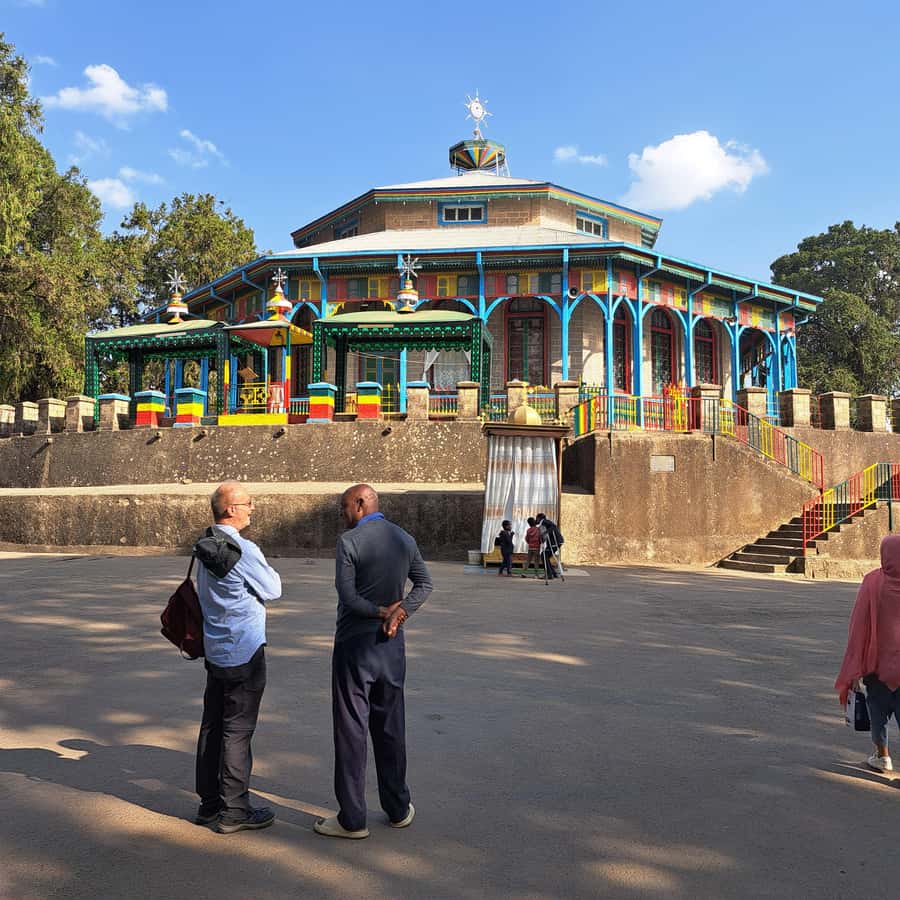
On the way to the market, you will see Anwar Mosque. It adds another religious and architectural reference point before the market walk. The tour does not state that you enter the mosque, so expect to observe it as part of the route unless your guide confirms otherwise.
Monuments, the old station, and Africa’s headquarters
After Mercato, the tour continues through several important public sights. You will see the Tiglachin Monument, the old train station, and the African Union headquarters building.
These stops are brief by nature, but they help connect Addis Ababa’s past and present. The old station points to an earlier era of rail travel and urban growth. The Tiglachin Monument reflects a political period in Ethiopia’s modern story. The African headquarters building places Addis Ababa in its wider continental role.
The tour description does not promise extended interior visits at these places. Think of them as guided sightseeing and photo stops from the route. Their value comes from the guide’s explanation, so this is another reason the private format can work well. You can ask why each site matters instead of simply recording its name and moving on.
Coffee, juice, and Ethiopian food
Ethiopian food is part of the cultural focus, but you need to read the inclusions carefully. Fresh seasonal juice, Ethiopian coffee, and a bottle of water are included. Food is not included, and alcoholic drinks are excluded.
The tour says you will have a chance to experience Ethiopian national and traditional cuisine. That may mean a food stop or a recommendation from the guide, but the supplied details do not confirm that a meal is covered in the $78 price. Plan to pay separately if you want food, and confirm the arrangement before the tour begins.
The coffee stop is a worthwhile part of the day. Coffee is central to Ethiopian social life, and tasting it in the country where the tradition began gives the break more meaning than a routine café stop. The fresh juice is a welcome extra, especially after walking through Mercato or spending time outdoors at Entoto.
The itinerary also lists a cooking class and traditional dance show among possible activities. However, the detailed route does not explain where or when these take place. I would treat them as activities that may be included in the day’s program rather than guaranteed highlights. Ask the provider to confirm them if they are a major reason for booking.
Private transport and the shape of the day
Pickup is available from Bole International Airport, Ethiopian Skylight Hotel, or another location arranged with the provider. The driver or guide meets you in the lobby or agreed pickup point and carries a sign with your name. Drop-off is available at the airport or Ethiopian Skylight Hotel.
That flexibility makes the tour practical for a short stay. You do not have to spend your limited time finding a taxi, working out a route, or negotiating several separate rides. The guide and driver handle the movement between the museum, mountain, church, market, and monuments.
The group is private, and guiding is available in English or French. A private group usually gives you more control over questions and photo stops than a large shared tour. Still, the route covers many sights in a limited period. If you want long museum time, an extended market visit, or a slow meal, this may feel compressed.
The published details describe the experience as six hours, while the itinerary lists 6.5 hours. That difference is small but worth checking, especially if you have a flight to catch. Give the provider your exact departure time and allow a safety margin for airport check-in.
Who will get the most from this experience

I would recommend this tour to a first-time visitor who wants a broad introduction without arranging separate transport and admissions. It also suits anyone with a long airport stopover, since pickup and return are built into the plan.
The tour works well for people who enjoy a mix of museums, viewpoints, religious buildings, markets, and city driving. You do not need to choose between an academic museum visit and a street-level experience. The route gives you both.
It is also a good fit for travelers who value conversation. The strongest praise goes to the guides, especially Gasha, who is described as passionate and highly informed. That personal guidance can make the difference between seeing a church and understanding why it matters.
I would be more cautious if you dislike crowds, walking through busy markets, or moving quickly between stops. Mercato can be intense, and the full route leaves limited time for lingering. People who want a specialist food tour, a long museum visit, or a relaxed day should consider a narrower private itinerary instead.
Should you book the Addis Ababa day tour?
Book it if you want one efficient day covering Addis Ababa’s main cultural and urban sights, with private pickup and a guide who can explain what you are seeing. The National Museum, Entoto Mountain, Saint George Church, Mercato, coffee, juice, and city monuments give you a useful first picture of Ethiopia’s capital.
Before paying, confirm three points: the actual six-hour or 6.5-hour duration, which church is included, and whether any food, cooking class, or dance show is part of your specific departure. At $78 per person, the tour offers solid value when private transport and guiding save you the trouble of planning a complicated day. It is less compelling if you want to spend most of your time at one site.
FAQ
How much does the Addis Ababa tour cost?
The listed price is $78 per person.
How long does the experience last?
The activity details list six hours, while the itinerary describes 6.5 hours. Confirm the exact duration and starting time before booking.
Where can pickup and drop-off take place?
Pickup and drop-off are available at Addis Ababa Bole International Airport and Ethiopian Skylight Hotel. The provider also says the driver can pick you up wherever you are.
Which languages are available?
Live guiding is available in English and French.
Is food included in the price?
Food is not included. Ethiopian coffee, fresh seasonal juice, and a bottle of water are included, while alcoholic drinks are not included.
Is the tour private?
Yes. The experience is offered for a private group, with pickup included.
Just added around Addis Ababa
- 10 Days in Northern Ethiopia Tours★ 4.5 · 3 reviews
- Two days Lake Wenchi and Menagesha Forest★ 5.0 · 3 reviews
- Day Trip to Tiya UNESCO Site & Melka Kunture Archaeological Site★ 4.5 · 3 reviews
- 6 days 5 nights Addis Abeba sightseeing & Lalibela Rock-Hewn Churches★ 5.0 · 3 reviews
- Addis Ababa Half Day Shopping Tour★ 5.0 · 3 reviews
- 6 days Omo valley cultural Tour★ 5.0 · 3 reviews
- 12- Day Historical Route of Ethiopia★ 5.0 · 3 reviews
- Addis Ababa City Tour★ 4.5 · 3 reviews
Addis Ababa Tours, compared.
Full Day Tour of Addis Ababa with Hotel Pickup and Drop-off
Read our review →
Day Trip From Addis Ababa See Historical Monastery,Stunning Nature,Animals,Birds
Read our review →
Addis Ababa Guided City Tour With Airport & Hotel Pick Up
Read our review →
Breathtaking Nature, Wildlife and Cave Church Tour – Free Pickups
Read our review →

Browse the lists this tour appears in