
Reviewed · ROCK-HEWN CHURCHES OF LALIBELA
Lalibela: Churches Full-Day Private Tour w/Coffee Ceremony
Lalibela’s churches reward slow looking. I like that this private full-day tour gives you time to study the rock-cut design with a guide, then shifts from stone monuments to daily life through a family coffee ceremony. I also like the hotel pickup, private car, and return transfer, which make a long day easier in a mountain town. The main catch is the extra US$100 church entrance fee, a cost that should be clear before you book.
The walking is steady, and some church areas require modest clothing and sandals rather than enclosed shoes. Women cannot enter Bet Golgotha, and the tour ends with Amhara music and dance in a bar, so the day is cultural as well as architectural. If you can request Abebe as your guide, do so. His careful explanations and strong local connections earned especially high praise, including the nickname the mayor of Lalibela.
In This Review
- Five things to know before you go
- Why Lalibela’s churches deserve a full day
- The northwestern churches: six very different stops
- Lunch and the move to the southeastern cluster
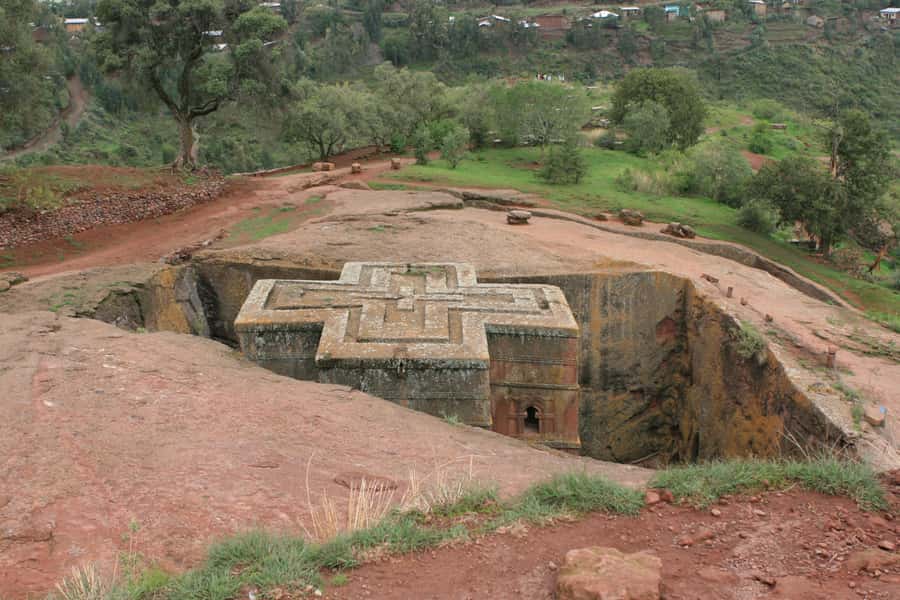
- Bet Giyorgis, Lalibela’s memorable finale
- A coffee ceremony inside a family home
- Amhara music and dance in the evening
- What the private format adds
- Practical advice for getting the most from the day
- Who should book this Lalibela tour?
- Should you book it?
- FAQ
- How long is the Lalibela churches tour?
- What is the price of the tour?
- Is the US$100 church entrance fee included?
- Does the tour include hotel pickup and drop-off?
- Is transportation private?
- Which languages does the guide speak?
- Can women enter Bet Golgotha?
- What clothing should I wear?
- Is accommodation included?
Five things to know before you go
- The church ticket costs US$100: It is included in the listed package, but one traveler was surprised that this fee was required, so check the total price carefully.
- You visit all three main church areas: The day covers the northwestern group, the southeastern group, and famous Bet Giyorgis.
- The experience is private: You travel by private car with a live guide in English or Amharic.
- The coffee ceremony takes you into local life: This is held in a family house, not simply demonstrated as a tourist stop.
- Bet Golgotha has a clear restriction: Women cannot enter, and the churches require modest clothing, with no shorts, short skirts, or see-through clothing.
Why Lalibela’s churches deserve a full day
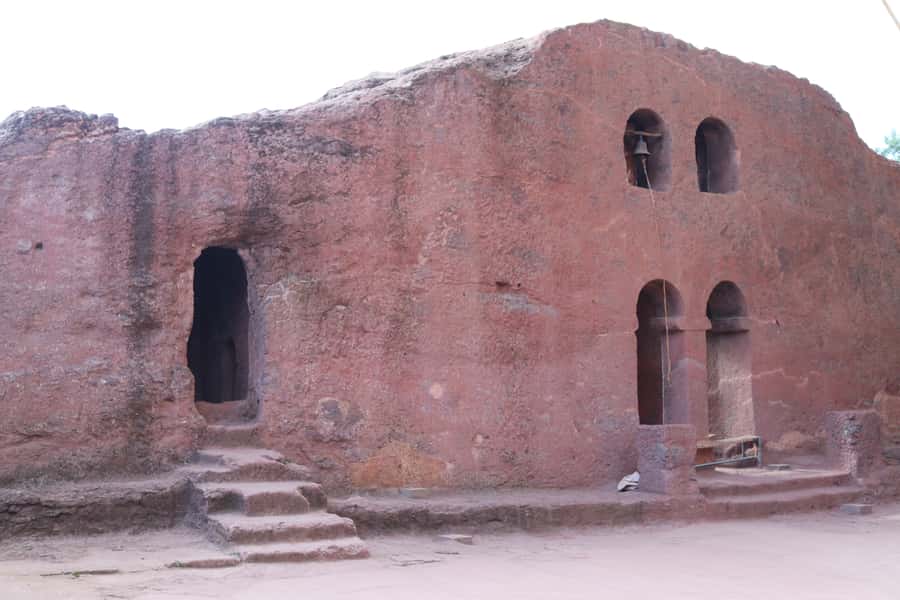
Lalibela is not a place to rush through with a quick photo stop. Its churches were cut, shaped, and linked through rock, with some structures carved downward into the ground and others partly built from stone. The unusual design is easiest to understand when you have time to walk, pause, and hear how each church fits into the larger religious center.
This tour is built around that slower pace. It begins in the northwestern cluster, moves to the southeastern group after lunch, and finishes at Bet Giyorgis. You are not simply ticking off names. You are moving through a connected town of worship, narrow passages, carved courtyards, and striking stone forms.
I would choose a private tour here because the sites call for questions. You may want to know how a church was cut, why a passage is shaped a certain way, or how religious use continues today. With your own guide, you can ask without holding up a large group.
The price is $342 per person. That is not a small outlay, but the package includes hotel pickup and drop-off, private transportation, the $100 church admission, a live guide, the walking tour, and the coffee ceremony. In practical terms, $242 covers the private vehicle, guiding, local arrangements, and the cultural portion of the day. Lunch and accommodation are not listed as included, so budget for those separately.
More Lalibela church tours:
- Visiting Lalibela churches
★ 5.0 · 40 reviews - Tour 11 monolithic rock churches & museum in Lalibela & cave church with mummies
★ 5.0 · 37 reviews - Lalibela, Axum, Danakil and Omo Valley 8 DAYS
★ 5.0 · 29 reviews
The northwestern churches: six very different stops
Your morning starts in the northwestern cluster, where the churches include Bet Medhane Alem, Bet Maryam, Bet Meskel, Bet Danaghel, Bet Mikael, and Bet Golgotha. This opening section gives you the best sense of how varied Lalibela’s sacred buildings can be.
Bet Medhane Alem is one of the major churches in the group and is a strong introduction to the scale of the site. The structure’s rock-cut form makes the building feel both solid and oddly separated from the ground around it. Your guide can point out the cuts, columns, and links between the church and the surrounding rock.
Bet Maryam offers a different experience, with details that reward close attention rather than a quick look from outside. The guide’s role matters here. At several churches, the important features are not obvious until someone explains what you are seeing.
Bet Meskel and Bet Danaghel add smaller and more intimate stops to the morning. The names can blur together after several visits, so I recommend keeping a short note on your phone or asking your guide to recap each church before you leave. That small habit helps you remember the differences later.
Bet Mikael and Bet Golgotha bring an important practical restriction. Women are not permitted to enter Bet Golgotha. That is not a minor footnote, so plan your expectations in advance. The group can still visit the area, but access inside is limited.
The ground is uneven, and this is primarily a walking visit. Bring sandals as requested, use sunscreen, and carry cash. Modest clothing is required, so leave shorts, short skirts, and see-through clothing at the hotel. A passport or ID card is also listed among the items to bring.
Lunch and the move to the southeastern cluster
The schedule calls for a lunch stop at a local restaurant around noon. Lunch is not listed among the included services, so ask your guide how payment works and keep cash available. One booking included a positive mention of traditional lunch and coffee, but the package details only clearly include the coffee ceremony, not lunch.
After lunch, the tour continues to the southeastern cluster. The change of area breaks up the morning and gives you a chance to sit down before more walking. That matters because a full day among the churches can be tiring, even when the distances between stops are manageable.
The southeastern group includes Bet Gabriel-Rufael, Bet Merkorios, Bet Amanuel, and Bet Abba Libanos. Each stop adds another piece to the picture of Lalibela’s unusual construction. Some churches feel more open and monumental, while others are reached through rock passages or enclosed spaces.
Bet Gabriel-Rufael is a good place to pay attention to the way sacred buildings and the surrounding stone relate to one another. Bet Merkorios and Bet Amanuel continue the sequence, and your guide can help you separate their features instead of letting the sites run together.
Bet Abba Libanos is one of the highlighted churches and a key reason this tour works better as a full day. You have enough time to look at the carved structure, hear the background, and move on without treating every stop as a race against the clock.
The quality of the guide is the strongest variable here. A French-speaking booking described the explanations as clear and detailed, while an English-speaking booking praised Abebe for taking time at each church and explaining the local past with care. The tour offers English and Amharic guiding, so confirm your preferred language when booking.
Bet Giyorgis, Lalibela’s memorable finale
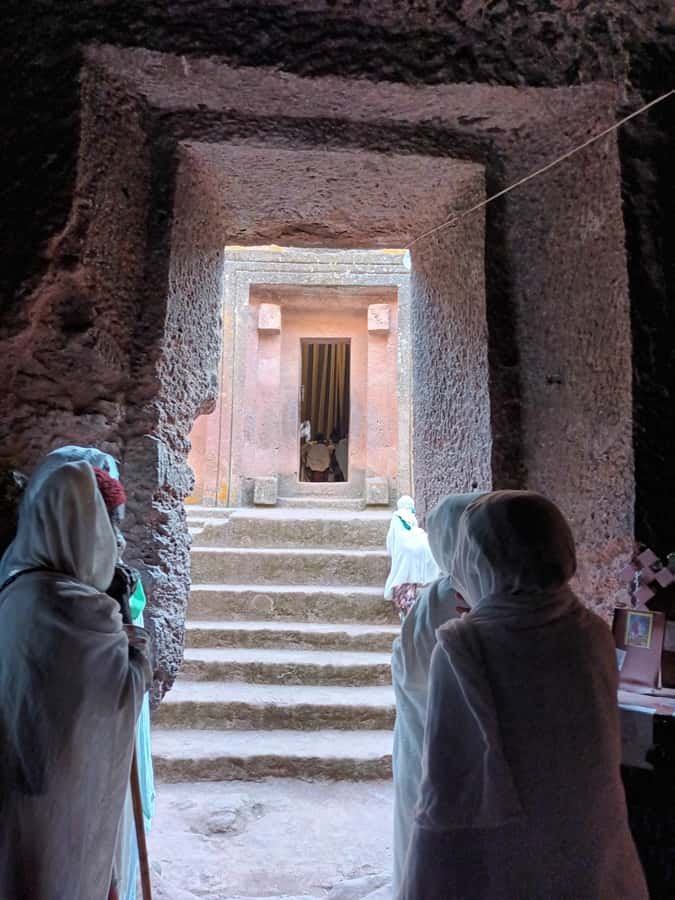
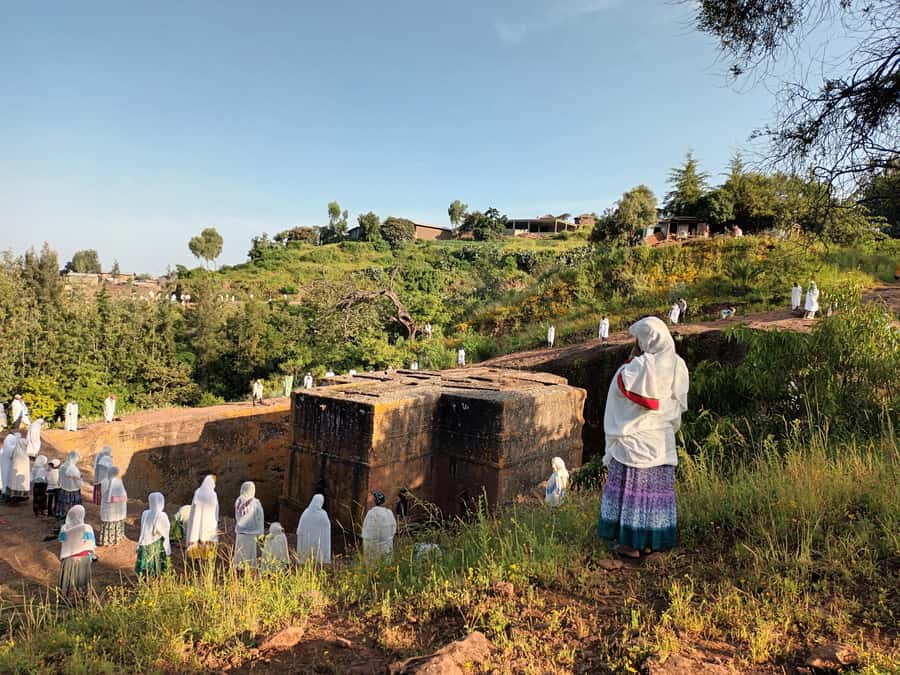
The day’s church visits end at Bet Giyorgis, built in honor of Saint George. Its form is among Lalibela’s most recognizable, and arriving here after the other clusters gives the final church extra weight.
Bet Giyorgis is often the image people carry away from Lalibela, but seeing it at the end has an advantage. By then, you have already learned how the churches were shaped and how the different areas connect. You can look at the famous structure with more context, rather than treating it as an isolated monument.
Bring your camera, but do not let photography replace the view itself. The shape, depth, and surrounding rock are best understood from several angles. Your guide can also help explain details that are easy to miss when you are focused on getting the classic picture.
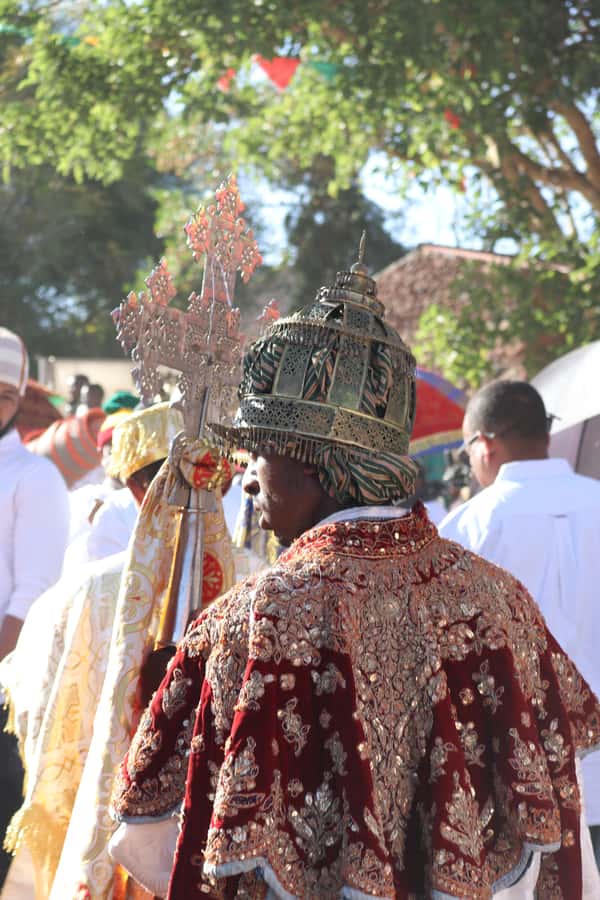
You should expect a religious site, not a staged monument. Dress respectfully, follow your guide’s instructions, and allow for moments when access or movement is controlled by local practice. The tour offers skip-the-ticket-line access, which can help keep the schedule moving.
More coffee ceremonies:
- Ethiopian Culinary Tour – Market, Food, Coffee Ceremony & more
★ 5.0 · 65 reviews - Market Tour and Cooking Class with a Coffee Ceremony at a Home in Addis Ababa
★ 5.0 · 32 reviews - Ethiopian Cooking Class and Coffee Ceremony with a Local in Addis with transfers
★ 5.0 · 14 reviews - Ethiopian Culinary Tour – Market, Coffee Ceremony and More
★ 5.0 · 10 reviews
A coffee ceremony inside a family home
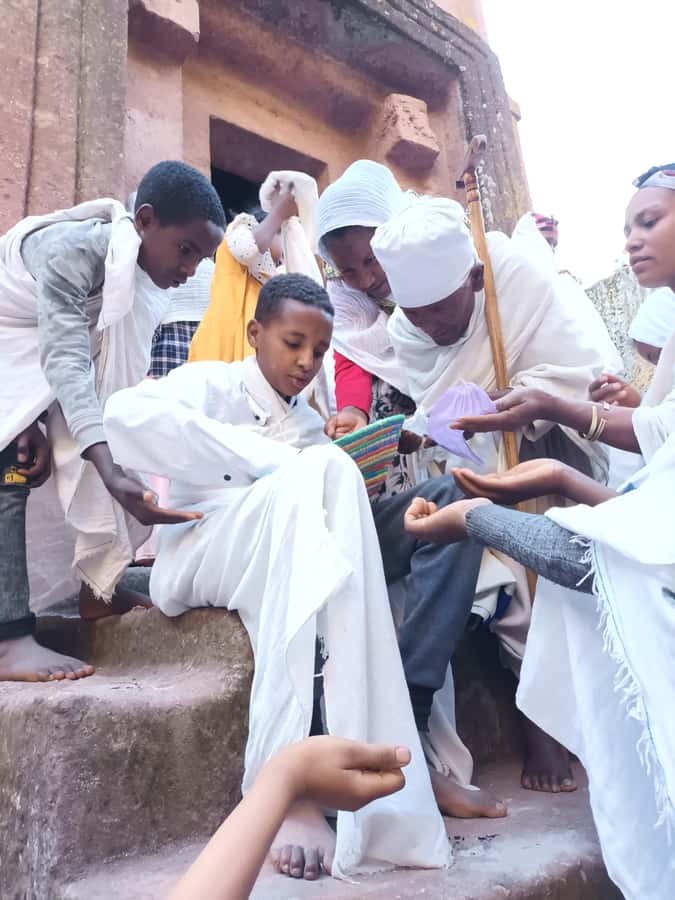
After the churches, the tone changes completely. You go to a family house for a traditional coffee ceremony and learn about local life and culture. This is one of the best parts of the program because it places the day’s grand monuments beside an ordinary social setting.
The ceremony is not just a drink at the end of a tour. Coffee has an important place in Ethiopian hospitality, and sitting in a family home gives you a chance to see how welcome is expressed beyond formal sightseeing. I like this contrast: in the morning, you study carved stone and religious architecture; later, you sit with a household and share a familiar local ritual.
The supplied information does not specify how long the ceremony lasts or exactly what food is served. That is worth asking before you go, especially if you have dietary needs. The coffee itself is included, but other food or personal purchases may not be.
This is also a good point to ask respectful questions. Your guide can help you understand what is happening and when to take part. The private format should make the exchange feel less hurried, though the exact family setting can vary.
Amhara music and dance in the evening
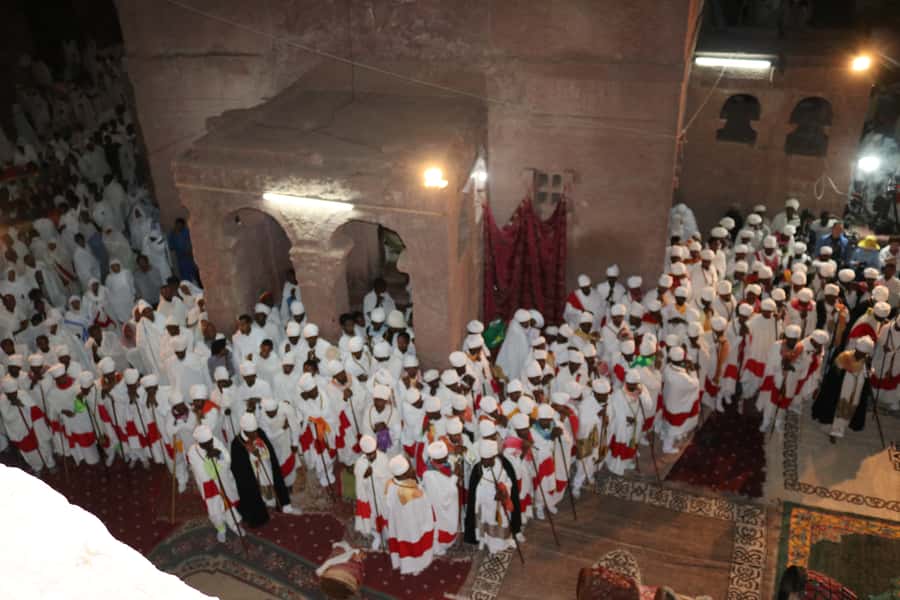
The final cultural stop features traditional Amhara music and dance in a bar. It gives you a lively ending after a day of quiet church visits and careful walking.
This part may suit you if you want more than monuments. You get a look at performance, music, and social life in the region, rather than ending the day immediately after Bet Giyorgis. The setting is informal, and the bar environment may not appeal to everyone, especially if you prefer a quiet finish or do not drink.
The program says you watch the performance, not that you must participate. I would treat it as an opportunity to observe and enjoy the atmosphere at your own pace. Since the details do not state whether food, drinks, or a performance fee are included, carry cash and ask your guide what is covered.
A return transfer takes you back to your chosen point in Lalibela. That is useful after a long day, particularly if you are tired from walking or carrying shopping and camera gear.
What the private format adds
A private group changes the rhythm of the day. You can ask for more explanation at Bet Abba Libanos, pause longer at Bet Giyorgis, or move on when you have seen enough of a smaller stop. You are not tied to strangers’ interests or a fixed group pace.
The private car also helps connect the church clusters with the lunch and evening portions. Hotel pickup and drop-off remove the need to arrange separate local transport, and the return transfer means you do not have to find your way back after the music and dance.
Still, private does not mean effortless. You will walk, stand, and negotiate uneven surfaces during the church visits. The tour lasts one full day, and the combination of religious sites, lunch, a home ceremony, and evening entertainment makes for a packed schedule.
The strongest guide feedback centers on Abebe. One detailed account praised his airport pickup, careful explanations, knowledge of Lalibela, and ties to people in the community. That same booking added a separate walk toward a mountaintop monastery, reaching a village after about an hour and a half rather than completing the full five-hour hike. That extra outing was not part of this listed day and required an additional fee, so ask clearly before agreeing to any add-on.
Practical advice for getting the most from the day
Start with the right clothes. Wear modest clothing that covers the knees and shoulders, and bring sandals as requested. Shorts, short skirts, and see-through clothing are not allowed.
Keep sunscreen and cash with you. Cash may be useful for lunch, drinks, personal purchases, or any optional activity. Bring your passport or ID card because it is listed as required equipment.
Do not assume the $342 price tells the whole story until you check what is included. The $100 church admission is included in the stated package, but one person did not realize that this fee was required. Lunch is not clearly included, and accommodation is excluded.
If you care about detailed history, request Abebe by name if he is available. The available feedback gives him the clearest praise, but guide assignment may depend on the operator’s schedule. English and Amharic are the stated guiding languages.
The tour allows free cancellation up to 24 hours before the start, and you can reserve now and pay later. Those terms help if your Lalibela plans are still shifting, but you should still check the available starting time for your date.
Who should book this Lalibela tour?
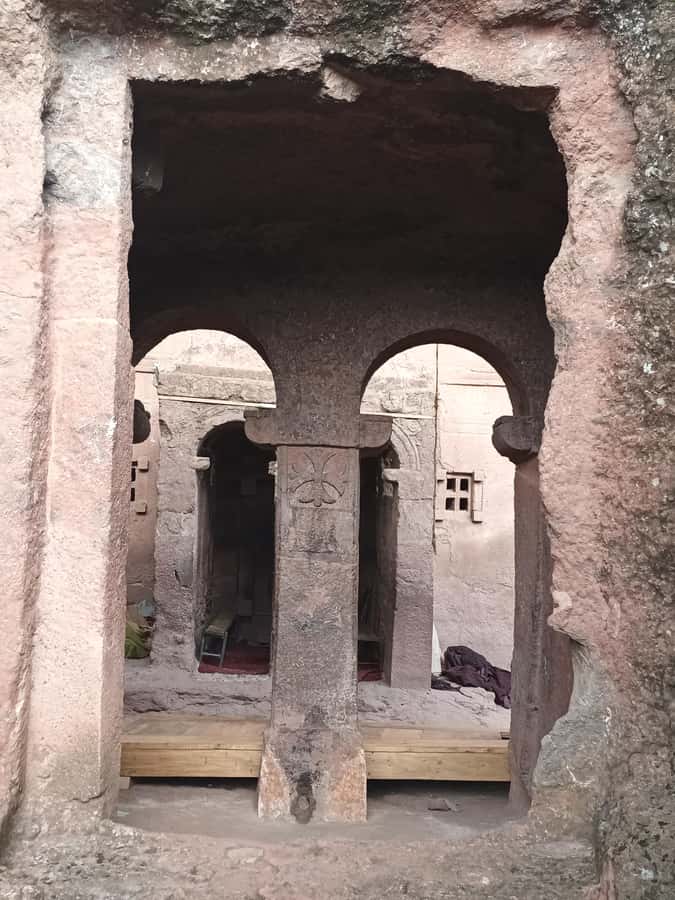
I would recommend it to anyone who wants Lalibela’s main churches covered in one organized day, especially first-time visitors with limited time. It suits you if you value private transport, detailed guiding, and a cultural stop that reaches beyond monuments.
It is also a good match if you want to see both major church clusters and Bet Giyorgis without arranging several separate visits. The coffee ceremony adds a personal touch, while the evening music and dance give you another view of local culture.
I would be more cautious if you dislike long sightseeing days, walking on uneven ground, or strict dress rules. Women should also know in advance that Bet Golgotha cannot be entered. If the US$100 church admission comes as an unwelcome surprise, confirm the complete cost before booking.
Should you book it?
Book this tour if you want a well-organized, private introduction to Lalibela with the major church groups, a family coffee ceremony, and Amhara music in one day. The included church ticket, private car, hotel transfers, and guide make the $342 price easier to justify, though lunch and accommodation remain separate.
For the best version of the experience, ask for Abebe, confirm the entrance fee and meal arrangements, and dress for a full day of respectful walking. If you prefer a slower visit with more time at each church, ask whether the schedule can be adjusted. If your priority is seeing the widest range of Lalibela’s religious sites and meeting local people without juggling transport, this is a strong choice.
FAQ
How long is the Lalibela churches tour?
The tour lasts one day and covers the church visits, lunch stop, coffee ceremony, evening music and dance, and return transfer.
What is the price of the tour?
The listed price is $342 per person.
Is the US$100 church entrance fee included?
Yes. The stated package includes the $100 entrance fee to the Lalibela churches.
Does the tour include hotel pickup and drop-off?
Yes. Pickup and drop-off at your chosen point in Lalibela are included.
Is transportation private?
Yes. Transportation is provided in a private car, and the tour is for a private group.
Which languages does the guide speak?
Live guiding is available in English and Amharic.
Can women enter Bet Golgotha?
No. Entry is not permitted for women at Bet Golgotha.
What clothing should I wear?
You should avoid shorts, short skirts, and see-through clothing. Modest clothing is required, and sandals are listed among the recommended items to bring.
Is accommodation included?
No. Accommodation is not included in the tour price.
More full-day trips
- Lalibela Full Day Guided Tours With Hotel & Airport Pickup
★ 5.0 · 8 reviews - Full Day lalībela church’s tour
★ 3.8 · 6 reviews - Full Day Tour To The 11 Rock Hewn Churches Of Lalibela
★ 5.0 · 5 reviews - Full Day Tour in Lalibela
★ 5.0 · 3 reviews
More coffee experiences
- Vintage Coffee Shops, Restaurants, Sightseeing in Addis Ababa
★ 5.0 · 17 reviews - Ethiopia coffee cupping class/Ethiopian food injera making
★ 5.0 · 10 reviews - Unique Ethiopian Cooking Class and Coffee Ceremony with a Local in Addis Ababa
★ 4.5 · 7 reviews - Coffee Cupping Tour in Addis Ababa
★ 5.0 · 5 reviews
Just added around Lalibela
- Lalibela 2-Day Eco Trekking Tour★ 5.0 · 3 reviews
- Full Day Tour in Lalibela★ 5.0 · 3 reviews
- Lasta Mountains: Highland Eco Trekking Tour in Lalibela★ 5.0 · 4 reviews
- Day Hike Around Lalibela★ 5.0 · 5 reviews
- Full Day Tour To The 11 Rock Hewn Churches Of Lalibela★ 5.0 · 5 reviews
- Fully guided city tours of Addis Ababa with hotel pickup★ 5.0 · 5 reviews
- 3 Days 2 nights Lalibela & Yemrehana Krestos seightseeeing tour★ 5.0 · 6 reviews
- Lalibela Backpacker tours★ 5.0 · 6 reviews
Rock-Hewn Churches of Lalibela, compared.
12 Days SIMIEN MOUNTAIN-LALIBELA-DANAKIL-TIGRAY CHURCHES
Read our review →
Tour 11 monolithic rock churches & museum in Lalibela & cave church with mummies
Read our review →
5 DAYS Lalibela, Axum, Tigray churches and Danakil
Read our review →
6 Days tour Package (Simien Mountains, Lalibela, and Danakil Depression)
Read our review →
Lalibela, Axum, Danakil and Omo Valley 8 DAYS
Read our review →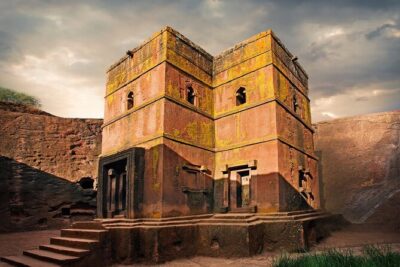
Browse the lists this tour appears in