
Reviewed · COFFEE EXPERIENCES
Ethiopian Culinary Tour – Market, Coffee Ceremony and More
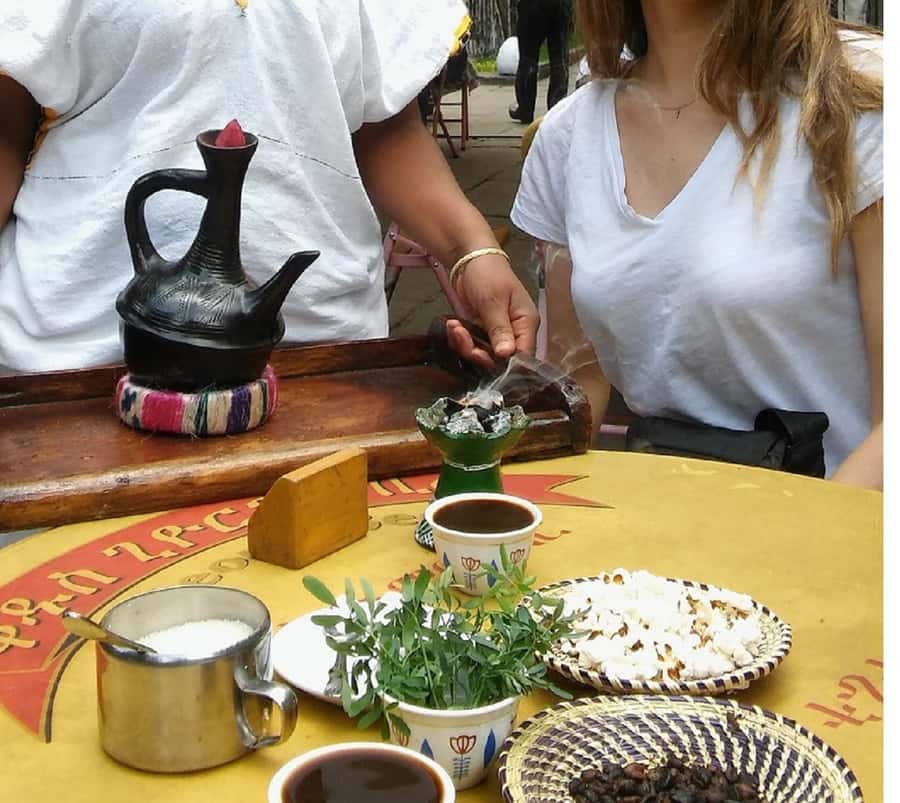
Coffee here begins with smoke, scent, and ceremony. This six-hour Addis Ababa tour brings together Merkato’s spice stalls and a traditional Ethiopian coffee ceremony, two excellent ways to understand the country through food. I love that the day is hands-on rather than just a series of tastings. You bake injera, learn the coffee process, and sample Tej, Ethiopia’s honey wine.
I also like the range of stops. Tomoca introduces you to Ethiopian Arabica beans through Italian-style coffee, while the market shows how ingredients move from stall to kitchen. The main caution is pace: six hours covers a lot, and Merkato can feel intense if you prefer quiet sightseeing. Still, with transport, lunch, a driver, fuel, and an English-speaking guide included, the $85 price is fair for a food-focused introduction to Addis Ababa.
Guides such as Desale, Seid, Zerefa, and others have been praised for explaining local customs, landmarks, and food with warmth. Pickup is available from hotels, homes, or the airport, which makes this a useful first or final day in the city.
In This Review
- Key points at a glance
- Why this food tour works in Addis Ababa
- Starting with Tomoca coffee and Ethiopian Arabica
- Walking through Merkato’s spice market
- Learning to bake spongy injera
- Taking part in the traditional coffee ceremony
- Lunch at Ethiopia’s first hotel
- Finishing with Ethiopian Tej
- Guides, driving, and the six-hour schedule
- Is $85 a fair price?
- Who should book this Addis Ababa food experience?
- Should you book it?
- FAQ
- How long is the Ethiopian Culinary Tour?
- Where does the tour take place?
- What is included in the $85 price?
- Is hotel pickup included?
- What kind of coffee will I try?
- Will I bake injera myself?
- What is Tej?
- Is lunch included?
- What language is the tour conducted in?
- What should I bring?
- Can I cancel the booking?
Key points at a glance
- Merkato spices and bargaining: Walk through Africa’s largest open-air market and see coffee, spices, food, and non-food goods sold side by side.
- A coffee ceremony you take part in: Learn the steps, roast beans, and taste coffee prepared in a traditional Ethiopian style.
- Your own injera attempt: Try baking the soft, spongy flatbread that forms the base of many Ethiopian meals.
- A taste of Tej: Visit a local honey-wine bar and sample Ethiopia’s traditional fermented honey drink.
- A broad Addis Ababa introduction: Your guide can point out city landmarks and explain local history while you travel between stops.
- Useful all-in pricing: The $85 fee covers six hours, transport, activities, lunch, water, and hot drinks.
Why this food tour works in Addis Ababa
Ethiopian food is not just a list of dishes. It is a way to understand farming, trade, hospitality, and daily life. This tour works because it connects all four.
You begin with ingredients at Merkato, see how food is prepared through the injera lesson, and then sit down to eat a buffet of local dishes. Coffee and Tej add two important social traditions. The result feels broader than a restaurant visit, but more focused than a general city tour.
I would choose this experience if you want to understand what you are eating in Ethiopia. You will not simply be handed a plate and told what it contains. You get a look at the market, the cooking process, and the ceremonies that give food its place in Ethiopian culture.
The day also gives you several settings. Merkato is crowded and commercial. The cooking stop is practical and participatory. The coffee ceremony is slower and more ceremonial. The Tej bar offers a relaxed finish. That change of mood helps keep six hours from feeling repetitive.
More coffee ceremonies:
Starting with Tomoca coffee and Ethiopian Arabica
The first coffee stop is at Tomoca, a well-known Addis Ababa coffee shop where you can try Italian-style coffee and macchiato made with Ethiopian Arabica beans. This is a smart opening because it gives you a familiar format before introducing the more traditional ceremony later.
The coffee has a useful connection to Ethiopia’s wider food culture. You are not tasting an anonymous drink. The beans are Ethiopian, but the preparation at Tomoca reflects the Italian influence found in Addis Ababa’s café culture. If you like espresso and macchiato, this stop gives you a quick point of comparison.
I would treat Tomoca as a short introduction rather than the main event. The traditional ceremony later in the day is where you spend more time learning about the process. Still, the contrast is worthwhile: one cup is served in an Italian-influenced café style, and the other comes through a slower Ethiopian ritual.
Hot drinks are included with lunch, but the tour description does not say that every drink or alcoholic purchase throughout the day is covered. Alcoholic drinks other than the included honey-wine tasting are not included, so bring that distinction to mind when planning your spending.
Walking through Merkato’s spice market
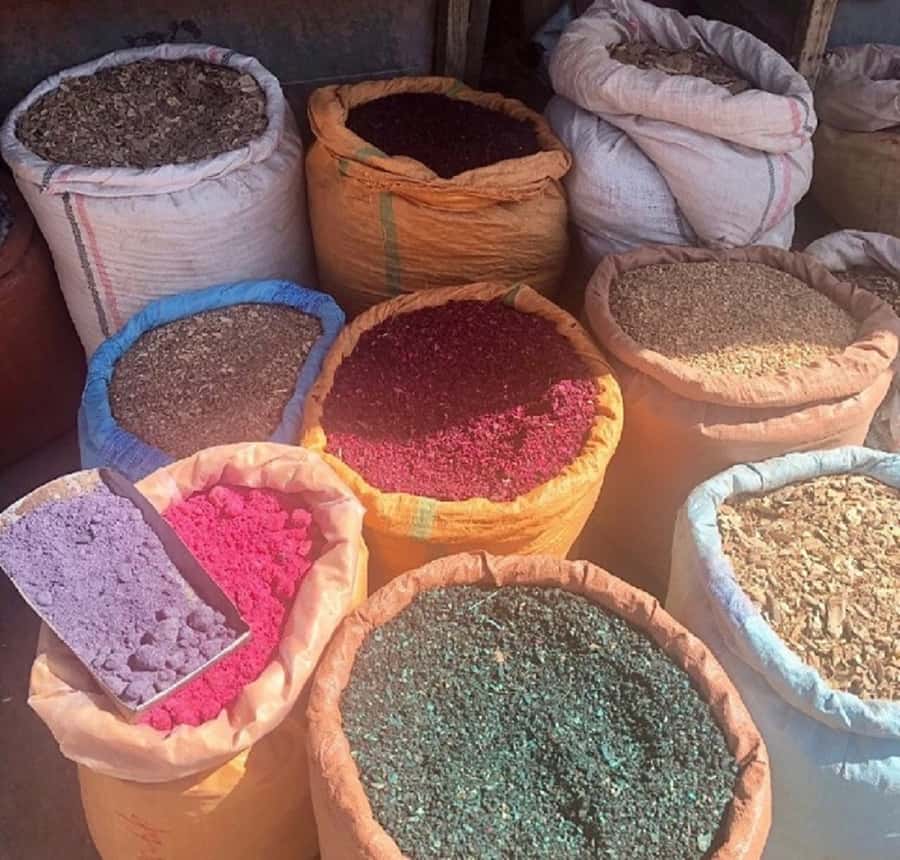
Merkato is the most visually demanding part of the day. It is described as the largest open-air market in Africa, and the tour takes you into its spice-trading area rather than keeping you on a coach looking from outside.
You can expect sacks, stalls, and dealers selling spices, coffee, food, and many non-food goods. One of the most useful details is that you are encouraged to bargain. This is not a polished food hall with marked prices and tidy displays. Your guide helps you understand the setting while you test your negotiating skills.
I like this stop because it shows the working side of Ethiopian cuisine. A restaurant meal tells you what the finished food tastes like. A spice market shows you the ingredients before they reach the pot. You get a better sense of how color, aroma, and texture begin the cooking process.
Merkato is also where you should manage your expectations. A large open-air market can be crowded, noisy, and demanding. Keep your passport or ID card with you because it is required for the tour, but carry only what you need for the day. The tour does not promise a set shopping list, so think of the market first as a cultural visit, with buying opportunities if something catches your eye.
The guide is important here. Seid was praised for explaining both food and city landmarks, while Desale was noted for answering questions about Ethiopia during the drive and at the stops. A good guide turns a confusing market walk into a readable story.
Learning to bake spongy injera
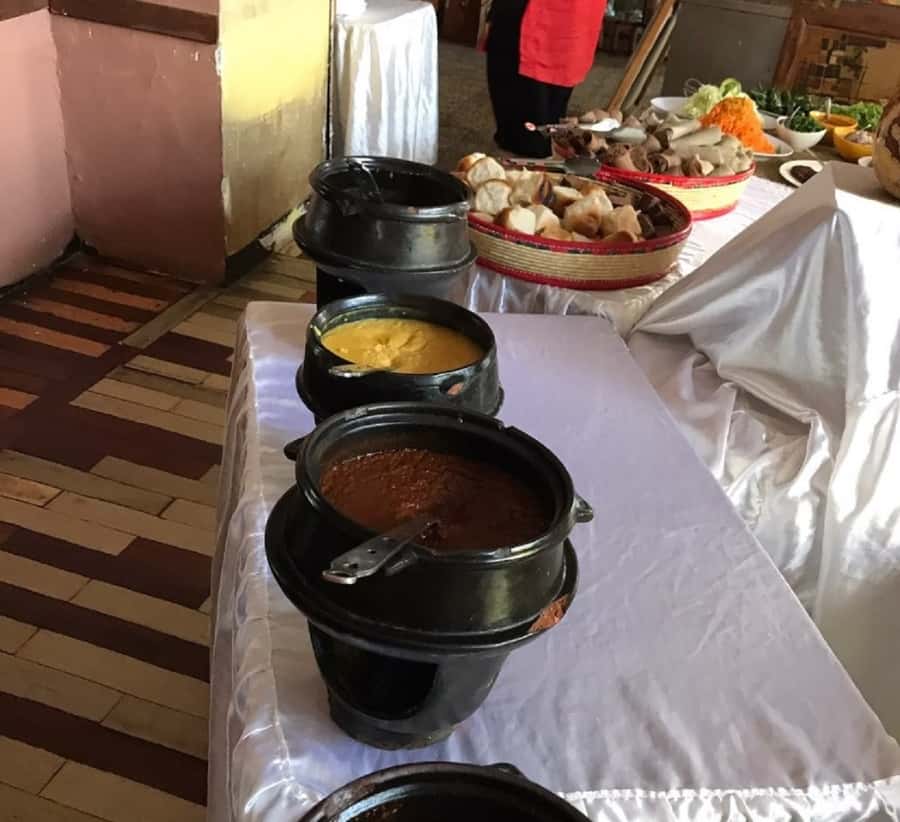
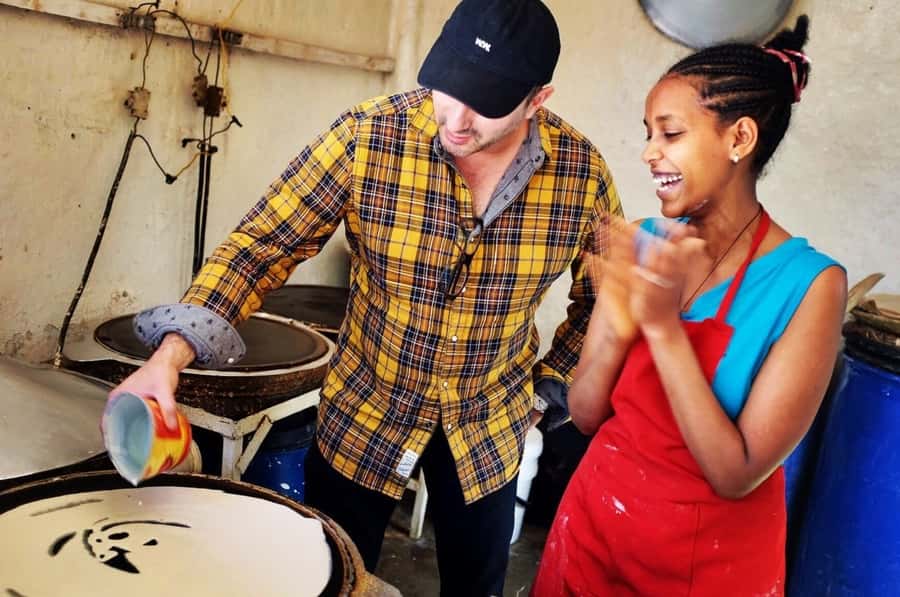
The injera lesson is the most hands-on cooking section. Injera is the soft, spongy Ethiopian flatbread used with many meals, and it serves as both food and utensil at the table.
You are shown the process step by step and then given the chance to try baking your own. Do not expect a professional cooking class with a printed recipe and a spotless demonstration kitchen. The value is in trying the technique and seeing why the bread has its distinctive texture.
This is a good activity for people who learn by doing. You may find that your first attempt is more educational than perfect. That is part of the fun. Afterward, you can try your creation with a typical Ethiopian spicy accompaniment, giving you an immediate link between the cooking lesson and the lunch that follows.
The injera stop also helps you understand the eating style. Ethiopian dishes are commonly served over injera, and pieces of the bread are used to pick up food. If you have never eaten this way, the class gives you a little confidence before the buffet.
The supplied details do not specify the exact cooking venue, the recipe, or how much time you spend at the stove. I would therefore see this as a cultural cooking experience rather than a full culinary course. You get participation, context, and a chance to taste your work, but not necessarily the skills to reproduce every dish at home.
More coffee experiences:
- Vintage Coffee Shops, Restaurants, Sightseeing in Addis Ababa
★ 5.0 · 17 reviews - Ethiopia coffee cupping class/Ethiopian food injera making
★ 5.0 · 10 reviews - Unique Ethiopian Cooking Class and Coffee Ceremony with a Local in Addis Ababa
★ 4.5 · 7 reviews - Coffee Cupping Tour in Addis Ababa
★ 5.0 · 5 reviews
Taking part in the traditional coffee ceremony

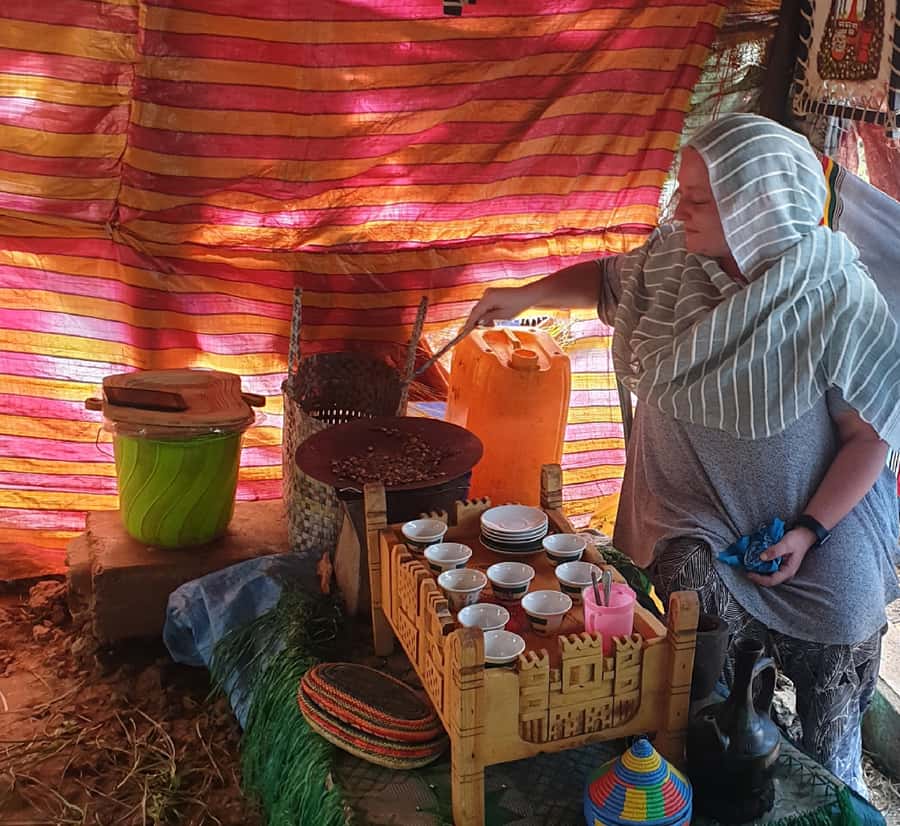
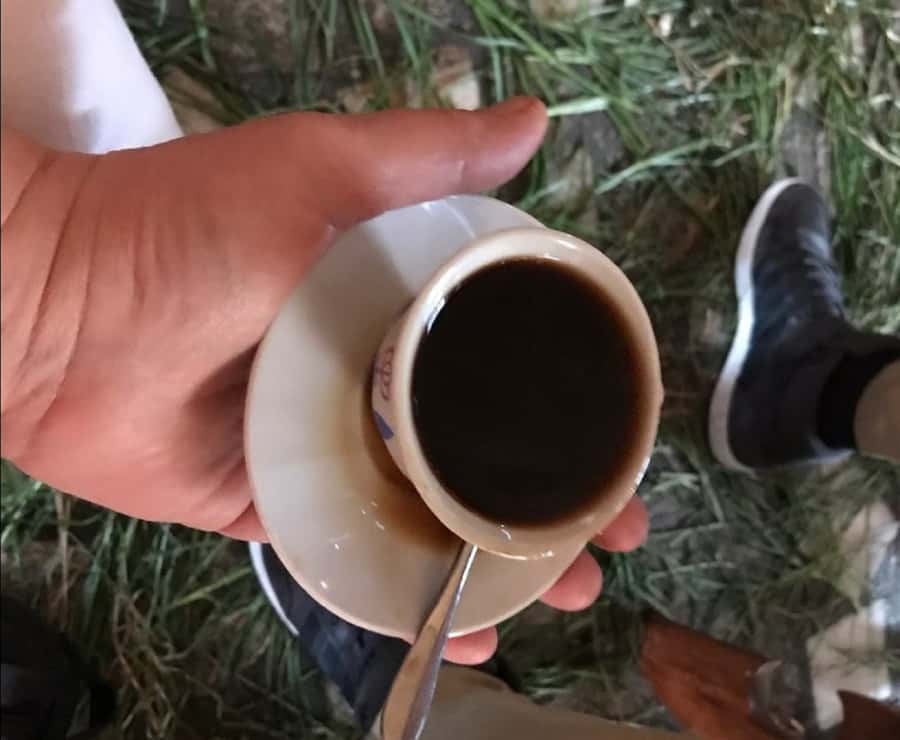
The coffee ceremony is the heart of the tour. Your guide demonstrates the steps and explains how Ethiopian coffee is prepared and served. You may also roast your own beans, according to the experience described by past participants.
That roasting element matters. It makes the ceremony more than a cup of coffee at the end of a sightseeing day. You get to follow the beans from their raw state toward the drink in your cup. The smell and preparation are part of the experience, not background decoration.
A traditional coffee ceremony is also about time and company. The process is slower than ordering a takeaway coffee, and that slower rhythm gives you space to ask questions. Andreas, one of the people who enjoyed the tour, specifically appreciated learning to prepare local food, roast beans, attend the ceremony, and taste the finished coffee.
I would not rush this part. If the market feels loud and crowded, the ceremony provides a calmer counterpoint. Ask your guide about the different preparation steps, the role of coffee in Ethiopian social life, and the difference between this method and the Tomoca macchiato.
The tour promises an English-speaking guide, and the strongest part of the experience appears to be the explanation around the food. The guide may also use the driving time to point out Addis Ababa landmarks and explain the areas you pass.
Lunch at Ethiopia’s first hotel
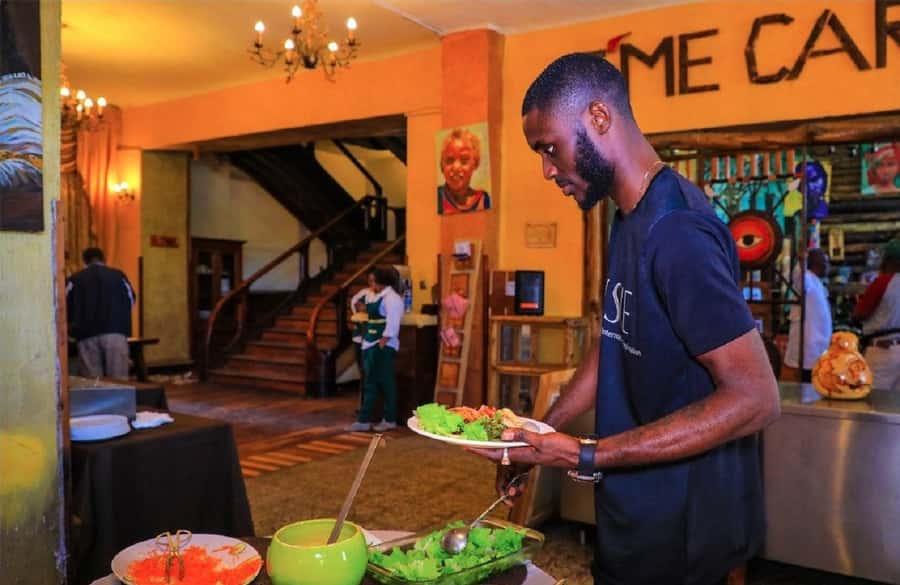
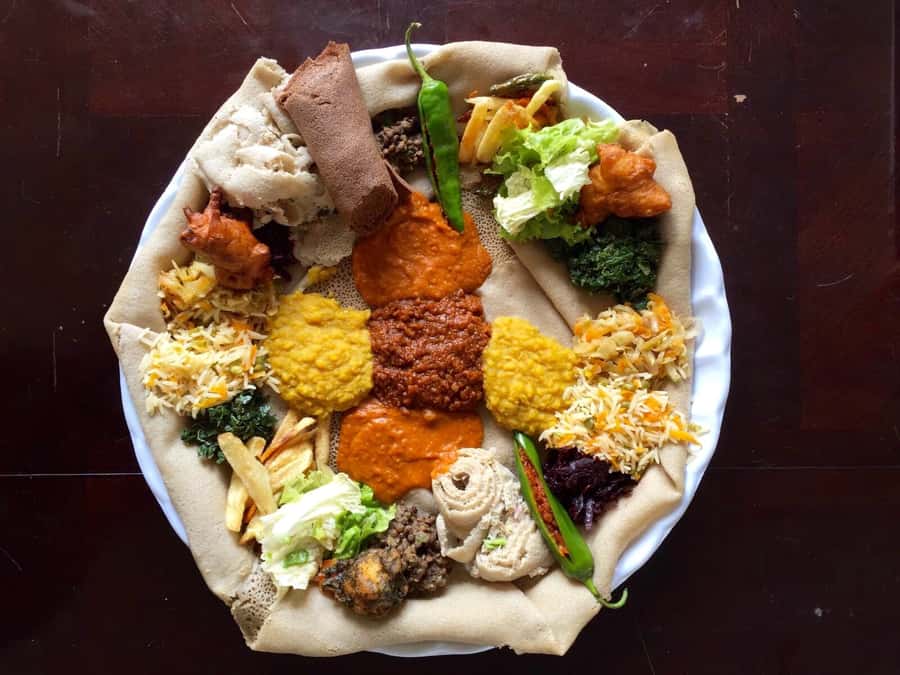
Lunch is served buffet style at the oldest hotel, described as the first Ethiopian hotel. You can sample a range of popular local dishes instead of choosing a single plate.
That format is useful if you are new to Ethiopian food. You can try several items in modest portions and return to the dishes you like. A vegetarian buffet is specifically described, so this part should suit people who want to sample plant-based Ethiopian cooking.
Lunch includes a bottle of water and hot drinks. The price also covers the meal, which helps the $85 fee make more sense. You are paying for transport and guiding, but you are not then facing a separate lunch bill at the main meal stop.
The main limitation is that the exact menu is not fixed in the supplied details. You should expect popular Ethiopian dishes, but not a guaranteed list of recipes. If you have allergies or strict dietary needs, tell the provider before booking and confirm what can be served.
I like the position of lunch in the day. By this point, you have seen spices, handled injera, and learned about coffee, so the buffet becomes a chance to connect those pieces. It is not simply fuel between attractions.
Finishing with Ethiopian Tej
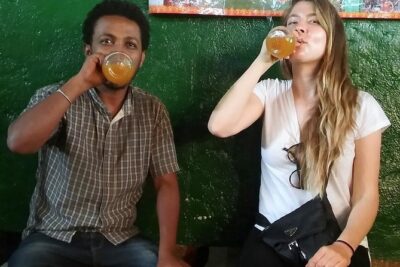
The final tasting takes place at a local Tej bar. Tej is a traditional Ethiopian honey wine similar to mead, made mainly from fermented honey.
This is a useful final stop because it introduces a drink many people will not have encountered before. You can taste samples and learn how Tej fits into local drinking culture. The tour description does not promise a full bar crawl or unlimited servings, so think of it as a focused tasting.
Alcoholic drinks other than the honey-wine experience are not included. That is a small but important cost detail. If you want anything else, you will pay separately.
I would also keep your own comfort in mind. Anyone avoiding alcohol should ask the guide about the tasting before taking part. The tour includes Tej samples, but it does not say that a non-alcoholic substitute is available.
Guides, driving, and the six-hour schedule
Pickup and drop-off are included anywhere in Addis Ababa, including hotels, private homes, and the airport. That is a strong practical feature in a city where arranging several separate rides can eat up time and add stress.
You are asked to wait in the hotel lobby for 15 minutes before or after the scheduled pickup time. The tour includes a car, driver, and fuel, and the guide travels with you in English.
The driving is not dead time. Seid and Desale were both praised for pointing out landmarks and explaining city history from the road. Zerefa was also described as friendly and open during conversations about different countries and cultures. Those details suggest that the guide can add value between food stops, not just lead you from door to door.
Six hours is long enough to cover the main activities, but the day is full. Merkato alone can absorb your attention, and the coffee ceremony rewards patience. If you want extended shopping, a long cooking lesson, and a leisurely lunch, this schedule may feel tight.
The experience takes place rain or shine. Wear practical clothing and shoes suitable for walking through a market. You should bring a passport or ID card, as requested by the operator.
Is $85 a fair price?
At $85 per person, this is a reasonable package if you want several Addis Ababa food experiences in one day. Transport, driver, fuel, guide, activities, lunch, water, and hot drinks are included.
The value is strongest for solo visitors or anyone staying briefly in Addis Ababa. Hiring separate transport to Merkato, arranging a cooking class, finding a coffee ceremony, and locating a Tej bar could cost more and require much more planning.
The price is less attractive if you mainly want a long market visit or a serious cooking course. You are paying for variety and convenience, not depth at one single stop. The experience is also better value if you appreciate the city commentary during the drives.
Free cancellation up to 24 hours before the start and reserve-now, pay-later booking make it easier to fit into a changing itinerary. Starting times depend on availability, so check the schedule before you commit.
Who should book this Addis Ababa food experience?
I would recommend it to first-time visitors who want a practical introduction to Ethiopian food and city life. It suits curious eaters, coffee fans, people interested in markets, and anyone who prefers activities over passive sightseeing.
It is also a good choice for visitors with only one free day in Addis Ababa. You get food, shopping culture, coffee, a traditional drink, lunch, and a little city orientation without arranging each part yourself.
Families and mixed-interest groups may also find the variety useful, though the market environment may be tiring for younger children. The supplied information does not specify group size, child pricing, or accessibility details, so ask the operator directly if those points matter to your plans.
I would be less likely to choose it if I wanted a quiet, slow day or a detailed cooking curriculum. The market is active, the schedule covers several locations, and the injera lesson is a short practical activity rather than a full chef-led course.
Should you book it?
Book this tour if you want a full taste of Addis Ababa in six hours, with the city’s food traditions explained as you go. The best reasons are the hands-on injera attempt, the coffee ceremony with bean roasting, and the chance to see spices at Merkato before sampling Ethiopian dishes at lunch.
The main tradeoff is breadth over leisure. You will cover many experiences, but you will not spend all day at one market, kitchen, or café. For $85, with pickup, transport, lunch, and an English-speaking guide included, I think the balance is good.
If you choose it, bring your ID, allow flexibility around pickup, and arrive ready to taste rather than simply watch. The tour is at its best when you ask questions, try the bread, take part in the coffee steps, and let the guide connect the stops.
FAQ
How long is the Ethiopian Culinary Tour?
The tour lasts six hours.
Where does the tour take place?
The experience takes place in Addis Ababa, Ethiopia.
What is included in the $85 price?
The price includes pickup and drop-off in Addis Ababa, an English-speaking guide, a car and driver, fuel, activity fees, lunch, a bottle of water, and hot drinks.
Is hotel pickup included?
Yes. Pickup and drop-off are included from hotels, homes, or the airport in Addis Ababa.
What kind of coffee will I try?
You will visit Tomoca for Italian-style coffee and macchiato made with Ethiopian Arabica beans. You will also take part in a traditional Ethiopian coffee ceremony.
Will I bake injera myself?
Yes. The tour includes a step-by-step demonstration and an opportunity to try baking Ethiopian injera bread.
What is Tej?
Tej is a traditional Ethiopian honey wine similar to mead. It is made mainly from fermented honey, and the tour includes samples at a local Tej bar.
Is lunch included?
Yes. Lunch is a buffet-style meal at the first Ethiopian hotel, also described as the oldest hotel, with samples of popular local dishes.
What language is the tour conducted in?
The tour is conducted in English with a live English-speaking guide.
What should I bring?
You should bring a passport or ID card. The tour takes place rain or shine, so practical clothing for the weather is useful.
Can I cancel the booking?
Yes. You can cancel up to 24 hours in advance for a full refund. You can also reserve now and pay later.
More shopping trips
- Addis Ababa Half Day Shopping Tour
★ 5.0 · 3 reviews
More market visits
- Addis Ababa +Mount Entoto View Point,Museums Palace Market Tours
★ 5.0 · 42 reviews - Go wheretheLocalsgo, Eatwhat thelocalseat!open Market&More Tours
★ 5.0 · 33 reviews - Addis Mercato Market
★ 5.0 · 22 reviews - Addis Ababa: Entoto hill and Mercato Market layover tour
★ 5.0 · 5 reviews
Just added around Addis Ababa
- 10 Days in Northern Ethiopia Tours★ 4.5 · 3 reviews
- Day Trip to Tiya UNESCO Site & Melka Kunture Archaeological Site★ 4.5 · 3 reviews
- Two days Lake Wenchi and Menagesha Forest★ 5.0 · 3 reviews
- 6 days 5 nights Addis Abeba sightseeing & Lalibela Rock-Hewn Churches★ 5.0 · 3 reviews
- Addis Ababa Half Day Shopping Tour★ 5.0 · 3 reviews
- 6 days Omo valley cultural Tour★ 5.0 · 3 reviews
- 12- Day Historical Route of Ethiopia★ 5.0 · 3 reviews
- Addis Ababa City Tour★ 4.5 · 3 reviews
Coffee Experiences, compared.
Ethiopian Culinary Tour – Market, Food, Coffee Ceremony & more
Read our review →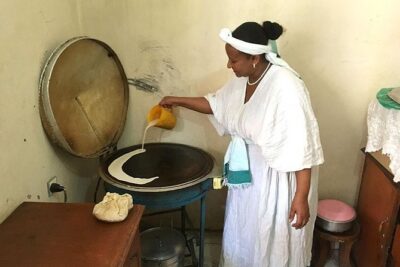
Market Tour and Cooking Class with a Coffee Ceremony at a Home in Addis Ababa
Read our review →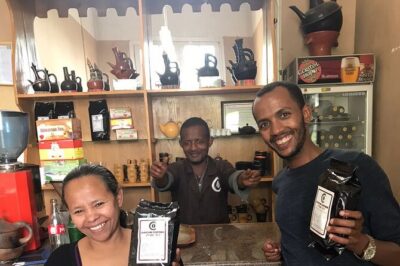
Vintage Coffee Shops, Restaurants, Sightseeing in Addis Ababa
Read our review →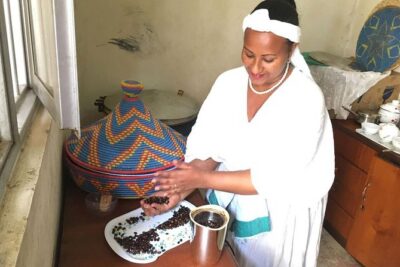
Ethiopian Cooking Class and Coffee Ceremony with a Local in Addis with transfers
Read our review →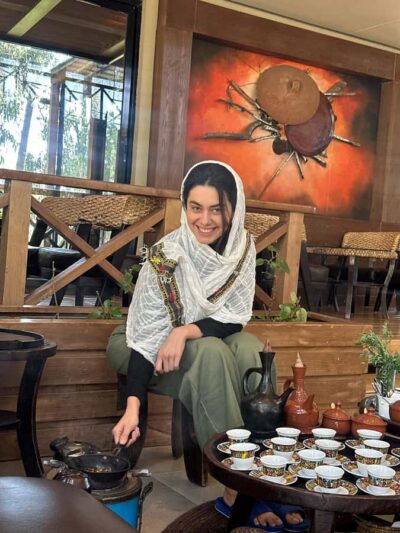
Ethiopia coffee cupping class/Ethiopian food injera making
Read our review →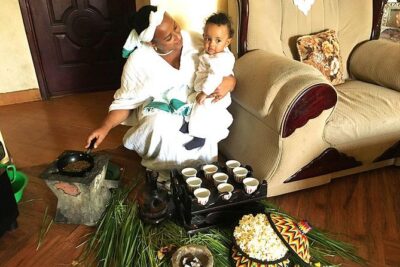
Unique Ethiopian Cooking Class and Coffee Ceremony with a Local in Addis Ababa
Read our review →
Addis Ababa City Experience : Markets, Coffee & Local Life
Read our review →
Lalibela: Churches Full-Day Private Tour w/Coffee Ceremony
Read our review →Browse the lists this tour appears in