

Reviewed · MARKETS
Go wheretheLocalsgo, Eatwhat thelocalseat!open Market&More Tours
Come hungry, leave curious. This private Addis Ababa tour brings together the National Museum, local food, Ethiopian coffee, major markets, and city sights in one flexible outing. I like the private format, which lets you set the pace with a guide rather than follow a large group. I also like the generous food focus, with vegetarian dishes, meat stews, juices, and a traditional coffee tasting included.
The main consideration is time. At four to seven hours, this is not a quick airport stop unless you arrange a shorter version in advance. Mercato closes on Sundays, and the National Museum closes on Mondays, so your travel date affects the route. The market areas can also be busy and crowded, which is part of the experience but may not suit everyone.
In This Review
- Key Points Before You Book
- Why This Addis Ababa Tour Works Well
- Starting at the National Museum and Meeting Lucy
- Finding Coffee, Leather, and Local Goods at Mercato
- Sunday Alternative: Shiro Meda Market
- Eating at Yobez Traditional Restaurant
- Tomoca Coffee in Piazza
- The Lion of Judah and Addis Ababa City Views
- How the Private Vehicle Changes the Day
- Who Will Get the Most From This Experience
- Cancellation, Group Size, and Practical Planning
- Should You Book This Addis Ababa Tour?
- FAQ
- How much does the tour cost?
- How long does the tour last?
- Can I arrange pickup?
- Is the tour suitable for vegetarians and vegans?
- What happens if I book on Sunday?
- Is the National Museum open every day?
Key Points Before You Book

- Lucy at the National Museum: See the famous 3.2-million-year-old Australopithecus afarensis fossil and learn why Ethiopia matters so much to human evolution.
- Three food stops in one outing: Expect Ethiopian dishes, fresh juices, coffee, and a meal that can include both vegetarian and nonvegetarian specialties.
- A guide-led visit to Mercato: The open-air market is easier to approach with local help, especially if you want coffee, leather, jewelry, or small gifts.
- Sunday plans change: Mercato is closed on Sunday, so the route uses Shiro Meda Market instead.
- Historic coffee at Tomoca: The Piazza branch dates to 1953 and serves Ethiopian black coffee, coffee with milk, and roasted coffee to take away.
- Good for a stopover: Airport or hotel pickup is offered, and one published experience involved a three-hour layover outing with guide Yonas.
Why This Addis Ababa Tour Works Well

Addis Ababa can feel like several cities at once. It is a national capital, a major trading center, a home for ancient Christian traditions, and a place where coffee is treated with real ceremony. A private tour helps connect those pieces without making you spend your limited time working out every transfer yourself.
The route also has a useful balance. The National Museum gives you context. Mercato or Shiro Meda shows daily commerce and local shopping. Yobez Traditional Restaurant handles the main food stop, while Tomoca adds one of the city’s best-known coffee addresses. The Lion of Judah provides a brief symbolic stop tied to Ethiopia’s monarchy.
At $71.25 per person, the value depends on how much of the route you complete. You are paying for a private guide and driver, an air-conditioned vehicle with onboard Wi-Fi, museum admission, food tasting, coffee, fruit juices, and market transport. For a solo visitor or a couple on a short schedule, that can be fair because the cost includes several separate activities. For a larger private party of up to eight people, the per-person price may feel stronger still.
The food is the real selling point. You are not simply taken to one restaurant and sent on your way. The experience is designed around trying several types of Ethiopian food, including fasting-style vegetarian dishes and meat options such as doro wat. If you have never eaten from a shared injera platter, this is a useful introduction with a guide nearby to explain what you are tasting.
More market visits:
- Ethiopian Culinary Tour – Market, Food, Coffee Ceremony & more
★ 5.0 · 65 reviews - Addis Ababa +Mount Entoto View Point,Museums Palace Market Tours
★ 5.0 · 42 reviews - Market Tour and Cooking Class with a Coffee Ceremony at a Home in Addis Ababa
★ 5.0 · 32 reviews
Starting at the National Museum and Meeting Lucy
The National Museum of Ethiopia gives the day a strong opening. The most famous object is Lucy, the partial skeleton of Australopithecus afarensis discovered in Ethiopia and dated to about 3.2 million years ago. Seeing Lucy helps put the country’s role in human evolution into clear focus.
The museum is not only about fossils. Its historical section covers the rise and fall of the Aksumite Empire, the influence of the Ethiopian Orthodox Church, and major stages of modern Ethiopian history. You can also see ancient paintings, sculptures, and more recent artistic work.
A second-floor collection presents clothing, tools, and household objects from different parts of Ethiopia. That matters because Addis Ababa is a meeting place for many cultures, and the displays offer a quick introduction before you head into the markets.
The visit lasts about one hour, and admission is included. Check your date carefully: the museum is closed on Monday. If the museum is a priority, do not assume that a Monday pickup will include it.
One hour is enough for a useful overview, but not for a slow study of every display. If you enjoy museums and want to read everything, you may find this stop brief. If you want an accessible introduction before the food and shopping, the timing works well.
Finding Coffee, Leather, and Local Goods at Mercato
Mercato is the main shopping stop when the tour runs from Monday through Saturday. This enormous open-air market is made up of lanes and stalls selling local products, food, clothing, and household goods. The experience is less about polished displays and more about seeing how commerce works in Addis Ababa.
Your guide can point you toward Ethiopian coffee, jewelry, leather goods, and other products. The tour also includes stops around Piazza, an old Tomoca coffee shop, Zebra Gallery Shop, the Stadium area, and leather shops. That gives you more than one shopping zone, although the exact time at each place can vary with traffic and your interests.
You should think of Mercato as an active market, not a quiet craft center. It may feel crowded and visually intense. That is precisely why a private guide has value here. You can ask what an item is, compare products, and decide where to spend your time instead of wandering without a plan.
The market portion is listed at about two hours. Admission is included, and the tour includes walking through the open-air market. Wear comfortable shoes and keep your shopping list realistic. Coffee, scarves, small jewelry, leather goods, and textiles are practical choices because they are easy to carry and connect directly to local production.
The guide handles the arrangements, but you still need to make your own buying decisions. Ask about prices before committing, and do not feel obliged to purchase at every stop. A private tour should give you room to browse, not pressure you into shopping.
Sunday Alternative: Shiro Meda Market

Mercato is closed on Sunday, so the route changes to Shiro Meda Market. This is an important detail to check before booking because the two markets offer different experiences.
Shiro Meda is known for handwoven Ethiopian cotton clothing and textiles. You might find Ethiopian wedding dresses, women’s clothing, scarves, tablecloths, bed covers, T-shirts, necklaces, earrings, and other small gifts. The market is near the US Embassy and is especially useful if you want fabric-based souvenirs.
The stop lasts about 45 minutes and has no separate admission charge. That is enough time for focused browsing, but not a long textile-shopping session. If you want to buy clothing or home textiles, tell your guide early so your time is used well.
Sunday visitors do not receive the full Mercato experience, but Shiro Meda is not merely a backup with nothing to offer. It gives you a more focused look at Ethiopian weaving and clothing. I would choose the Sunday route if textiles interest you, but I would not book on Sunday expecting the same market experience as the weekday schedule.
More shopping trips:
- Addis Mercato Market
★ 5.0 · 22 reviews - Vintage Coffee Shops, Restaurants, Sightseeing in Addis Ababa
★ 5.0 · 17 reviews - Ethiopian Culinary Tour – Market, Coffee Ceremony and More
★ 5.0 · 10 reviews - Addis Ababa: Entoto hill and Mercato Market layover tour
★ 5.0 · 5 reviews
Eating at Yobez Traditional Restaurant
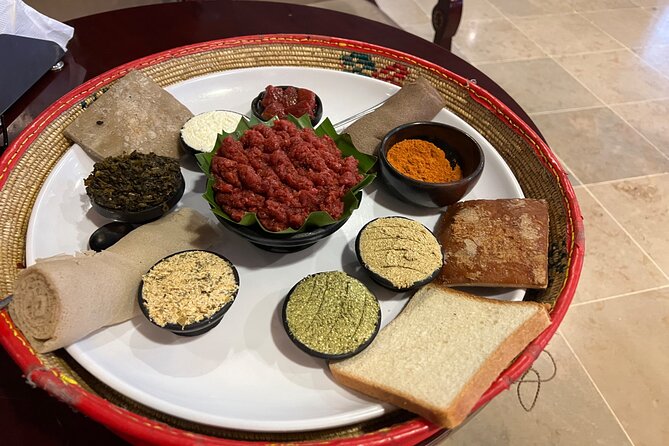
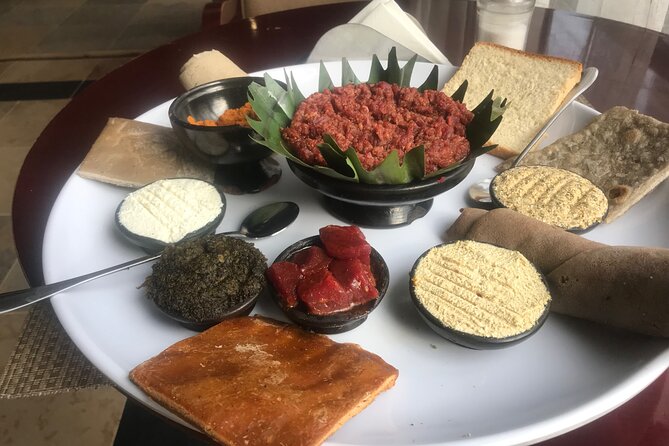
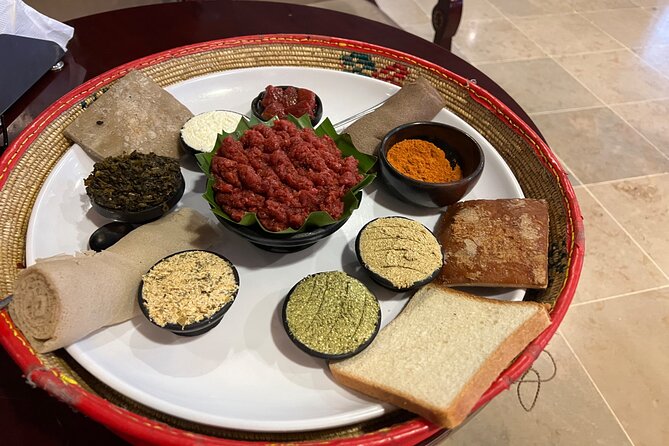
The main meal at Yobez Traditional Restaurant is the heart of the tour. Ethiopian food works especially well for a guided tasting because one shared platter can introduce you to many flavors and textures at once.
The vegetarian selection centers on dishes common during the fasting season. You may be served cabbage, potatoes, beans, lentils, and chickpeas, along with other vegetable preparations. These foods are generally eaten with injera, the sour, soft flatbread used to scoop up the meal.
Meat eaters can try doro wat, a spicy chicken stew made with berbere, caramelized onions, spiced local butter, and hard-boiled eggs. The seasoning can include pepper, cayenne, garlic, ginger, and other spices. Doro wat is one of Ethiopia’s best-known dishes, and this is a good place to try it as part of a wider meal rather than as an isolated plate.
Vegetarians are well served here. The tour specifically includes vegan and nonvegetarian food options, so you can enjoy a full meal without treating the vegetarian choices as an afterthought. If you eat meat, you can compare the vegetable dishes with chicken stew and see how much flavor Ethiopian cooking builds without relying on meat.
The restaurant stop lasts about 48 minutes. That is enough for a meal, but it may feel short if you want to linger over every dish. The larger tour includes additional food and drink tastings, so the whole day is not limited to this one stop.
The published price includes national food tasting, but it does not include tips for the driver or guide. Bring some local cash if you want to thank the guide at the end.
Tomoca Coffee in Piazza
Tomoca Coffee adds a compact but memorable stop. The Piazza location has been serving coffee since 1953 and is identified as the oldest coffee shop in Ethiopia.
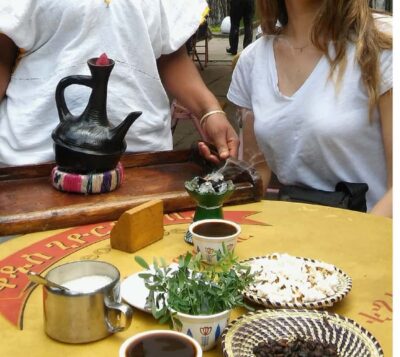
You can order Ethiopian coffee black, with milk, or as a macchiato. You can also buy roasted coffee or ground coffee to take home. The stop lasts about 15 minutes, so this is a quick tasting rather than a long café visit.
That short timing can be a benefit. After a meal and a market walk, fifteen minutes gives you a pause without slowing the whole route. It is also useful for anyone who wants to bring Ethiopian coffee home but does not know where to start.
One published account of the experience described a three-hour layover outing that included vegetarian injera, coffee at the original Tomoca, and a drive around the city with Yonas. That makes the tour especially appealing for a stopover, but you should request a shorter plan directly if your airport schedule is tight. The standard experience can run as long as seven hours.
The Lion of Judah and Addis Ababa City Views
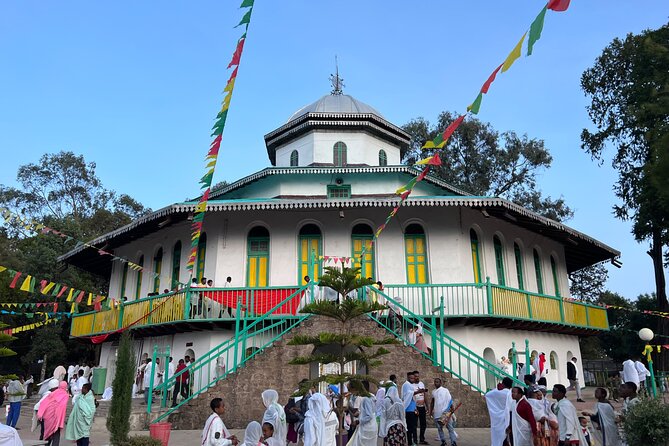
The Lion of Judah stop takes about 15 minutes. The symbol is linked to the biblical tribe of Judah and to Jesus Christ, and it was also used to represent the Ethiopian monarchy, particularly Emperor Haile Selassie.
This is a brief stop, but it gives the day a useful political and cultural reference point. After Lucy, Aksum, Ethiopian Orthodox traditions, and the markets, the Lion of Judah helps connect Ethiopia’s modern national identity with its royal past.
Do not expect a long monument visit. The stop is short and works best as part of the wider city drive. If you are mainly interested in food and shopping, it will not take much time away from those priorities.
How the Private Vehicle Changes the Day
Pickup is offered, and you can also meet at a designated meeting point. The vehicle is air-conditioned and includes Wi-Fi, which matters in Addis Ababa if you are moving between several stops and want a break from the city streets.
The private format is limited to a maximum of eight people. That is small enough for direct conversation and flexible timing, though the experience will feel different for two people than for a full group of eight. You can ask to slow down at a market, spend less time shopping, or focus more on food, provided the guide can fit your wishes into the day.
The tour lasts roughly four to seven hours. That broad range reflects the number of stops and the flexible design. Traffic, meal timing, shopping, and your pickup location may affect the final length, so avoid scheduling a tight onward connection unless you have confirmed the timing.
Airport pickup is a major advantage for a long layover. Still, leave a safe margin before your next flight. A three-hour layover outing is specifically possible, but the full route is longer and should not be treated as a guaranteed three-hour excursion.
Who Will Get the Most From This Experience
I would recommend this tour to first-time visitors who want several sides of Addis Ababa in one day. It is also a good choice for solo visitors, couples, and small groups who prefer a guide and vehicle rather than arranging separate museum, market, restaurant, and coffee visits.
Food-focused visitors should be near the front of the line. You get vegetarian, vegan, and meat dishes, plus fresh juices and Ethiopian coffee. People who enjoy shopping for textiles, leather, coffee, and jewelry will also find the route useful.
This may be less suitable if you want a quiet, slow museum day or a highly specialized history tour. The museum visit is only about an hour, and the market areas can be crowded. It is also not ideal for someone who dislikes trying unfamiliar foods or who wants complete control over restaurant choice.
The timing rules matter. Avoid Monday if the National Museum is essential. Avoid Sunday if Mercato is essential, or choose Sunday specifically if Shiro Meda’s textiles appeal to you more.
Cancellation, Group Size, and Practical Planning
You receive confirmation at booking, and most people can participate. Free cancellation is available up to 24 hours before the experience starts. Canceling or changing the booking within 24 hours does not qualify for a refund, and the local cutoff time applies.
The experience requires a minimum number of participants. If that minimum is not met and the tour is canceled, you are offered another date or experience, or a full refund.
You should arrive ready to eat and walk. Comfortable footwear will help at Mercato, and a small amount of space in your luggage is useful if you plan to buy coffee, textiles, leather, or gifts. Since tips are not included, set aside money for the driver or guide.
Should You Book This Addis Ababa Tour?
Book it if you want food, markets, and major city sights handled in one private outing. The combination of Lucy, Mercato or Shiro Meda, Yobez Restaurant, Tomoca Coffee, and the Lion of Judah gives you a broad first look at Addis Ababa without requiring several separate bookings.
The strongest reasons to choose it are the flexible format, pickup option, food range, and coffee focus. The main limits are the long possible duration, short museum and coffee stops, Sunday and Monday closures, and the busy nature of the markets.
If you are visiting Addis Ababa on a layover, ask for a shortened route and confirm the return timing before you pay. If you have a full day, keep the longer format and allow yourself time to enjoy the meal and market rather than racing from stop to stop.
FAQ
How much does the tour cost?
The listed price is $71.25 per person.
How long does the tour last?
The experience lasts approximately four to seven hours, depending on the route and timing.
Can I arrange pickup?
Yes. You can request pickup, or meet the guide at the designated meeting spot.
Is the tour suitable for vegetarians and vegans?
Yes. The food tasting includes vegetarian and vegan dishes, as well as nonvegetarian options.
What happens if I book on Sunday?
Mercato Market is closed on Sunday. The tour uses Shiro Meda Market instead, where you can shop for Ethiopian textiles, clothing, scarves, jewelry, and small gifts.
Is the National Museum open every day?
No. The National Museum of Ethiopia is closed on Monday. Admission is included when the museum is open and included in your route.
Just added around Addis Ababa
- 10 Days in Northern Ethiopia Tours★ 4.5 · 3 reviews
- Day Trip to Tiya UNESCO Site & Melka Kunture Archaeological Site★ 4.5 · 3 reviews
- Two days Lake Wenchi and Menagesha Forest★ 5.0 · 3 reviews
- 6 days 5 nights Addis Abeba sightseeing & Lalibela Rock-Hewn Churches★ 5.0 · 3 reviews
- Addis Ababa Half Day Shopping Tour★ 5.0 · 3 reviews
- 6 days Omo valley cultural Tour★ 5.0 · 3 reviews
- 12- Day Historical Route of Ethiopia★ 5.0 · 3 reviews
- Addis Ababa City Tour★ 4.5 · 3 reviews
Markets, compared.

Ethiopian Culinary Tour – Market, Food, Coffee Ceremony & more
Read our review →
Market Tour and Cooking Class with a Coffee Ceremony at a Home in Addis Ababa
Read our review →
Ethiopian Culinary Tour – Market, Coffee Ceremony and More
Read our review →
Browse the lists this tour appears in