
Reviewed · OMO VALLEY TRIBAL TOURS
Omo Valley 5 Days
Five days here brings Ethiopia close. This tour pairs Karo, Hamer, and Mursi village visits with a Dorze weaving stop and a Lake Chamo boat ride. I like the mix of living culture and wildlife, and I like that a local guide, scout, 4WD vehicle, village payments, and entrance fees are built into the price.
The main catch is the amount of road time. Several days run for about seven hours, domestic flights are not included, and one account describes poor communication and an unexpectedly group-style trip after paying for a tailored tour. Confirm the schedule, group size, and flights before paying.
In This Review
- Key points to know before you go
- What this five-day route really offers
- Day 1: Addis Ababa to Arba Minch and Konso
- Day 2: Karo body painting and a Hamer village
- Day 3: Key Afar, Jinka, and a small museum
- Day 4: Mago National Park and a Mursi village
- Day 5: Dorze weaving and the Lake Chamo boat ride
- The vehicle, guides, and group size
- Accommodation, meals, and what is not covered
- Who will get the most from this trip
- Should you book the Omo Valley five-day tour?
- FAQ
- Where does the Omo Valley five-day tour begin?
- Are domestic flights included in the price?
- What type of vehicle is used?
- What is the maximum group size?
- Is hotel accommodation included?
- How many breakfasts are included?
- Is the Lake Chamo boat trip included?
- Are camera and video fees included?
- What is the cancellation policy?
Key points to know before you go
- Karo body painting at Kolcho: Visit a village beside the Omo River, where traditional body decoration remains a major part of cultural identity.
- Hamer village life: See mud, wood, and thatch homes, red-dyed plaited hair, leather clothing, and a community arranged around an extended family.
- Mursi visit in Mago National Park: A long mountain drive leads to a village known for clay lip plates, a custom now used less often.
- Dorze homes and weaving: In the Chencha mountains, tall beehive-shaped houses and cotton and wool weaving add a different cultural angle.
- Lake Chamo by boat: Look for large crocodiles and possibly hippopotamuses before your return flight to Addis Ababa.
- Small-group potential, but verify it: The advertised maximum is 12 people, though the exact group arrangement should be confirmed in writing.
What this five-day route really offers
The Omo Valley is not a quick sightseeing circuit. It is a demanding trip through dry plains, mountains, river country, villages, and protected areas. You spend long stretches in a Toyota Land Cruiser, then step out into places where local customs, clothing, architecture, and family life remain central.
That contrast is the reason I find the route worthwhile. You are not simply checking off monuments. You are seeing how different communities adapt to their surroundings and express identity through dress, body painting, houses, farming, weaving, and ceremony.
The package costs $1,153.85 per person. That is a serious sum, but the value improves when you consider what is covered: accommodation, bed and breakfast, private ground transfers in a 4WD vehicle, local guides, a scout when needed, village and elders payments, admission fees, and the Lake Chamo boat trip. The price does not include domestic or international flights, drinks, laundry, phone and internet costs, or camera and video fees.
You should also know that this is a packed five days. The route includes flights between Addis Ababa and Arba Minch, long drives, early starts, rougher rural roads, and several cultural visits. I would choose it for access and convenience, not for a slow holiday.
More Omo Valley tours:
- 6 Days Omo Valley Tribes Tours From Addis Ababa
★ 5.0 · 33 reviews - 3 Days Omo Valley Tour
★ 5.0 · 24 reviews - Danakil Depression, Lalibela, Omo Valley and Simien Mountains
★ 5.0 · 23 reviews
Day 1: Addis Ababa to Arba Minch and Konso

The trip begins with a flight from Addis Ababa to Arba Minch, followed by a drive to Konso. This saves a huge amount of overland time and gets you quickly into southern Ethiopia.
Konso is used as an overnight base on the route. The following days continue through dry country and fertile hills, so this first transfer gives you a useful change of setting almost at once. Since the schedule does not state the exact flight time or accommodation property for this night, confirm both before departure.
The first day is mainly a transfer day. Do not expect a full program of village visits after landing. If you are prone to motion sickness, the combination of flying and a long 4WD drive is worth planning for.
Day 2: Karo body painting and a Hamer village
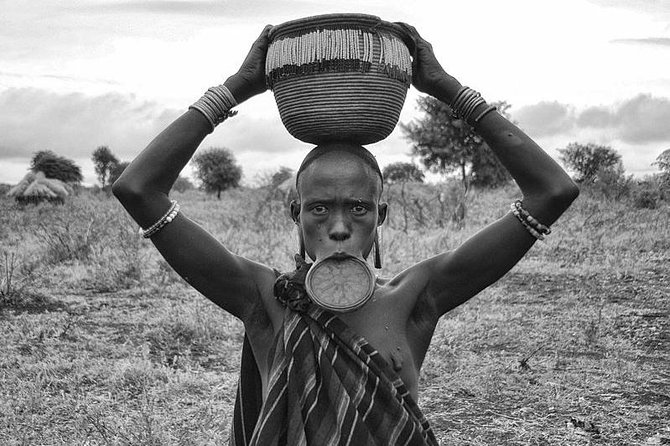
The route heads toward Kolcho village, home of the Karo people, on the banks of the Omo River. The Karo are known for traditional body painting, and this is one of the most visually distinctive stops in the entire journey.
The river setting matters. You are not seeing body decoration in isolation. You are seeing it as part of a community living beside one of the region’s major waterways, in a dry area where water shapes daily life and travel.
In the evening, the tour visits a Hamer village near the accommodation. The Hamer are noted for their careful appearance. Women may wear red-dyed plaited hair and leather skirts decorated with shells, while homes are built from local mud, wood, and thatch.
The village layout is especially interesting. A small extended family may live in roughly 10 to 15 huts, with everyday activity centered around the homes. This gives you a better sense of family structure than a quick photo stop would.
You should approach this visit with care. These are living communities, not museum displays. Ask your guide how to request photographs, listen before taking pictures, and expect that camera or video fees may apply. Those charges are not covered in the package.
The schedule labels this stop as Dasenech Village even though the description focuses on the Karo and Hamer. That may be a simple itinerary error, but I would ask the operator to clarify the planned villages and driving order before you leave Addis Ababa.
Day 3: Key Afar, Jinka, and a small museum
This day crosses dry sandy plains toward Key Afar, then moves into more fertile rolling hills on the way to Jinka. The change in scenery helps explain why the Omo region supports such varied communities within a relatively compact area.
In Jinka, you visit a small museum focused on local customs. It is a useful pause after the drive because it gives context before more village visits. I particularly like the idea of seeing cultural information in a museum setting before relying on quick roadside impressions.
The schedule also offers an optional walk into town, with opportunities to meet local people along the way. Since this walk is optional, ask your guide about the time available and the best way to take part respectfully.
The day is listed at about seven hours. That includes driving and sightseeing, so the exact balance may depend on road conditions and the pace of the group. You will want comfortable clothes, sturdy shoes, water, sun protection, and patience.
One practical issue deserves attention: this day is also labeled Dasenech Village, while the description names Key Afar and Jinka. Get a written day-by-day plan if the details matter to you. Clear communication is especially important on a short trip where one missed stop cannot easily be added later.
More five-day itineraries:
- 5 DAYS Lalibela, Axum, Tigray churches and Danakil
★ 5.0 · 34 reviews - Danakil Depression and Lalibela 5 Days Tours
★ 5.0 · 28 reviews - 5 Days North Ethiopia Tours
★ 5.0 · 23 reviews - 5 DAYS Axum, Lalibela, Tigray churches and Danakil
★ 4.5 · 22 reviews
Day 4: Mago National Park and a Mursi village
The fourth day starts early and crosses mountains into the drier Mago National Park area. The drive itself is part of the experience, with some of the most attractive scenery on the route appearing before you reach the park.
Wildlife sightings are possible, not guaranteed. You might see Dik Dik and lesser Kudu on the dry plains. The park visit adds a natural element to a tour otherwise centered on culture, but you should keep expectations realistic. This is not presented as a dedicated wildlife safari.
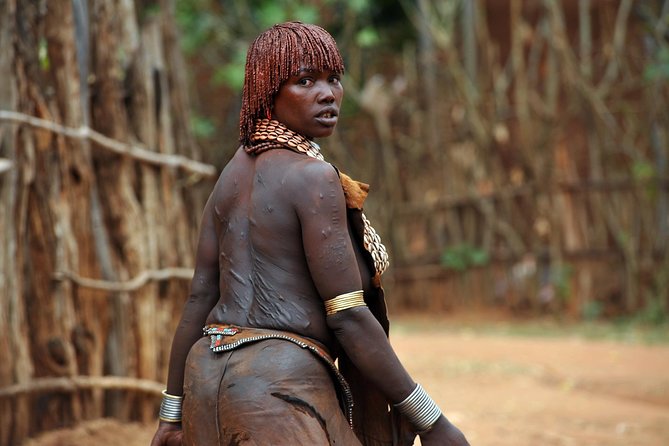
The main stop is a Mursi village. Mursi women are widely associated with decorated clay plates placed in the lower lip. The tour description also notes that the custom is now used less often, and some older women have loose skin without a plate in place.
That detail is important. It reminds you that customs change and that no single image can represent an entire community. Try to look beyond the most photographed feature. Clothing, homes, conversation, and daily work can tell you just as much.
This is another setting where respectful conduct matters. Your guide and local scout are there to help manage village access and payments. Follow their instructions, ask before taking photographs, and remember that a cultural visit involves people who deserve privacy and fair treatment.
After Mago National Park, the route returns to Konso. It is another seven-hour day, so the early start and late arrival may leave little free time. I would not add extra plans for the evening.
Day 5: Dorze weaving and the Lake Chamo boat ride

The final day begins with a drive from the fertile area around Arba Minch across dry plains and into the Chencha mountains. Arba Minch means Forty Springs, and the area is known for fertile soils and ensete, often called false banana.
In a Dorze village, you can visit a tall, beehive-shaped thatched home, see weaving, and watch a demonstration of the many uses of false banana. The plant is important here not simply as food, but as a material with several practical uses.
The Dorze are also known for cotton and wool weaving. If you enjoy buying useful local crafts rather than generic souvenirs, this is likely the best shopping stop on the route. Take your time, compare items, and ask whether the product is made locally before buying.
After a picnic lunch, you head to Lake Chamo for a boat trip. The main aim is to find enormous crocodiles and possibly hippopotamuses. The boat ride provides a welcome change after several days in the vehicle and gives the final day a clear highlight.
The schedule says about five hours for the day, but the timing must fit the drive, village visit, picnic, boat ride, airport transfer, and flight from Arba Minch to Addis Ababa. I would keep your Addis evening free in case road or flight timing shifts.
The vehicle, guides, and group size

Ground transport is by 4WD Toyota Land Cruiser. That is the right type of vehicle for a route that includes sandy plains, mountain roads, and remote villages. Still, a suitable vehicle does not make long drives short. Expect comfort to depend on road conditions, group size, and how much luggage is inside the cabin.
The maximum group size is 12 people. That can work well for village access and shared costs, but it is not the same as a private tour. One account described paying for a tailored experience and then finding the arrangement more like a group trip, along with poor communication. I would get the following points confirmed before booking:
- The exact number of people in your departure
- Whether the trip is private or shared
- The names of the hotels or lodges
- The domestic flight times
- Which villages are planned each day
- Any camera, video, or local photography charges
Local guides and a scout are included where needed. One especially positive account praised a local Omo Valley guide named Euale. If that person is available for your departure, you may wish to request him, though guide assignments should be confirmed rather than assumed.
The operator also states that most people can participate and that pickup is offered. The route still requires tolerance for long drives, early mornings, heat, dust, and basic rural conditions.
Accommodation, meals, and what is not covered
Accommodation is provided according to the program, with bed and breakfast included. Four breakfasts are listed, which fits a five-day trip with overnight stays before the final flight.
A picnic lunch is mentioned on the last day. The package does not promise full lunch and dinner coverage throughout the route, so budget for meals beyond breakfast and ask exactly where food stops occur.
Alcoholic drinks are excluded. Laundry, personal internet, telephone, fax, and other unlisted services are also your responsibility. Camera and videography fees may be required at certain sites, and those costs can add up if you take many photographs.
The mobile ticket and pickup option make the arrangement easier at the start. Confirmation is provided at booking. Still, convenience is not a substitute for clear details, so save the final itinerary, contact numbers, flight information, and accommodation names offline.
Who will get the most from this trip
I would recommend this tour to you if you want a concentrated introduction to southern Ethiopia and prefer having transport, guides, entrance fees, local payments, and accommodation arranged together.
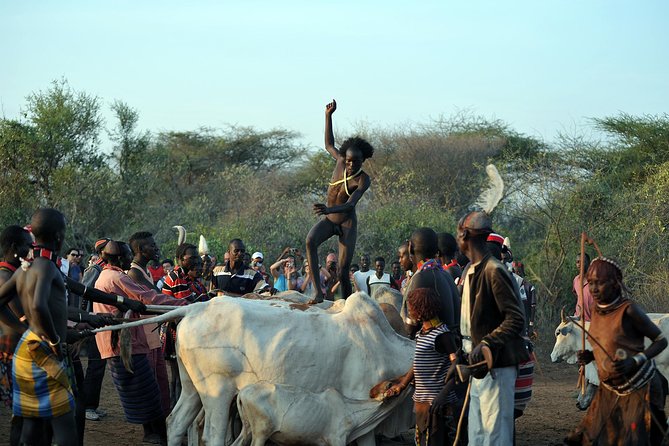
It suits people who are curious about cultural difference and willing to observe with humility. Families can manage it too. One French-language account describes a five-day Omo Valley trip with children aged 14 and 8, including a Hamer bull-jumping ceremony, though that ceremony is not promised in the standard schedule. Do not book expecting to see it unless the operator confirms a date and location.
I would hesitate if you dislike long vehicle journeys, want a carefully paced holiday, or expect a fully private itinerary at all times. The route is also a poor fit if you need every activity and transfer to run on a fixed timetable.
Should you book the Omo Valley five-day tour?
I would book it for the route and the access, but only after confirming the details in writing. The Karo, Hamer, Mursi, and Dorze visits cover a remarkable range of cultural traditions, while Mago National Park and Lake Chamo add wildlife and scenery.
The package offers fair value if your flights are reasonably priced and the included local services are important to you. The largest risks are communication, schedule clarity, and the possibility that a supposedly tailored trip may operate as a shared group departure.
If the operator confirms your group size, guide, flights, accommodation, village visits, and extra photography costs, this is a strong five-day introduction to the Omo Valley. If those answers remain vague, I would wait or seek a more clearly defined private arrangement.
FAQ
Where does the Omo Valley five-day tour begin?
The tour begins in Addis Ababa, with a flight to Arba Minch on the first day.
Are domestic flights included in the price?
No. International and domestic flights are excluded from the tour price.
What type of vehicle is used?
Ground transportation is provided in a 4WD Toyota Land Cruiser.
What is the maximum group size?
The maximum is 12 people.
Is hotel accommodation included?
Yes. Accommodation is provided according to the program, with bed and breakfast included.
How many breakfasts are included?
Four breakfasts are included.
Is the Lake Chamo boat trip included?
Yes. The Lake Chamo boat trip is included, along with entrance fees and stated village and elders payments.
Are camera and video fees included?
No. Any required camera or videography fees are not included.
What is the cancellation policy?
You receive a full refund if you cancel at least three full days before the experience start time. Cancellations or changes made within three days are not accepted for a refund. If poor weather causes cancellation, you are offered another date or a full refund.
Just added around Addis Ababa
- 10 Days in Northern Ethiopia Tours★ 4.5 · 3 reviews
- Day Trip to Tiya UNESCO Site & Melka Kunture Archaeological Site★ 4.5 · 3 reviews
- Two days Lake Wenchi and Menagesha Forest★ 5.0 · 3 reviews
- 6 days 5 nights Addis Abeba sightseeing & Lalibela Rock-Hewn Churches★ 5.0 · 3 reviews
- Addis Ababa Half Day Shopping Tour★ 5.0 · 3 reviews
- 12- Day Historical Route of Ethiopia★ 5.0 · 3 reviews
- 6 days Omo valley cultural Tour★ 5.0 · 3 reviews
- Addis Ababa at a Glance★ 5.0 · 3 reviews
Omo Valley Tribal Tours, compared.

6 Days Omo Valley Tribes Tours From Addis Ababa
Read our review →
Lalibela, Axum, Danakil and Omo Valley 8 DAYS
Read our review →
Danakil Depression, Lalibela, Omo Valley and Simien Mountains
Read our review →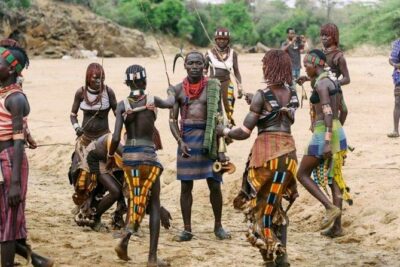



9 Days Tours To Danakil Depression, Simen MNP, Lalibela With Omo Valley Tribes
Read our review →Browse the lists this tour appears in