
Reviewed · ROCK-HEWN CHURCHES OF LALIBELA
5 DAYS Axum, Lalibela, Tigray churches and Danakil
The volcanic night is only half the story. This fast-moving Ethiopia tour links Lalibela’s rock churches, Axum, the Gheralta region, and the Danakil Depression in five demanding days. I like the small maximum of four people and the inclusion of domestic flights, fuel, a 4WD vehicle, a professional driver, accommodations, and several meals. The operator has also helped at least one customer with Ethiopian visa processing, a useful extra when plans are tight.
The trade-off is the pace. You cover huge distances, sleep in both hotels and camp, and face rough roads, heat, early starts, and a strenuous walk at Erta Ale. This is a strong choice for a first taste of northern Ethiopia, but not for a slow, restful holiday.
In This Review
- Key points at a glance
- Why this five-day route is so ambitious
- Day 1: Lalibela’s churches carved from living rock
- Day 2: Axum’s ancient ruins and the road to Hawzen
- Day 3: Rough tracks and the climb toward Erta Ale
- Day 4: Sunrise at the crater and optional Lake Afrera
- Day 5: Salt miners, Dallol, and Lake Assal
- What the $1,000 price really covers
- Who should book this route
- Booking timing and cancellation details
- Should you book the five-day Ethiopia tour?
- FAQ
- How long is the Ethiopia tour?
- Are domestic flights included?
- What is the maximum group size?
- Is accommodation included?
- What meals are included?
- What fitness level is required?
Key points at a glance
- Four-person maximum: A tiny group should make airport transfers, long drives, and schedule changes easier to manage.
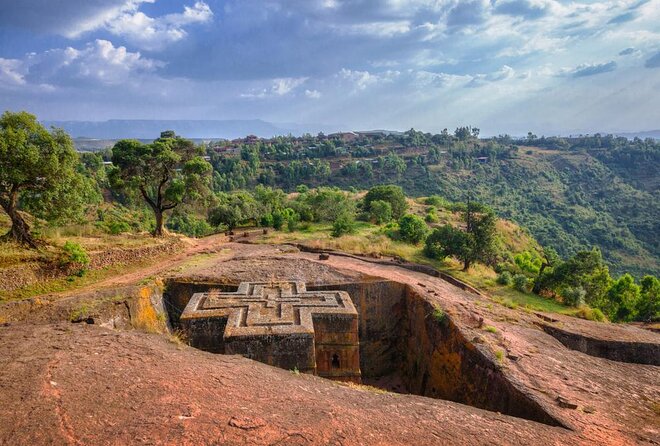
- Three major historic areas: Lalibela, Axum, and Gheralta each offer a different view of Ethiopia’s religious and cultural past.
- Erta Ale requires effort: The volcano visit includes rough 4WD travel, camping, walking, and a sunrise outing.
- Dallol and Lake Assal: The final day reaches salt-mining country, a below-sea-level depression, and areas shaped by volcanic activity.
- Flights save valuable time: Domestic air travel connects Addis Ababa with the northern route and brings you back from Mekele on the final evening.
- Best for fit, flexible sightseers: Moderate physical fitness is required, and the schedule leaves little room for delays.
Why this five-day route is so ambitious
This trip tries to join two very different Ethiopias in one compact route. The first part is about sacred buildings, ancient ruins, and highland scenery. The second moves into the Afar region, where heat, salt, volcanic ground, and rough tracks replace church courtyards and stone monuments.
That contrast is the main attraction. You are not spending five days in one region. You are crossing several parts of the country and seeing famous places that are usually handled as separate trips.
The cost is time. A five-day schedule sounds generous until you look at the distances. Day two includes a flight from Lalibela to Axum, a visit to Axum, and a drive of about 190 kilometers to Hawzen, taking roughly two hours according to the planned timing. Day three then sends you toward Erta Ale through Mekele. The route is efficient, but it is not leisurely.
The maximum group size of four is important here. A large coach would make this kind of program tiring and impersonal. With only a few people, you should have more room in the Toyota Land Cruiser and less waiting during transfers. The small group also matters when the road, weather, or flight schedule forces a change.
More Danakil expeditions:
- 12 Days SIMIEN MOUNTAIN-LALIBELA-DANAKIL-TIGRAY CHURCHES
★ 5.0 · 45 reviews - 3 Day Danakil Depression Ertale and Dallol Tours
★ 5.0 · 44 reviews - 5 DAYS Lalibela, Axum, Tigray churches and Danakil
★ 5.0 · 34 reviews
Day 1: Lalibela’s churches carved from living rock
Your first morning begins with a flight north from Addis Ababa to Lalibela. After the transfer to your hotel and lunch, you visit the first group of rock-hewn churches, set north of the small Jordan River.
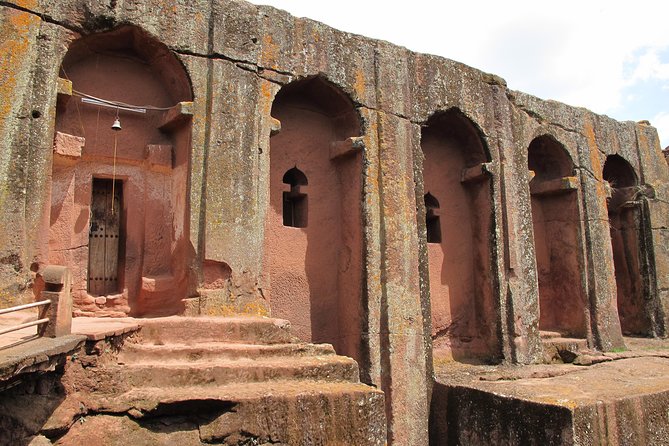
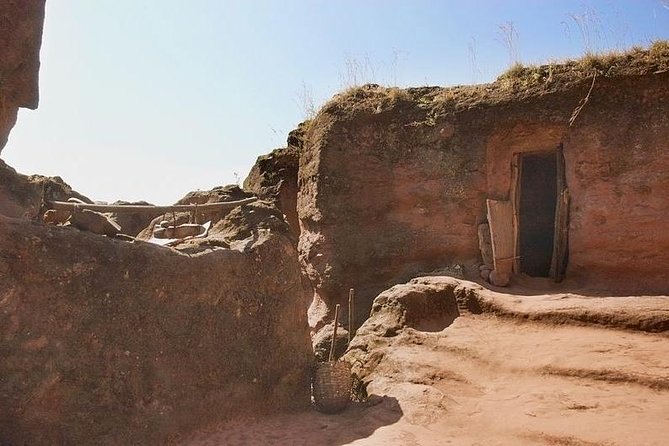
Lalibela is not a collection of ordinary old churches. These buildings were cut downward into the rock during the reign of King Lalibela, dated here to 1181 through 1221. The work is easier to understand once you are on site. Instead of laying stones on top of one another, builders carved courtyards, walls, doorways, and passageways out of the surrounding rock.
The town has about eleven churches arranged in groups of three. This first visit gives you around four hours, with admission included. That is enough for a meaningful introduction, though you should not expect to examine every corner of every church at a slow pace.
Wear practical shoes. The visit involves uneven ground, steps, and walking between the carved structures. The churches are active religious places, not just monuments, so modest clothing and respectful behavior are important. The atmosphere can shift quickly from sightseeing to worship, which is part of what makes Lalibela special.
I like the placement of Lalibela at the start of the route. You arrive by air rather than losing a full day on the road, then begin with Ethiopia’s most famous sacred site. The drawback is that the program gives only one listed church visit, so you may want to confirm in advance exactly which groups and churches are included.
Day 2: Axum’s ancient ruins and the road to Hawzen
A second morning flight takes you from Lalibela to Axum. The planned visit to Axum lasts about one hour before you drive toward Hawzen, passing through Adwa and the Gheralta plains.
Axum is one of northern Ethiopia’s key historic centers. Even with a short stop, the ruins give the route a useful change of tone. Lalibela is defined by churches cut into rock. Axum is associated with an older royal and monumental tradition, visible in its ruins and stone remains.
One hour is brief. You should treat Axum as a focused stop rather than a full city tour. If ancient sites are your main reason for coming to Ethiopia, this portion may feel rushed. If your priority is seeing several major regions in one trip, the short visit is a reasonable compromise.
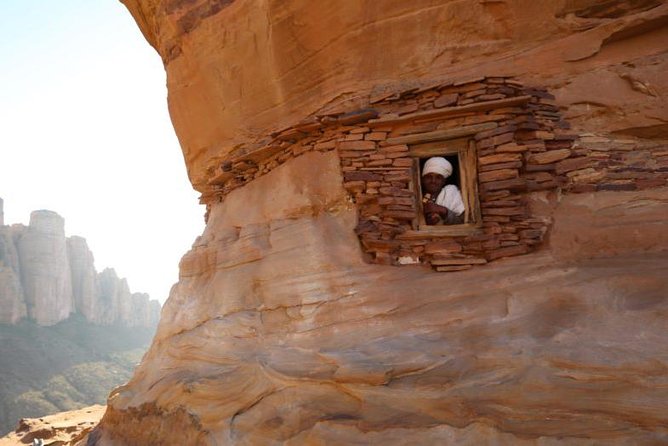
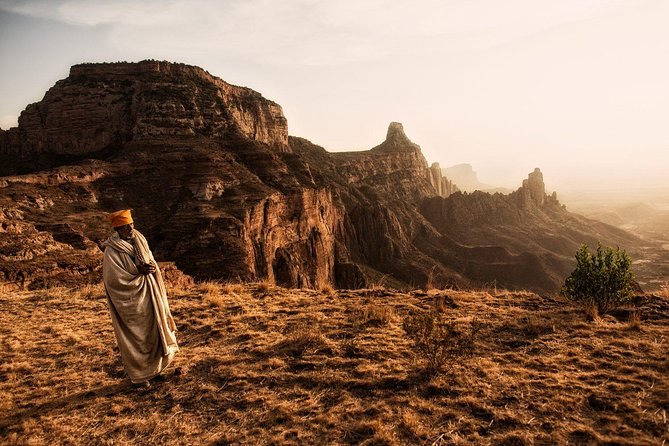
The drive to Hawzen is more than a transfer. It takes you toward Gheralta, a region known for churches cut into cliffs and rocky outcrops. Hawzen serves as the overnight base for that area. The route through Adwa and the Gheralta plains also helps you understand how quickly the scenery changes as you leave the more familiar highland centers.
The schedule does not clearly set out a separate, extended Gheralta church visit on this day. That is worth checking before you pay. The tour description identifies Gheralta churches as part of the route, but the listed day mainly explains the drive and the overnight stay in Hawzen.
This is also the point where the trip starts to feel like an expedition. You have already taken two flights and crossed a large section of northern Ethiopia. Keep your day bag light and your essentials close, because hotel and vehicle changes come quickly.
Day 3: Rough tracks and the climb toward Erta Ale
Day three begins the Danakil section. The route heads toward Erta Ale through Mekele, with the drive to Dodom, the settlement at the volcano’s base, beginning at about 9:00 in the morning.
Erta Ale is described as a shield volcano about 30 kilometers across at its base, with a roughly one-square-kilometer summit caldera. Its summit rises to 613 meters, and the volcano is known for a permanent lava lake. Those figures sound tidy on paper. The practical reality is rough.
The 80-kilometer road to the base is described as one of the roughest roads in the world. A Toyota Land Cruiser is included for good reason. You should expect a slow, jarring ride over difficult tracks rather than a smooth highway transfer. The vehicle, fuel, lubricants, driver, and driver allowance are included, so the main question is not transport cost. It is how well you handle the conditions.
The final approach includes a walk and a camp near Erta Ale. The supplied information does not give a precise walking distance or a full camping equipment list, so ask what bedding, water, and meals are provided before departure. Dinner is included on two nights, and the overall package includes four breakfasts and three lunches, but meal coverage is not described day by day.
The volcano is the centerpiece for people who want something far outside a standard cultural tour. You are not simply stopping at a viewpoint. You are traveling into an isolated volcanic area and spending the night in basic camp conditions.
At the same time, this is the hardest portion of the trip. The operator advises a moderate level of fitness, but the combination of walking, heat, rough roads, and limited rest may feel tougher than that phrase suggests. If you have mobility limits, ask detailed questions before booking.
More Lalibela church tours:
- Danakil Depression and Lalibela 5 Days Tours
★ 5.0 · 28 reviews - Danakil Depression, Lalibela, Omo Valley and Simien Mountains
★ 5.0 · 23 reviews - 6 Days Lalibela, Omo Valley and Harar
★ 5.0 · 15 reviews - Lalibela 3 Days/ 2 Nights Tour package
★ 5.0 · 13 reviews
Day 4: Sunrise at the crater and optional Lake Afrera
The fourth day starts early with sunrise at Erta Ale. You visit the northern crater, associated with the main pit, then walk about five minutes toward the southern and central pits.
The main pit crater is described as about 200 meters deep and 350 meters across, with three levels. A smaller southern pit is about 65 meters wide and 100 meters deep. These measurements give you a sense of scale, but they do not remove the need for care. Volcanic ground can be uneven, and the day begins before most people have recovered from the previous drive and camp.
The planned descent starts around 7:00 in the morning if possible, with a return to Dodom by about 9:00 and arrival at camp no later than roughly 10:30. That early schedule is practical. It aims to get you away from the volcano before the day becomes even hotter.
After time to rest, the route may continue to Lake Giulietti, also called Lake Afrera. This stop is optional and may not be available during the summer period. Do not build your entire decision around it. Consider it an extra possibility rather than a guaranteed part of the experience.
This day shows both the appeal and the weakness of the route. You get the rare chance to see the volcano at sunrise, then continue into the Afar region. But you also have a long day after a rough night, and the schedule depends on road conditions, weather, and local access.
Bring sun protection, water storage, sturdy footwear, and clothing that can handle dust. These are practical needs, not decorative packing advice. The volcanic region is physically exposed, and there are few comforts between stops.
Day 5: Salt miners, Dallol, and Lake Assal
The final Danakil day begins with a drive to Ragad, also called Asebo, where local workers mine salt. You see salt being broken from the ground, cut into rectangular blocks, and loaded onto camels.
This is one of the most distinctive parts of the route because it connects the scenery to daily work. The salt is not presented as an abstract natural curiosity. You see the labor involved and the role of camel caravans in moving the blocks.
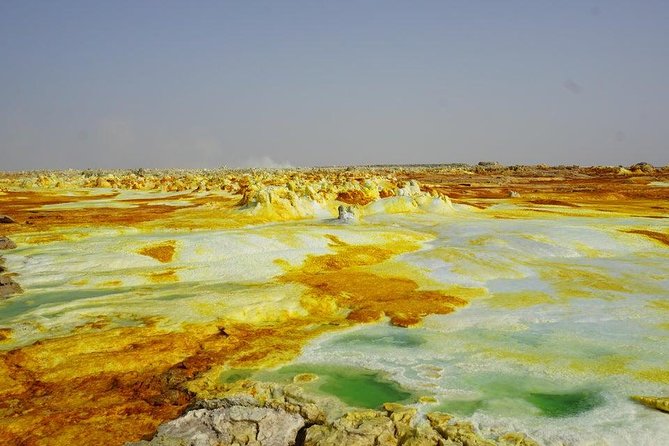
The route continues to Dallol, described as 116 meters below sea level. Volcanic activity has shaped the area into a place of colorful salts and unusual ground formations. The program also includes Lake Assal and a walk with Afar people.
Camel caravans are not present in July, August, or early September. That seasonal note matters. If seeing the caravans is high on your list, choose your travel dates carefully and confirm conditions before you leave.
After the excursions, you return to Hamedela and continue to Mekele. The planned flight leaves Mekele at 7:50 in the evening and arrives in Addis Ababa at 9:10. That flight is a major reason this route can fit into five days. Without it, the return journey would add another long overland section.
Still, the final day is not light. The salt-mining visit, Dallol, Lake Assal, the return drive, and an evening flight make for a full eight-hour touring day before airport procedures. Keep your final evening flexible, especially if you have an international departure the next morning.
What the $1,000 price really covers
At $1,000 per person, the tour asks you to judge value by logistics as much as by sightseeing. The package includes domestic flights, ground transport in a 4WD Toyota Land Cruiser, fuel and lubricants, an experienced driver, driver allowance, accommodations, a mix of hotel and camping, and several meals.
That is a substantial amount of transport for five days. Flights link Addis Ababa, Lalibela, Axum, and Mekele, while the vehicle covers the long northern and Afar routes. Fuel alone would be a serious cost on a program with this much driving, and the remote Danakil section is not a place where casual public transport planning is easy.
The small group adds value. With no more than four people, you are paying for a more personal format rather than a large vehicle filled with passengers. That should make the long drives more manageable, though the tour does not promise a separate guide in addition to the professional driver.
Meals are only partly covered. You receive four breakfasts, three lunches, and two dinners, but alcoholic drinks, personal purchases, internet, telephone costs, laundry, camera or videographer fees, and services not listed are extra. Keep some money available for those items.
The price is attractive if you want a broad first visit and do not want to arrange several domestic flights, remote transport, and camping separately. It is less attractive if you want long church visits, relaxed hotel mornings, or a carefully paced cultural program.
Who should book this route
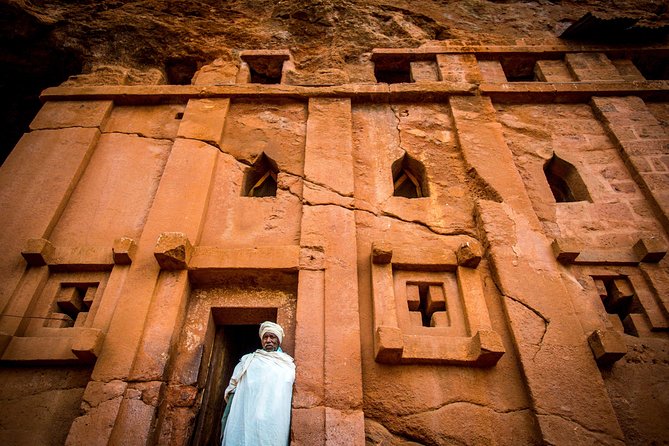
I would recommend this trip to you if your priority is range. In five days, you reach UNESCO-listed Lalibela, Axum, Gheralta country, Erta Ale, Dallol, Lake Assal, and salt-mining areas. Few short tours offer such a sharp change between highland churches and volcanic desert.
You should also be comfortable with uncertainty. The optional Lake Afrera visit may not operate in some periods. Camel caravans are absent in July, August, and early September. The experience requires good weather, and poor conditions can lead to a new date or a full refund rather than a normal continuation.
This is not the best fit if you dislike camping, rough roads, early starts, or compressed schedules. The moderate fitness requirement should be taken seriously, especially for the volcano section.
The tour may suit solo visitors and pairs particularly well because the four-person limit gives you a small social setting without requiring you to organize a private vehicle alone. Families should consider the long drives and physical demands carefully.
The operator’s practical support is another useful point. At least one customer received help with Ethiopian visa processing only a few hours before a flight. That is not a reason to leave your visa until the last minute, but it suggests the company may offer hands-on assistance when problems arise.
Booking timing and cancellation details
This experience is booked, on average, 79 days ahead, which fits the route’s limited capacity and complicated transport. Planning early is sensible, especially if you need particular flight dates or want to travel outside the months when camel caravans are absent.
You can cancel for a full refund up to three full days before the local start time. Inside that three-day window, the payment is not refunded and changes are not accepted. If poor weather cancels the tour, you are offered another date or a full refund.
Pickup is offered, mobile tickets are available, confirmation comes at booking, and service animals are allowed. The meeting time is listed as 9:00 in the morning, although several days require earlier activity, so confirm the exact pickup time for your departure date.
Should you book the five-day Ethiopia tour?
Book it if you want a bold, tightly packed route and value included flights, remote transport, and a very small group. The mix of Lalibela churches, Axum, Gheralta, Erta Ale, and Dallol gives you an unusually broad introduction to northern Ethiopia for $1,000.
Skip it if your ideal holiday means slow mornings, long visits at each historic site, or comfortable roads. Before paying, confirm the exact Gheralta church visit, camping supplies, meal schedule, and seasonal availability of Lake Afrera and camel caravans.
For the right person, this is a high-effort, high-reward trip. You trade comfort and spare time for a rare look at Ethiopia’s churches, volcanoes, salt country, and ancient cities in one compact journey.
FAQ
How long is the Ethiopia tour?
The tour lasts approximately five days, starting in Addis Ababa and ending with an evening flight from Mekele back to Addis Ababa.
Are domestic flights included?
Yes. The package includes domestic flights, including the route from Addis Ababa to Lalibela, the flight from Lalibela to Axum, and the return flight from Mekele to Addis Ababa.
What is the maximum group size?
The tour has a maximum of four participants.
Is accommodation included?
Yes. The tour includes a mix of hotel and camping accommodation.
What meals are included?
The package includes four breakfasts, three lunches, and two dinners.
What fitness level is required?
A moderate level of physical fitness is advised. The Erta Ale section includes rough 4WD roads, camping, walking, and an early morning crater visit.
More five-day itineraries
- 5 Days North Ethiopia Tours
★ 5.0 · 23 reviews - 5 Days Omo Valley Tours
★ 5.0 · 15 reviews - 5 Days Lalibela-Danakil Tour
★ 4.5 · 11 reviews - 5 Days Tour to World Heritage–listed Harrar, Dire Dawa and Awash NATIONAL PARK
★ 4.5 · 10 reviews
More Tigray church tours
- Ethiopia Tigray Tours: Guided tour of Tigray rock hewn churches
★ 5.0 · 36 reviews - 4-Day Tour: Tigray Churches & Danakil Depression Adventure.
★ 5.0 · 11 reviews - Two Days Tigray Churches Trip
★ 5.0 · 10 reviews - Tigray: Gheralta Mountains 2-Day Tour
★ 5.0 · 8 reviews
Just added around Addis Ababa
- 10 Days in Northern Ethiopia Tours★ 4.5 · 3 reviews
- Day Trip to Tiya UNESCO Site & Melka Kunture Archaeological Site★ 4.5 · 3 reviews
- Two days Lake Wenchi and Menagesha Forest★ 5.0 · 3 reviews
- 6 days 5 nights Addis Abeba sightseeing & Lalibela Rock-Hewn Churches★ 5.0 · 3 reviews
- Addis Ababa Half Day Shopping Tour★ 5.0 · 3 reviews
- 6 days Omo valley cultural Tour★ 5.0 · 3 reviews
- 12- Day Historical Route of Ethiopia★ 5.0 · 3 reviews
- Addis Ababa City Tour★ 4.5 · 3 reviews
Rock-Hewn Churches of Lalibela, compared.
12 Days SIMIEN MOUNTAIN-LALIBELA-DANAKIL-TIGRAY CHURCHES
Read our review →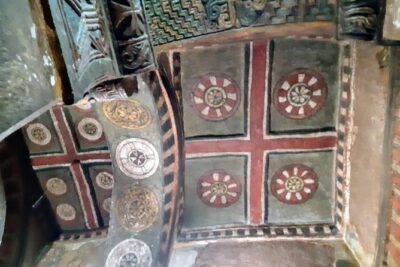
Tour 11 monolithic rock churches & museum in Lalibela & cave church with mummies
Read our review →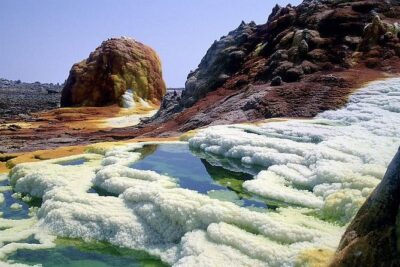
5 DAYS Lalibela, Axum, Tigray churches and Danakil
Read our review →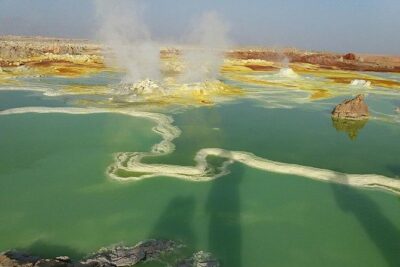
6 Days tour Package (Simien Mountains, Lalibela, and Danakil Depression)
Read our review →
Lalibela, Axum, Danakil and Omo Valley 8 DAYS
Read our review →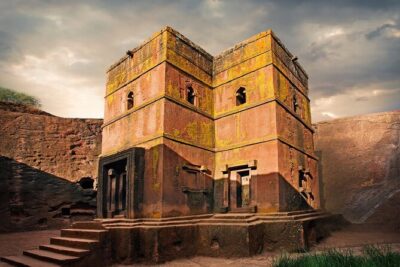
Browse the lists this tour appears in