
Reviewed · DANAKIL DEPRESSION TOURS
3 Day Danakil Depression Ertale and Dallol Tours
Heat changes the meaning of adventure. This three-day journey from Addis Ababa takes you into Ethiopia’s Afar region, where Erta Ale’s active volcano, sulfur-colored springs, salt flats, and camel caravans create scenery that feels almost unreal. I like the sharp contrast between fiery volcanic rock and brilliant yellow, green, and red mineral pools. I also like that the tour includes transport, meals, water, entrance fees, and local cultural stops rather than leaving you to arrange the difficult parts yourself.
The main drawback is comfort. You spend long hours in a Toyota Landcruiser on rough desert tracks, sleep outdoors or in very basic conditions, and may go roughly two and a half days without electricity or running water. The advertised plan also contains some timing overlap between the Erta Ale and Dallol visits, so I would confirm the exact order with Danakil Depression Tours before you set off.
In This Review
- Key points at a glance
- Why the Danakil Depression is worth the hardship
- Day one: the long road from Semera to Erta Ale
- Erta Ale after sunset
- Day two: returning to the crater, then crossing the salt country
- Lake Asale and the work of salt mining
- Day three: Dallol’s colors and extreme geology
- Transport, meals, and the value of $400
- Guides and organization
- What to pack and how to prepare
- Who should book this Danakil trip?
- Should you book it?
- FAQ
- Where does the tour start?
- What time does the tour start?
- How long is the tour?
- What is the maximum group size?
- Is transport included?
- Are meals included?
- Are entrance fees included?
- Can I cancel for a full refund?
Key points at a glance
- Erta Ale after dark: The volcano is the trip’s dramatic centerpiece, with a night hike toward an active crater and the chance to see glowing lava.
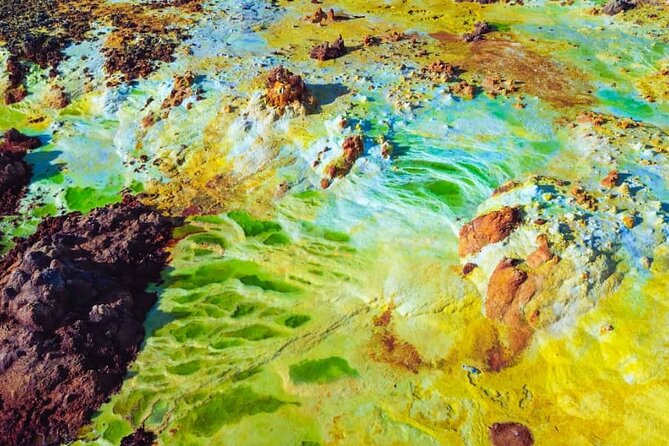
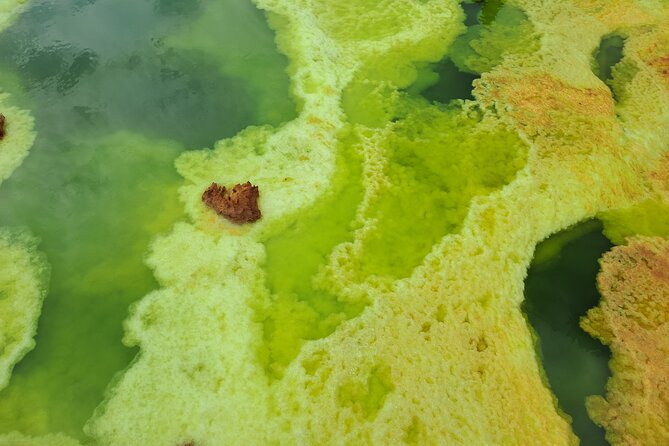
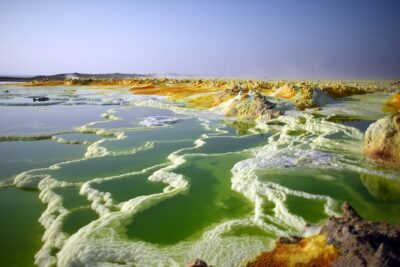
- Dallol’s acid-colored ground: Sulfur springs, fumaroles, salt mounds, and pools in green, yellow, and red create one of the world’s strangest natural scenes.
- Seven hours to Dodom: Day one is not a quick sightseeing outing. The drive from Semera to the Erta Ale base area takes about seven hours.
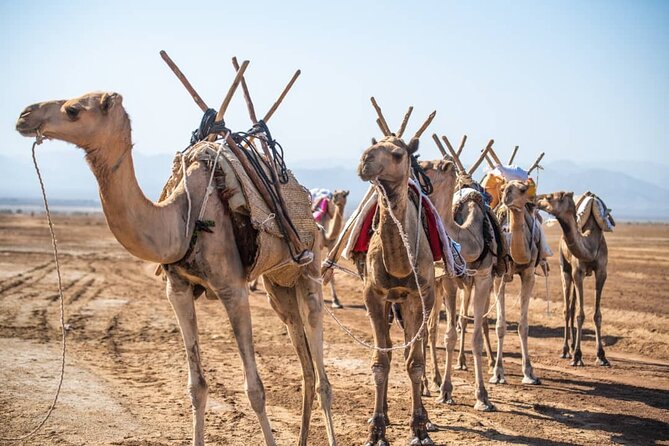
- Afar salt culture: At Hamed Ela and Lake Asale, you can see local salt mining and camel caravans carrying salt across the desert.
- Basic desert living: Expect sleeping under the stars, no running water or electricity for much of the trip, and rudimentary camp conditions.
- Small-group transport: The maximum group size is 10, with an air-conditioned vehicle and a cooking team supporting the route.
Why the Danakil Depression is worth the hardship
The Danakil Depression is one of the hottest and lowest parts of the planet. It is also one of Ethiopia’s most unusual destinations, not because of monuments or city streets, but because the ground itself seems active and unsettled.
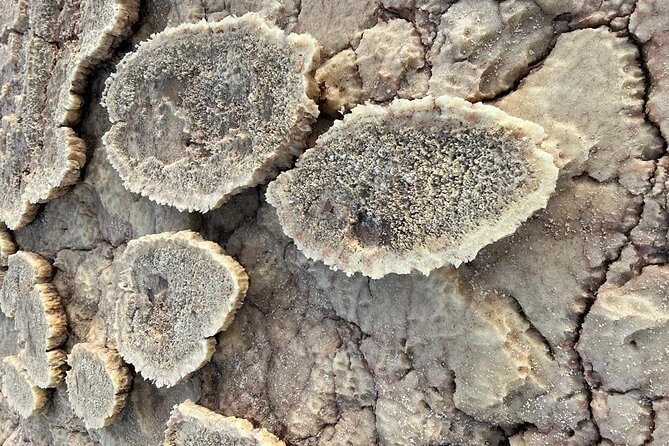
You may see solidified lava, salt flats, acid springs, bubbling mud, fumaroles, salt canyons, and volcanic formations packed into one remote region. The colors are not painted on the desert. They come from mineral deposits and hot springs, which gives the scenery a strange, almost otherworldly quality.
I like this trip because it gives you several different ways to understand the Afar region. Erta Ale offers raw volcanic drama. Dallol brings intense color and geology. Hamed Ela and Lake Asale connect those natural sights to the daily work of Afar people who mine, cut, load, and transport salt.
You should not book this as a soft adventure with a few scenic stops. It is a serious expedition with long drives, high heat, and little comfort. The reward is access to a place that feels far removed from ordinary Ethiopian sightseeing.
More Danakil expeditions:
- 12 Days SIMIEN MOUNTAIN-LALIBELA-DANAKIL-TIGRAY CHURCHES
★ 5.0 · 45 reviews - 5 DAYS Lalibela, Axum, Tigray churches and Danakil
★ 5.0 · 34 reviews - 2-Night 3-Day Danakil Depression Tour without Flights
★ 4.8 · 31 reviews
Day one: the long road from Semera to Erta Ale
The route begins in Semera, where you board a Toyota Landcruiser and travel into the Danakil in convoy. The published meeting point is the Oasis Building on Cameron Street in Addis Ababa, with a 9 a.m. start, but the itinerary describes the desert drive as beginning in Semera. That distinction matters. Ask the operator how your Addis pickup connects with the Semera departure, and do not assume that flights or transfers are included simply because pickup is offered.
The first part of the road out of Semera is smooth and asphalted. As you leave town, the Afar scenery opens up, and the drive becomes part of the experience rather than merely a transfer. You continue toward Afdera, associated with the region’s salt lake, as the road grows rougher.
Once you reach the desert, the surface changes sharply. The route crosses a maze of rock, sand, and hardened lava, with an occasional palm-lined oasis offering a welcome change from the bare terrain. A Toyota Landcruiser is a sensible vehicle here, but air conditioning does not turn several hours of rough driving into a comfortable ride. Bring patience, water, and something to occupy your mind between stops.
Lunch is included, and the cooking team prepares meals during the journey. That is a real advantage in a remote area. You are not searching for food stalls in a place where there may be no services at all.
The drive from Semera to Dodom, the Erta Ale base area, takes about seven hours. From there, the volcano section begins. The exact walking time can vary, and the supplied information refers to an early hike and a return visit before the sun becomes too strong, but it does not give a precise distance or ascent. You should therefore treat the Erta Ale visit as a moderate physical outing, not a simple roadside stop.
Erta Ale after sunset
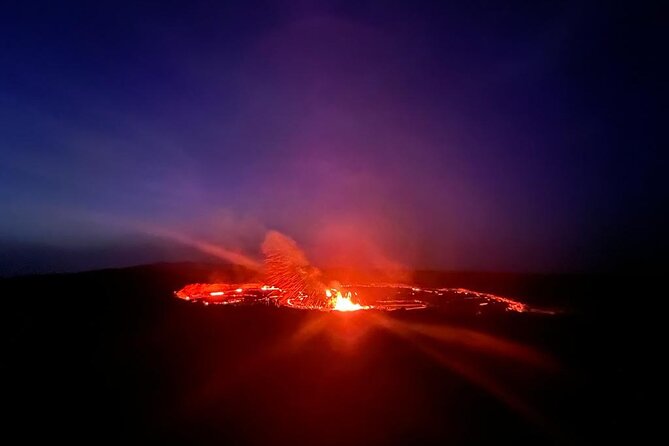
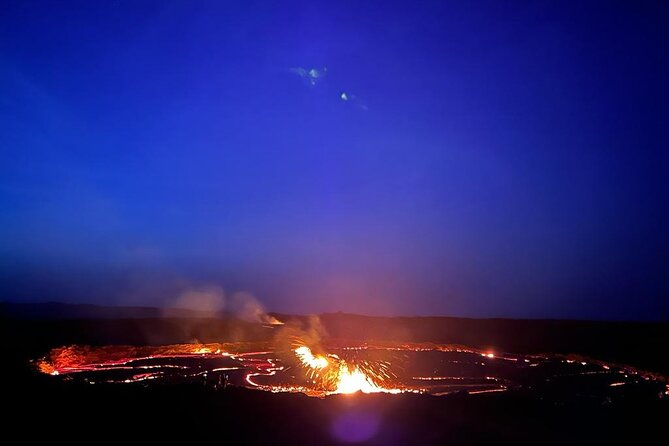
Erta Ale is the emotional high point of the tour. The attraction is an active volcanic crater, with heat, darkness, abrasive vapors, and the sound of volcanic activity combining into a powerful experience.
The timing is important. The itinerary places the main volcano visit after the long drive, followed by an early morning return to the crater before the heat rises. Seeing the volcano in darkness can make the glow of the lava more visible, while the predawn visit gives you cooler conditions and another chance to look into the crater.
The lava lake is not a guaranteed theatrical display, since volcanic conditions can change. Still, the experience is built around getting close to an active crater, and the possibility of seeing glowing lava is the reason many people accept the difficult road and basic camp.
You may sleep under the stars near the volcano. That sounds romantic, and it can be, but it also means accepting rudimentary conditions. The supplied information specifically warns of no electricity or running water for about two and a half days. Pack for function, not style: a headlamp, spare batteries, personal hygiene supplies, and clothing that can handle dust and heat will matter more than extra luggage.
Day two: returning to the crater, then crossing the salt country
The second day begins early with another hike to the crater before the sun climbs high. You visit the lava lake one last time, then begin the descent and the drive toward Hamed Ela, the small settlement associated with the Dallol area.
The stated schedule gives a descent around 6:30 a.m. and arrival at camp by about 8 a.m. for breakfast, followed by a roughly three-hour drive toward Hamed Ela. Later, the same day includes a visit to the village and Lake Asale. Because the listed day-by-day description places Dallol-related activities on both day two and day three, I would ask for a current timetable before booking. Conditions on this route can force changes, and knowing the actual sequence will help you prepare.
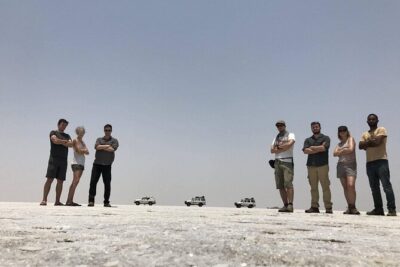
The road across the salt pans is one of the trip’s great visual transitions. The black volcanic terrain gives way to broad, pale salt country, with a horizon that can seem almost empty. It is a harsh setting, but not a lifeless one. The route connects you with the work of the Afar community and the old salt trade.
At Hamed Ela, you visit a village with a population of about 600 people. The value of this stop is its human scale. After hours of staring at volcanic rock and salt, you see how people live in one of the most demanding environments on earth.
More three-day trips:
- 3 Days Dankile Depression group Tours
★ 5.0 · 40 reviews - Trekking at Bale Mountains 3 Days
★ 5.0 · 28 reviews - 3 Days Omo Valley Tour
★ 5.0 · 24 reviews - 3 Days Bale Mountains Trekking
★ 5.0 · 19 reviews
Lake Asale and the work of salt mining
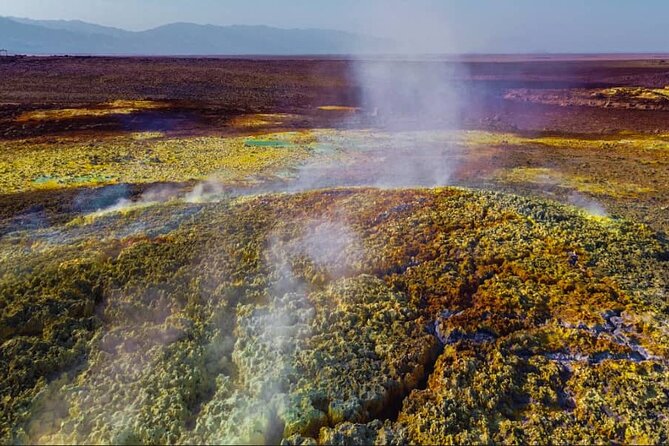
Lake Asale adds a cultural and economic layer to the scenery. The tour includes a visit to the lake to see local people mining salt, shaping it, and preparing it for transport by camel.
This is more than a photo stop. Salt has long shaped the economy and movement of the Danakil region, and watching the process gives you a direct connection to the place’s daily life. You can see why the wide salt flats are not simply empty ground. They are a workplace, a route, and a source of income.
Be respectful with cameras and follow the guide’s direction around local workers. The supplied information does not promise a formal cultural performance or extended village program. Think of Hamed Ela and Lake Asale as short, direct encounters with the region, not a staged cultural show.
Meals are covered throughout the trip, including two breakfasts, three lunches, and two dinners. Bottled water is also included, which is essential in this climate. Alcohol is not included, so plan accordingly.
Day three: Dallol’s colors and extreme geology
Dallol is the visual climax. The area is known for acidic springs, fumaroles, salt mounds, and pools in vivid shades of green, red, and yellow. The effect is startling because the colors appear against a severe, dry setting with almost no ordinary vegetation.
The tour schedules an early morning drive to Dallol, a wise choice in a place where daytime heat can become intense. The information gives an average temperature of about 35 degrees Celsius, with some days exceeding 48 degrees Celsius. Rainfall is extremely low, listed at roughly 100 to 200 millimeters annually.
That combination explains why the timing and physical demands matter. You need to be comfortable walking in heat and on uneven ground. The tour requires a moderate level of fitness, and this is not the right choice if you want a fully climate-controlled sightseeing day with frequent facilities.
Dallol is best appreciated slowly, but the environment may limit how long you stay in any one area. The colored springs and mineral formations are striking from a distance and close up, yet this is an active geological zone rather than a manicured park. Stay with the group and follow local instructions.
The final day also includes views of salt mining and camel caravans. The sight of camels loaded with salt crossing the flats connects Dallol’s dramatic geology with the practical work that has sustained communities here.
Transport, meals, and the value of $400
At $400 per person, this tour offers strong value if you want the major Danakil sights without arranging a remote desert expedition yourself. The price includes an air-conditioned vehicle, taxes, entrance fees for Erta Ale and Dallol, bottled water, two breakfasts, three lunches, and two dinners.
The value is not just in the ticketed attractions. You are paying for convoy travel, desert transport, a cooking team, local coordination, and access to places where independent logistics would be difficult. The maximum group size is 10, which is small enough to make the vehicle and guide interaction more manageable than a large bus tour.
Still, the price does not buy comfort. You should not compare it with a hotel-based three-day excursion. The basic sleeping arrangements, lack of electricity and running water, and very long road sections are part of the cost of reaching the Danakil.
Alcohol is excluded. The listing also does not state that domestic flights, airport transfers, or accommodation in Addis Ababa are included. Since the published meeting point is in Addis Ababa but the route starts in Semera, confirm exactly what is covered before you pay.
Guides and organization
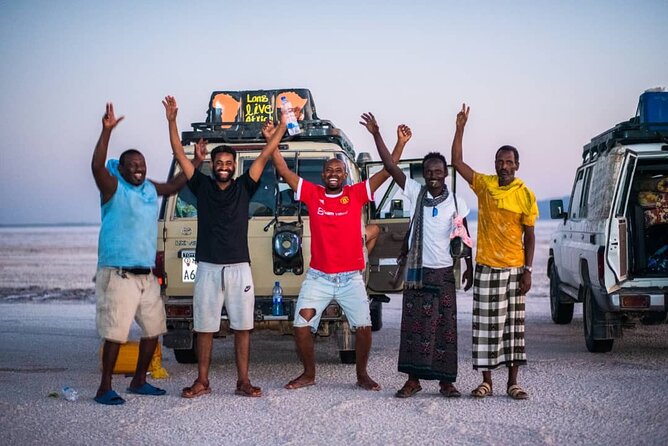
The strongest praise for this experience centers on the people running it. Specific guide names appearing in the supplied feedback include Kbrom, Asfaw, Aklilu, Abe, Ashu, Abey, Akelilu, and Tesh. Mickey, the company owner, is also singled out for helpful communication and personal attention.
You should not expect every named guide to lead every departure. Ask who will accompany your group and who will drive, especially if you have questions about language, first aid, or the physical sections.
The recurring strengths are clear: friendly staff, careful coordination, good meals, and a sense of safety during a demanding trip. One account describes airport coordination even after a flight delay of up to two hours, while another praises the team for helping a solo woman feel safe. These details matter in a remote region where plans may need to change.
The tour has a five-star rating from 44 reviews and a 100 percent recommendation figure. Those numbers suggest strong satisfaction, but they do not remove the physical challenges. Organization can make a hard trip easier. It cannot make the desert cool or the roads smooth.
What to pack and how to prepare
You should prepare for exposure, dust, rough driving, and very limited facilities. The most useful items are practical:
- A headlamp and spare batteries for the night volcano visit
- Light clothing that covers you from strong sun and dust
- Sturdy walking shoes for lava and uneven ground
- Personal toiletries for a period without running water
- Sun protection and a reusable bag for keeping dusty items separate
- Extra patience for long vehicle days and possible timing changes
The operator supplies bottled water and meals, but you should still ask how much personal water you should carry during walks. Because the itinerary includes extreme heat and moderate physical activity, anyone with a relevant medical concern should seek professional advice before booking.
The cancellation policy allows a full refund if you cancel at least 24 hours before the local start time. Changes or cancellations inside that window are not accepted for a refund.
Who should book this Danakil trip?
I would recommend this tour to you if you want rare geological scenery, accept basic conditions, and see the Afar region with local logistical support. It suits adventurous adults with moderate fitness who can handle long off-road drives and outdoor sleeping.
It is a good match for photographers, geology fans, and people who prefer unusual natural sites over polished attractions. It also suits solo visitors who want the structure and company of a small convoy rather than attempting a remote route alone.
I would hesitate to recommend it if you need reliable electricity, running water, soft beds, short transfers, or a fixed timetable. Families and older visitors should consider the heat, the road conditions, and the early volcano walk carefully. The tour is not described as accessible, and no special mobility arrangements are provided.
Should you book it?
Book it if Erta Ale’s lava, Dallol’s mineral colors, and the salt trade sound worth three hard days. The combination is rare, and the included transport, meals, water, fees, and small group help make $400 a fair price.
Before booking, confirm the Addis Ababa to Semera arrangements and ask for the current order of the Erta Ale and Dallol visits. If you accept the discomfort, this can be one of Ethiopia’s most memorable journeys. If you want ease, choose a gentler route and admire the Danakil from photographs.
FAQ
Where does the tour start?
The listed meeting point is the Cameron Street Oasis Building on Cameroon Street in Addis Ababa, Ethiopia. The itinerary itself describes boarding a Toyota Landcruiser in Semera, so confirm how the Addis meeting point connects with the Semera departure.
What time does the tour start?
The stated start time is 9:00 a.m. The schedule describes the drive into the Danakil beginning around 9 a.m.
How long is the tour?
The experience lasts approximately three days.
What is the maximum group size?
The tour accepts a maximum of 10 travelers.
Is transport included?
Yes. An air-conditioned vehicle is included. The itinerary describes Toyota Landcruisers traveling into the Danakil in convoy.
Are meals included?
Yes. The price includes two breakfasts, three lunches, and two dinners.
Are entrance fees included?
Yes. The tour includes entrance and admission fees for Erta Ale and the Dallol Danakil Depression areas.
Can I cancel for a full refund?
You can cancel for a full refund if you do so at least 24 hours before the experience start time. Cancellations or changes made less than 24 hours before the start are not accepted for a refund.
Just added around Addis Ababa
- 10 Days in Northern Ethiopia Tours★ 4.5 · 3 reviews
- Two days Lake Wenchi and Menagesha Forest★ 5.0 · 3 reviews
- Day Trip to Tiya UNESCO Site & Melka Kunture Archaeological Site★ 4.5 · 3 reviews
- 6 days 5 nights Addis Abeba sightseeing & Lalibela Rock-Hewn Churches★ 5.0 · 3 reviews
- Addis Ababa Half Day Shopping Tour★ 5.0 · 3 reviews
- 6 days Omo valley cultural Tour★ 5.0 · 3 reviews
- 12- Day Historical Route of Ethiopia★ 5.0 · 3 reviews
- Addis Ababa City Tour★ 4.5 · 3 reviews
Danakil Depression Tours, compared.
12 Days SIMIEN MOUNTAIN-LALIBELA-DANAKIL-TIGRAY CHURCHES
Read our review →3 Days Danakil Depression Tour from Semera City
Read our review →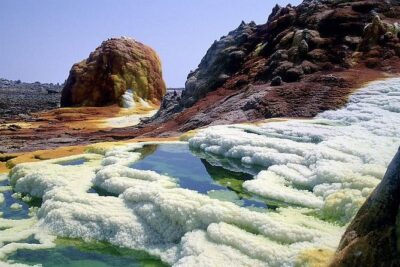
5 DAYS Lalibela, Axum, Tigray churches and Danakil
Read our review →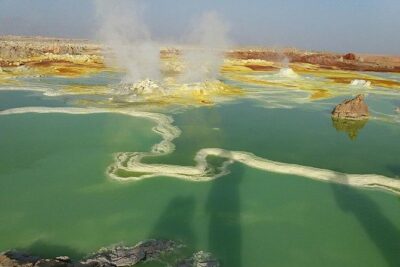
6 Days tour Package (Simien Mountains, Lalibela, and Danakil Depression)
Read our review →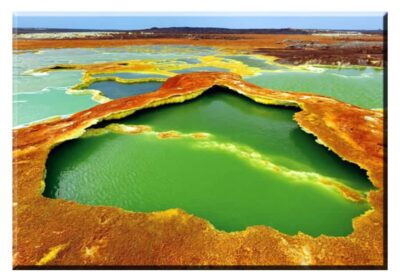
2-Night 3-Day Danakil Depression Tour without Flights
Read our review →
Lalibela, Axum, Danakil and Omo Valley 8 DAYS
Read our review →Browse the lists this tour appears in