
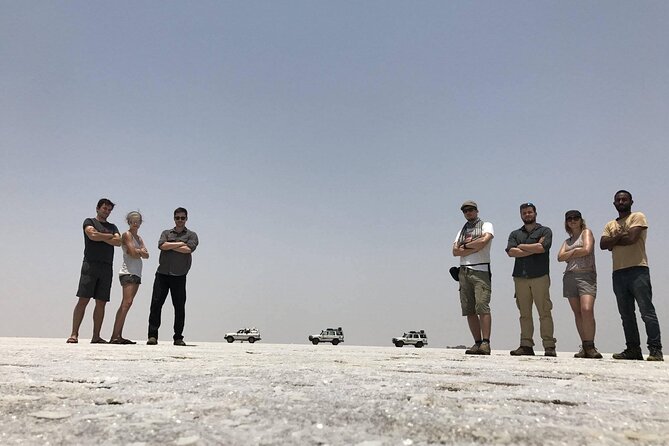
Reviewed · DANAKIL DEPRESSION TOURS
3 Days Danakil Depression Tour
The Earth feels unfinished here. This three-day journey through Ethiopia’s Danakil Depression combines Erta Ale volcano, salt mines, camel caravans, Lake Assal, and the strange mineral colors of Dallol. I like the rare volcanic scenery and the chance to see salt being cut by hand, loaded onto camels, and carried across one of the harshest regions on earth. I also like that the tour includes permits, entrance fees, meals, an air-conditioned vehicle, and a small group of no more than 10 people.
The main catch is comfort. This is a demanding trip with long drives, basic desert camping, extreme heat, and a moderate level of fitness required. Communication can also be uneven, and transport problems have caused serious frustration for some people, so I would confirm every transfer and flight before paying for nonrefundable tickets.
In This Review
- Key points to know before you book
- Why the Danakil Depression feels unlike other Ethiopia trips
- Day 1: The long approach to Erta Ale
- Sleeping near the volcano and starting before sunrise
- Lake Giulietti and the optional Afrera stop
- Day 3: Salt workers, camels, and the lowest ground
- What the $450 price really includes
- Guides, drivers, food, and the human side of the trip
- Heat, safety, and what to pack
- Should you book the 3 Days Danakil Depression Tour?
- FAQ
- How long is the Danakil Depression tour?
- How much does the tour cost?
- How many people can join the tour?
- Is hotel pickup available?
- Is a mobile ticket available?
- What is included in the price?
- Are drinks included?
- Is Erta Ale active during the tour?
- Is the Lake Giulietti or Lake Afrera stop guaranteed?
- Are camel caravans visible all year?
- What fitness level is required?
- What happens if bad weather cancels the tour?
Key points to know before you book
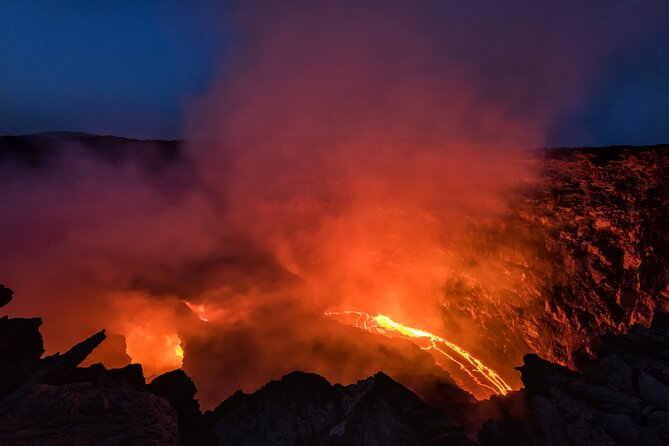
- Erta Ale requires a long night and early morning: You drive to Dodom, walk to the volcano, camp near the summit, and rise early for the crater and sunrise.
- The scenery changes sharply each day: Black volcanic rock, a lava lake, salt flats, mineral colors, and camel caravans all appear within one short trip.
- The tour is physically demanding: Expect roughly 12-hour days, heat, walking on rough ground, and basic conditions at camp.
- The price covers useful essentials: The $450 per-person cost includes transport, permits, entrance fees, two dinners, three lunches, and two breakfasts.
- The group is capped at 10: That is small enough to keep the vehicle and camp experience reasonably manageable.
- Confirm current volcanic and transport conditions: Erta Ale’s activity may be lower than older descriptions suggest, and reports include mixed communication and vehicle reliability.
Why the Danakil Depression feels unlike other Ethiopia trips
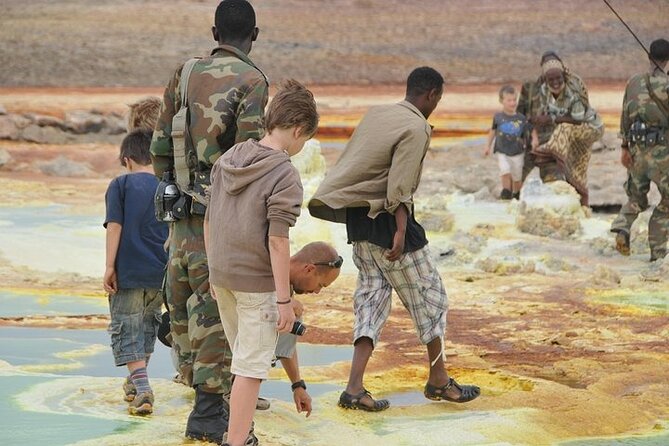
The Danakil Depression lies in the northern part of the Afar Triangle, a geological lowland formed where three tectonic plates are pulling apart. That movement helps explain the region’s volcanoes, salt deposits, hot ground, and unusual colors. You are not simply visiting a desert. You are seeing a place shaped by active forces below the surface.
The tour’s appeal comes from contrast. One moment you are on rough volcanic ground near Erta Ale. Later, you are beside a salt lake or watching Afar workers cut blocks from the earth. Dallol adds another change of mood, with mineral colors and volcanic formations that can look almost artificial.
I would approach this trip as an expedition rather than a standard sightseeing outing. The schedule is broad and the days can run for about 12 hours. Much of that time is spent driving across remote terrain, but the driving is what connects the major sights.
More Danakil expeditions:
- 3 Days Danakil Depression Tours Via Semera
★ 5.0 · 47 reviews - 12 Days SIMIEN MOUNTAIN-LALIBELA-DANAKIL-TIGRAY CHURCHES
★ 5.0 · 45 reviews - 3 Day Danakil Depression Ertale and Dallol Tours
★ 5.0 · 44 reviews
Day 1: The long approach to Erta Ale
The first day begins around 9:00 in the morning, with a drive toward Dodom, the settlement at the base of Erta Ale. The volcano’s name means smoky mountain in the Afar language. It is a shield volcano with a base roughly 30 kilometers wide and a summit caldera about one kilometer across.
The listed height is 613 meters, which sounds modest until you consider the heat, rough ground, darkness, and remote setting. The physical difficulty comes less from altitude and more from the long approach, the desert climate, and the uneven volcanic surface.
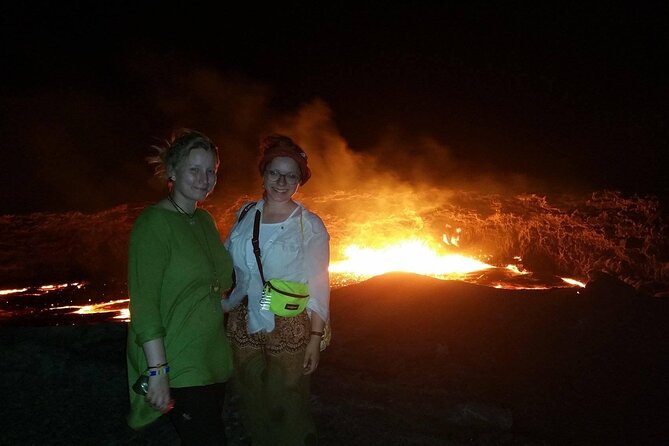
Erta Ale is famous for its lava lake, described as one of only a handful of permanent lava lakes in the world. Older descriptions often present it as a continuously furious spectacle. Conditions can change, however. Current activity may be lower than in the past, and flank eruptions have slowed, so you should not book this trip expecting a guaranteed wall of glowing lava.
That uncertainty does not make the volcano unworthy. The caldera, black rock, volcanic silence, and possibility of seeing heat below the crater still make Erta Ale a remarkable stop. It simply means you should judge the experience as a visit to an active volcanic area, not as a promise of a particular eruption display.
The first day is listed as about 12 hours, including the drive and the walk toward the volcano. You will need patience here. The route is remote, the surface can be hard on feet and equipment, and the schedule depends on road and weather conditions.
Sleeping near the volcano and starting before sunrise
The second day begins at Erta Ale with an early morning visit to the northern section of the crater, which corresponds to the main pit. The main pit crater is described as about 200 meters deep and 350 meters across. Smaller southern and central pits are reached by a walk of roughly five minutes.
The smaller southern pit is about 65 meters wide and close to 100 meters deep. These measurements give you a better sense of the scale than photographs alone. From the rim, the crater is not a small smoking hole. It is a broad, broken volcanic structure with several levels and collapsed sections.
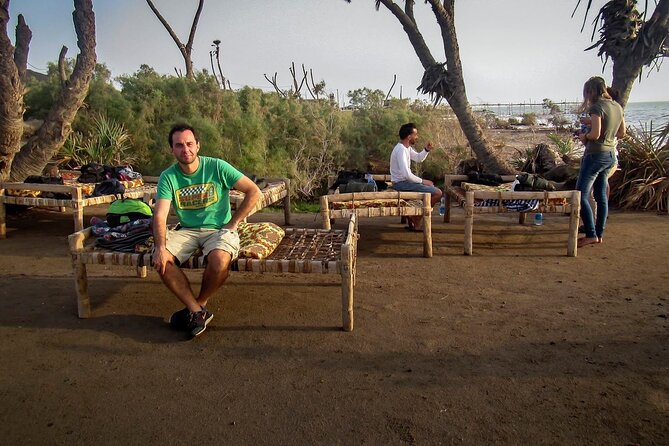
An early start matters for two reasons: cooler conditions and better light. Sunrise can reveal the crater walls in stages, with shadows changing as the sun rises. You should also expect a basic camp rather than a hotel-style night. The tour is designed for access to a remote volcano, not for comfort.
After breakfast, the plan is to descend around 9:00 in the morning and return to Dodom by about 10:30. The schedule says breakfast may be served around 7:00, so your morning will be short and active. Bring water within easy reach, protect your eyes from dust, and wear shoes suited to rough ground.
This is the part of the trip where fitness matters most. The operator asks for a moderate fitness level, and that is a fair description. You do not need to be a technical climber, but a long walk over uneven volcanic terrain in a hot, remote setting is not a casual stroll.
Lake Giulietti and the optional Afrera stop
After returning to camp, the group drives toward the mythical Lake Giulietti, also called Lake Afrera. This portion is listed as optional and may not be available during some periods, so you should ask what is operating on your chosen dates.
The lake adds another kind of scenery to the trip. After the dark rock of Erta Ale, the open water and salt country around Afrera can feel like a completely different region. The value of this stop depends heavily on the day’s timing, road conditions, and whether the optional visit is running.
The tour continues for about 12 hours on Day 2, which makes the pacing demanding. You may spend part of the day resting at camp after the volcano, but the transfer to the lake still takes time. I would not plan anything important immediately after this tour. The schedule is too dependent on remote roads and changing conditions.
More three-day trips:
- 3 Days Dankile Depression group Tours
★ 5.0 · 40 reviews - 3 Days Danakil Depression Tour from Semera City
★ 4.7 · 34 reviews - 2-Night 3-Day Danakil Depression Tour without Flights
★ 4.8 · 31 reviews - Trekking at Bale Mountains 3 Days
★ 5.0 · 28 reviews
Day 3: Salt workers, camels, and the lowest ground
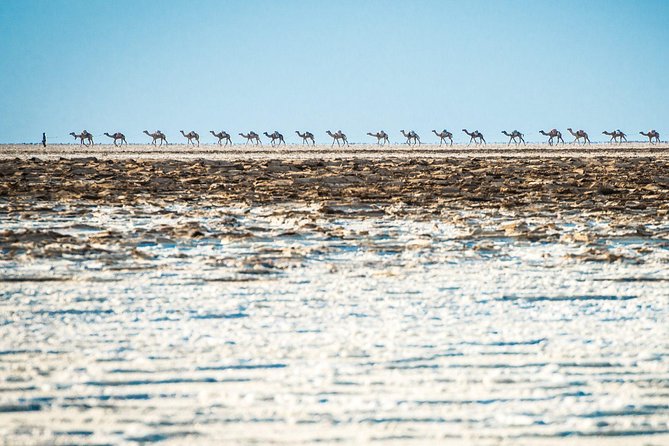
The final day focuses on the Danakil Depression itself. The morning drive goes to Ragad, also called Asebo, where local workers mine salt from the ground. You can see salt being broken, cut into rectangular pieces, and loaded onto camels.
This is one of the most valuable parts of the tour because it connects the famous scenery to daily work. The salt is not just a colorful surface for photographs. It is a resource extracted by hand in a region where transport still relies on camel caravans.
The visit also gives you a chance to walk with Afar people. That contact should be approached with respect and patience. You are entering a working area and a home region, not a staged attraction. Follow your guide’s instructions, ask before photographing people, and remember that the heat and salt affect workers far more than they affect a short-term visitor.
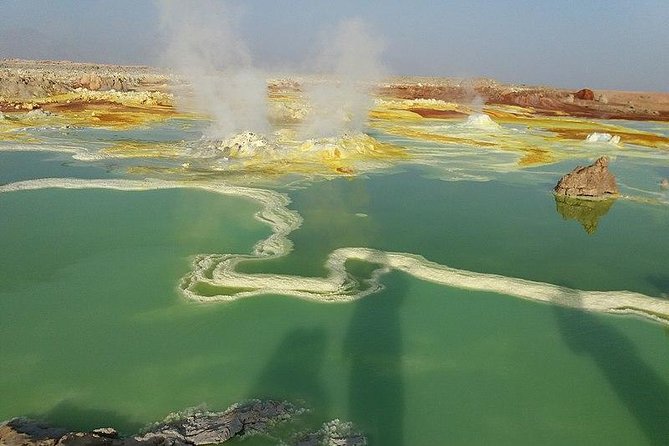
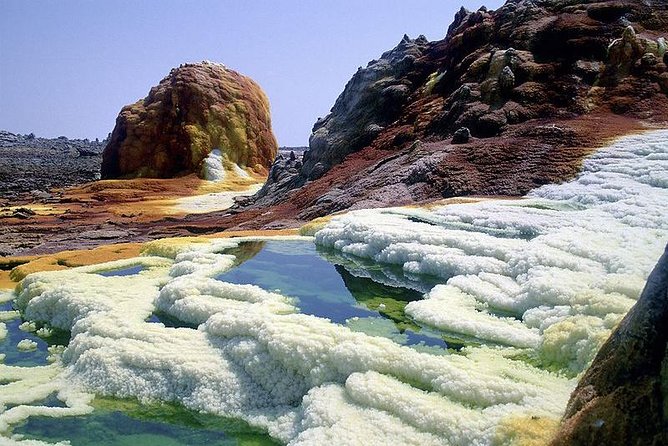
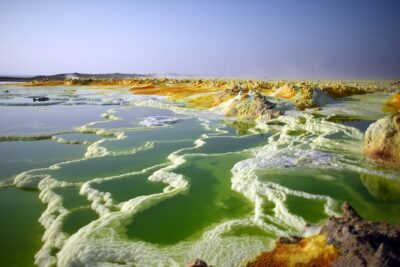
From Ragad, the route continues toward Dallol and Lake Assal. Dallol lies about 116 meters below sea level, making it one of the lowest places on earth. Volcanic activity has created mineral formations and colorful salt deposits, producing yellow, green, white, and orange tones in some areas.
Dallol is visually powerful, but the colors are not the only reason to visit. The site shows how heat, salt, water, and volcanic gases can alter the ground. The terrain may look delicate, yet it is also a harsh environment. Stay with the guide and avoid wandering onto unknown surfaces.
Lake Assal adds another salt-centered stop. The lake and surrounding salt formations help explain why caravans remain part of the region’s identity. If you visit between July, August, and early September, the camel caravan portion may not be available, so the timing of your trip affects what you see.
The final drive returns to Semera, followed by a flight back to Addis Ababa. Because the description does not clearly state that the domestic flight is included in the $450 price, I would confirm this in writing before booking. Also confirm the departure time, airport transfer, and what happens if the road schedule runs late.
What the $450 price really includes
At $450 per person, the tour can offer reasonable value if the transport and arrangements operate as planned. The cost includes an air-conditioned vehicle, permits, entrance fees, all listed taxes, two dinners, three lunches, and two breakfasts.
Those inclusions matter in the Danakil region. Remote permits and local access are not small details, and meals reduce the need to arrange food in places with limited services. Air conditioning is also more than a luxury when the itinerary involves long drives through extreme heat.
The price does not include alcoholic drinks or personal items such as internet, fax, and telephone use. You should budget for your own drinks and personal needs. The supplied information also does not list accommodation standards in detail, so ask what sleeping arrangements are provided at the desert camp.
The tour is booked, on average, about 40 days in advance. That suggests you should not leave planning until the last moment, especially if you are arranging flights into Semera or onward travel from Addis Ababa.
Guides, drivers, food, and the human side of the trip
The strongest part of the operation appears to be its staff. Several guides and team members receive warm praise, including Tesfa, Tesfaye, Aki, Hope, Abraham, Demeke, Haben, Josi, Seni, Wonde, and Kidu. Names may vary by departure, but the repeated pattern is clear: good guide and driver support can make a hard trip feel manageable.
Food also receives strong approval. A cook travels with the group, and the included meals are an important benefit in such a remote area. Do not expect restaurant variety, but warm, dependable meals can change the mood after a long drive or cold early morning.
Communication is less consistent. Some people describe the tour as well organized, while others found the daily plan unclear or felt that the main guide did not explain changes early enough. I would ask for a written schedule, the meeting point, the names of the local contacts, and an emergency contact before departure.
Vehicle condition deserves attention too. One account describes three blown tires, including two on the first day, with concern about worn tires and safety. A breakdown can happen on rough desert tracks, but worn equipment is a serious concern. Ask whether the vehicle has suitable tires, spare tires, and a clear recovery plan.
Heat, safety, and what to pack
The tour requires moderate fitness and good tolerance for heat, long drives, walking, and basic camping. You should be comfortable spending much of a day outside and following a fixed group schedule.
Useful items include:
- Plenty of personal drinking water
- Closed shoes with firm soles
- A hat, sunglasses, and sun protection
- Light clothing that covers your skin
- A warm layer for the early morning
- A small bag for personal items
- Extra phone and camera power if needed
The operator states that the tour requires good weather. If poor weather causes cancellation, you are offered another date or a full refund. For other cancellations, you can receive a full refund if you cancel at least 24 hours before the start time. Changes or cancellations inside that window are not accepted.
This is not a suitable choice if you need predictable hotel comfort, short daily outings, or a highly polished schedule. It is a better match for you if unusual geology, remote roads, basic camping, and demanding days are part of the appeal.
Should you book the 3 Days Danakil Depression Tour?
I would book this tour if you want to see several of Ethiopia’s most unusual natural sights in one tightly arranged trip. Erta Ale, Dallol, Lake Assal, salt mining, and camel caravans give you a broad experience for $450, and the included meals, permits, entrance fees, and transport improve the value.
I would not book without confirming the practical details. Ask about the current activity at Erta Ale, the optional Lake Afrera stop, the standard of camp, the Semera to Addis flight, vehicle condition, and the day-by-day communication plan.
Choose it for the rare geology and the chance to see a working salt economy up close. Skip it if you want comfort and certainty. In the Danakil Depression, the rough edges are part of the experience, but they should never come at the expense of clear information or basic safety.
FAQ
How long is the Danakil Depression tour?
The tour lasts approximately three days, with each day listed as about 12 hours of activity.
How much does the tour cost?
The stated price is $450 per person.
How many people can join the tour?
The maximum group size is 10 people.
Is hotel pickup available?
Pickup is offered, although the supplied information does not specify every pickup location.
Is a mobile ticket available?
Yes, the experience offers a mobile ticket.
What is included in the price?
The price includes an air-conditioned vehicle, all fees and taxes, permits, entrance fees, two dinners, three lunches, and two breakfasts.
Are drinks included?
Alcoholic drinks are not included. Personal items such as internet, fax, and telephone use are also excluded.
Is Erta Ale active during the tour?
Erta Ale has a lava lake, but its activity may not be as strong as older descriptions suggest. Flank eruption activity has also slowed.
Is the Lake Giulietti or Lake Afrera stop guaranteed?
No. The stop is optional and may not be available during some periods.
Are camel caravans visible all year?
No. The camel caravan portion is not available in July, August, and early September.
What fitness level is required?
A moderate level of physical fitness is required because the itinerary includes long drives, walking over rough volcanic ground, heat, and basic camping.
What happens if bad weather cancels the tour?
You will be offered a different date or a full refund if poor weather causes cancellation.
Just added around Ethiopia
- 10 Days in Northern Ethiopia Tours★ 4.5 · 3 reviews
- Lalibela 2-Day Eco Trekking Tour★ 5.0 · 3 reviews
- Day trek to Simeien Mountains★ 5.0 · 3 reviews
- Full Day Tour in Lalibela★ 5.0 · 3 reviews
- 4 Days tour in omo valley.★ 4.5 · 3 reviews
- Day Trip to Tiya UNESCO Site & Melka Kunture Archaeological Site★ 4.5 · 3 reviews
- Two days Lake Wenchi and Menagesha Forest★ 5.0 · 3 reviews
- 6 days 5 nights Addis Abeba sightseeing & Lalibela Rock-Hewn Churches★ 5.0 · 3 reviews
Danakil Depression Tours, compared.
12 Days SIMIEN MOUNTAIN-LALIBELA-DANAKIL-TIGRAY CHURCHES
Read our review →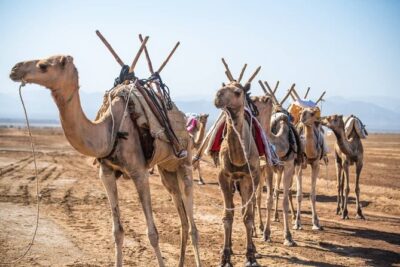
3 Day Danakil Depression Ertale and Dallol Tours
Read our review →3 Days Danakil Depression Tour from Semera City
Read our review →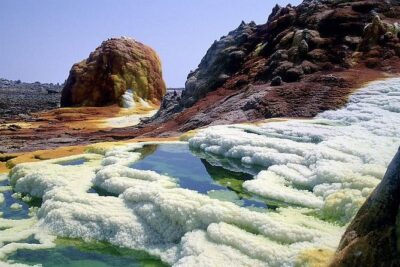
5 DAYS Lalibela, Axum, Tigray churches and Danakil
Read our review →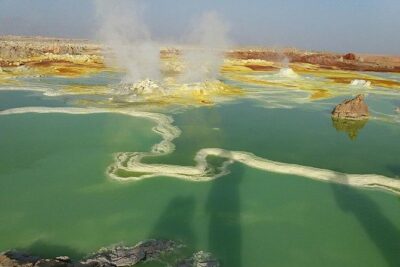
6 Days tour Package (Simien Mountains, Lalibela, and Danakil Depression)
Read our review →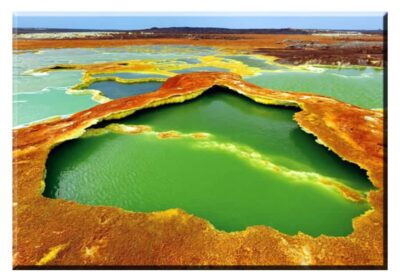
2-Night 3-Day Danakil Depression Tour without Flights
Read our review →
Lalibela, Axum, Danakil and Omo Valley 8 DAYS
Read our review →Browse the lists this tour appears in