
Reviewed · OMO VALLEY TRIBAL TOURS
9 days Omo Valley Tribes and Photography Tour
Nine days, many worlds, one long road. This private Ethiopia tour links Addis Ababa, the Omo Valley, Konso, Arba Minch, Hawassa, and the Rift Valley in one ambitious trip. I like the blend of indigenous culture and wildlife, especially the visits to Mursi, Hamer, Dassanech, Karo, and Konso communities, followed by boat trips on Chamo Lake and Hawassa Lake.
I also like the practical design: private transport, hotels, meals, entrance fees, and one domestic flight are included. The main drawback is the pace. Several days involve seven to ten hours of driving, and the $0 price shown for the experience is clearly not a usable final fare, so you should confirm the full cost before booking.
In This Review
- Key points to know before you go
- Starting with Lucy, Entoto, and Merkato in Addis Ababa
- Flying south to Jinka and meeting the Ari community
- Mursi villages and the long road to Turmi
- Omorate, the Dassanech, and Hamer sunset light
- Karo villages, Dimeka market, and the road to Konso
- Konso terraces, village design, and Arba Minch
- Chamo Lake crocodiles and Dorze bamboo houses
- Green mountain roads to Hawassa
- Fish markets, Ziway birds, and the final Addis evening
- What the price and inclusions really mean
- Who should book this Omo Valley journey?
- Should you book it?
- FAQ
- How long is the Omo Valley photography tour?
- Where does the tour begin and end?
- Is pickup offered?
- Is this a private tour?
- What communities can you visit?
- Is a domestic flight included?
- Are meals included?
- What is not included?
- What is the cancellation policy?
Key points to know before you go

- Addis Ababa begins the trip with major sights: Lucy at the National Museum, Entoto views, Trinity Cathedral, and Merkato.
- The Omo Valley section covers several distinct communities: Mursi, Hamer, Dassanech, Karo, and Konso each offer a different cultural setting.
- Photography is central to the experience: The itinerary is built around village visits, markets, daily life, scenery, and sunset light.
- The route includes real wildlife stops: Chamo Lake offers crocodiles and aquatic birds, while Ziway Lake adds birdwatching on the return to Addis.
- You should expect long road days: Days 5, 6, and 9 are especially demanding, with up to ten hours in transit.
- Personal service is a major selling point: Haile and Sycamore Ethiopia Tours receive strong praise for care, planning, and a family-like approach.
Starting with Lucy, Entoto, and Merkato in Addis Ababa

Your first day gives you a fast introduction to Ethiopia’s capital. The schedule includes the National Museum, Entoto Natural Park, Trinity Cathedral, and Merkato, with roughly two hours for the city tour and about one hour at each main stop.
The National Museum is the key opening visit. You can see Lucy, the famous fossil remains that give the museum its international importance, along with Ethiopian art, culture, and historical displays. The stop is only listed as one hour, so you will need to keep moving rather than study every gallery at length.
Entoto Natural Park takes you uphill above Addis Ababa. The reward is the broad view over the city and the surrounding scenery. This is one of the best places in the itinerary for photographs that show Addis as a highland capital rather than just a busy urban center.
Trinity Cathedral, built by Emperor Haile Selassie in 1944, introduces Ethiopia’s Orthodox Christian tradition. The church is described as the second most important church for Ethiopian Orthodox believers, making it more than a quick architectural stop.
The day ends at Merkato, one of Africa’s largest open markets. You will see separate areas where local people conduct business, and the visit gives you a more direct look at everyday commerce. Merkato can be intense, so keep your belongings secure and stay close to your guide.
This first day is well planned for someone arriving in Ethiopia with limited time. It covers science, religion, city views, and street life. The only concern is that the schedule may feel full after a flight, especially if you are not used to high-altitude Addis Ababa.
More Omo Valley tours:
- 6 Days Omo Valley Tribes Tours From Addis Ababa
★ 5.0 · 33 reviews - 3 Days Omo Valley Tour
★ 5.0 · 24 reviews - Danakil Depression, Lalibela, Omo Valley and Simien Mountains
★ 5.0 · 23 reviews
Flying south to Jinka and meeting the Ari community
On day two, you fly from Addis Ababa to Jinka. This domestic flight is valuable because it removes a much longer overland journey and gets you to the Omo Valley quickly.
The plan includes the Jinka museum and a nearby Ari village. The Ari are one of the local communities in the area, and this visit gives you an early introduction to village life before the more remote excursions begin.
The listed program lasts about three hours, making this one of the easier days physically. That is helpful after the capital city visit and before the long drives ahead. Since only one flight per person is included, confirm exactly which route it covers and how baggage is handled when you reserve.
Jinka becomes your base for the first major cultural outings. From here, the road leads toward Mago National Park and the communities living farther south and west.
Mursi villages and the long road to Turmi

Day three is one of the tour’s most distinctive cultural days. You drive in the morning to Mago National Park to visit a Mursi community and village, then continue southwest toward Turmi, the center of the Hamer area.
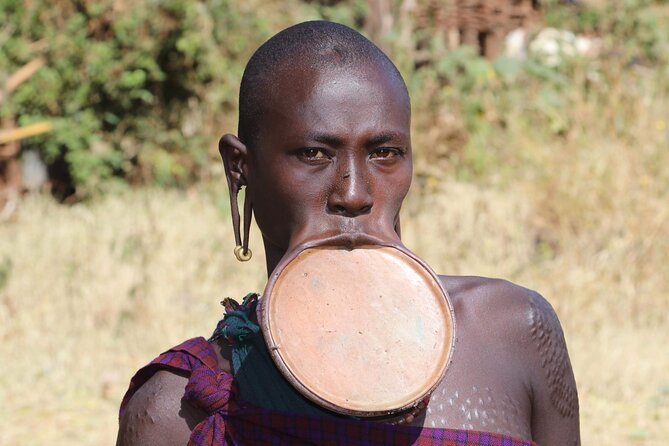
The Mursi are widely known for the lip plates worn by some women. This is a powerful visual subject, but it is also a moment that calls for respect. Ask before taking photographs, listen to your guide, and remember that people are not simply scenery for a camera.
The entire day is listed at about seven hours. That includes driving and the visit, so expect a demanding road journey rather than a leisurely park outing. The appeal is access to a part of southern Ethiopia that is difficult to reach independently, while the cost is time spent on rough or slow roads.
Turmi marks a change in focus. Instead of a single national park visit, you begin spending more time around Hamer communities, villages, markets, and open countryside. If your main reason for booking is photography, this is where the itinerary becomes especially relevant.
Omorate, the Dassanech, and Hamer sunset light
Day four takes you from Turmi to Omorate, near the border with Kenya. Here you visit Dassanech communities and cross the Omo River by local boat. The river continues toward Lake Turkana in Kenya, so this stop adds a strong geographic sense to the cultural program.
The boat crossing is a memorable change from the road. It also gives you a chance to see the Omo Valley from the water, though the provided details do not specify the boat type or crossing conditions. Ask your operator what to expect before departure.
After returning to Turmi for lunch, the afternoon continues with a Hamer village visit. The schedule specifically allows time for a beautiful sunset, which should appeal to photographers looking for warmer light and village scenes at the end of the day.
This is another seven-hour day. It combines transport, a border-region setting, a river crossing, lunch, and a late village visit. Bring water, sun protection, and spare camera batteries, since long days outside can make small comforts matter.
More photo sessions:
- Photography Expeditions to Omo Valley
★ 5.0 · 5 reviews
Karo villages, Dimeka market, and the road to Konso

Day five is the longest cultural transfer day before the return north. You leave early to visit Karo communities near the Omo River, return toward Turmi, and then continue to Konso.
The Karo stop extends the cultural range of the journey. Their communities are located near the river, so the visit has a different setting from the Hamer villages around Turmi. As with every village visit on this route, your guide’s handling of introductions and photography will shape the experience.
The route then passes through Dimeka, a small Hamer town with a large tribal market held on Saturdays. If your schedule puts you there on the right day, this may be one of the most useful photography opportunities on the trip. Markets show people buying, selling, meeting, and working, rather than presenting village life only as a staged cultural stop.
The drive continues through Woyto, with striking roadside scenery, before reaching Konso late in the afternoon. The day is listed at eight hours, and the early start plus long transfer means you may have little energy left after arrival.
Still, this is an important day because it connects the Lower Omo Valley with the next part of the journey. You move from river communities toward the terraced hills and villages of Konso.
Konso terraces, village design, and Arba Minch
Day six begins with a visit to the Konso area. The Konso are known for terraced farming and distinctive villages, giving this stop a different visual character from the communities farther south.
The Konso museum follows the village visit and runs until midday. This is a useful pairing. The outdoor visit gives you a sense of the setting, while the museum can provide additional context about local life, customs, and material culture.
After lunch, you drive north to Arba Minch, the capital of the Gamo zone. The drive takes much of the afternoon, with arrival expected late in the day. You should have some time to rest at the hotel and enjoy the views around Arba Minch.
This day illustrates the tour’s main tradeoff. You see a great deal of southern Ethiopia without arranging several separate trips, but you spend many hours in the vehicle. A private tour helps because your group can travel at its own pace within the planned route.
Chamo Lake crocodiles and Dorze bamboo houses
Day seven begins with a short drive to Chamo Lake, about 12 kilometers from Arba Minch. A boat trip takes you out to see large Nile crocodiles and aquatic birds. It is the clearest wildlife-focused activity in the itinerary.
The lake outing lasts until midday, followed by lunch in Arba Minch. The boat gives you a break from road travel and adds variety after several days centered on cultural visits.
In the afternoon, you drive about 30 kilometers to Dorze village. Dorze is known for traditional bamboo houses and weaving. The visit adds craft and architecture to the trip, and the unusual house design should provide strong photo subjects without requiring a long trek.
You return to Arba Minch at the end of the day. At roughly seven hours, this is a full day, but it is more balanced than the longest transfer days. The mix of crocodiles, birds, village architecture, and weaving makes it one of the tour’s strongest all-around sections.
Green mountain roads to Hawassa
Day eight is mainly a transfer from Arba Minch to Hawassa, also written as Awasa. The distance is about 272 kilometers, and the drive takes around seven hours.
The route passes through green mountain scenery, with a stop in Sodo to see Wolayta and Sidamo villages. This helps break up the long drive and adds two more local cultures to an already wide-ranging itinerary.
You arrive in Hawassa around midday. The afternoon includes Hawassa Lake and highlights of the city. Compared with the Lower Omo Valley, Hawassa offers a more urban and lakeside setting, which gives the final part of the trip a gentler rhythm.
The stop is worthwhile for anyone who enjoys changing scenery. You move from remote villages and dusty roads to a city beside a lake, then prepare for the final return to Addis Ababa.
Fish markets, Ziway birds, and the final Addis evening
The last day is another long one, listed at about ten hours. You begin with Hawassa’s fish market, then drive back to Addis Ababa, stopping near Ziway Lake to see birds and the lake scenery.
The fish market is a practical, local ending to the lake section. It is less polished than a formal attraction and more connected to daily work and food. If you like photographing ordinary life, this may be more rewarding than another landmark.
Ziway Lake adds one final nature stop. The itinerary highlights beautiful birds there, giving you a last chance to use your camera before returning to the capital.
You should reach Addis Ababa in the late afternoon. The evening includes a farewell program, followed by transfer to the airport for departure. Because this is a ten-hour day before an international flight, confirm the departure timing carefully and avoid scheduling a flight that leaves too soon after the planned return.
What the price and inclusions really mean
The displayed price is $0.00, which should be treated as a placeholder or incomplete fare, not as a free nine-day private tour. Ask Sycamore Ethiopia Tours for the actual price, what currency applies, and whether the quoted amount changes with hotel choice, flight availability, or group size.
The package includes private transport, accommodation, taxes and fees, one plane flight per person, and all listed breakfasts, lunches, and dinners. Those inclusions matter in southern Ethiopia, where arranging separate transport, hotels, meals, park visits, boat trips, and domestic flights can become complicated.
Visa costs and international air tickets are excluded. Alcoholic drinks, tips, and gratuities are also extra. Build those costs into your budget before deciding that the package offers good value.
The private format is especially useful here. You travel with only your own group, which can make long road days more comfortable and may allow better timing for photography within the planned schedule. Haile is praised for personal care, and the strongest comments describe Sycamore Ethiopia Tours as attentive and family-like rather than distant or purely transactional.
Who should book this Omo Valley journey?
I would recommend this tour to you if you want a broad first look at southern Ethiopia and prefer one organized route over several separate bookings. It suits photographers, culture-focused visitors, and people who want wildlife, markets, lakes, religious sites, and village visits in one trip.
You should be comfortable with long drives and a moderate level of physical fitness. The tour is not recommended for people with health problems, and the schedule leaves limited room for recovery after the hardest road days.
Photography is a major reason to consider it. You get village settings, market scenes, river views, traditional houses, wildlife, birds, city life, and sunset opportunities. Your best results will depend on patience and respectful conduct, so use the guide’s advice before photographing people.
The company’s four published ratings are all five stars, and the praised qualities are consistent: careful service, personal attention, cultural access, and professional planning. That is encouraging, but you should still ask for the exact hotel names, vehicle details, flight schedule, photography guidelines, and final price before paying.
Cancellation is flexible only up to a point. You receive a full refund if you cancel at least three full days before the start time. Cancellations or changes inside that period are not refunded or accepted, and poor weather may lead to a new date or full refund.
Should you book it?
Book this tour if your priority is variety and access. In nine days, you visit Addis Ababa, Jinka, Mago National Park, Turmi, Omorate, Konso, Arba Minch, Dorze, Hawassa, and Ziway, with several communities and two major lake areas along the way.
Think twice if you dislike long drives, prefer slow travel, or need a relaxed schedule. Before booking, get the real price in writing and confirm the domestic flight, hotel standards, road conditions, and final airport timing.
For a private introduction to the Omo Valley, Sycamore Ethiopia Tours offers an appealing route with strong personal service and a wide range of experiences. The journey asks a lot from you, but it also gives you an unusually full picture of southern Ethiopia.
FAQ
How long is the Omo Valley photography tour?
The tour lasts approximately nine days and includes eight nights.
Where does the tour begin and end?
It begins in Addis Ababa, includes travel through southern Ethiopia, and returns to Addis Ababa for an airport transfer at the end.
Is pickup offered?
Yes. Pickup is offered as part of the experience.
Is this a private tour?
Yes. Only your own group participates in the private tour or activity.
What communities can you visit?
The route includes Ari, Mursi, Hamer, Dassanech, Karo, Konso, Wolayta, Sidamo, Gamo, and Dorze communities.
Is a domestic flight included?
Yes. One plane flight per person is included. The itinerary states that the flight is from Addis Ababa to Jinka.
Are meals included?
Yes. Breakfast, lunch, and dinner are included for the nine-day program.
What is not included?
Visa fees, international air tickets, alcoholic drinks, tips, and gratuities are not included.
What is the cancellation policy?
You can receive a full refund if you cancel at least three full days before the experience start time. Cancellations and changes made within three days are not refunded or accepted. If poor weather causes cancellation, you will be offered another date or a full refund.
Just added around Addis Ababa
- 10 Days in Northern Ethiopia Tours★ 4.5 · 3 reviews
- Two days Lake Wenchi and Menagesha Forest★ 5.0 · 3 reviews
- Day Trip to Tiya UNESCO Site & Melka Kunture Archaeological Site★ 4.5 · 3 reviews
- 6 days 5 nights Addis Abeba sightseeing & Lalibela Rock-Hewn Churches★ 5.0 · 3 reviews
- Addis Ababa Half Day Shopping Tour★ 5.0 · 3 reviews
- 12- Day Historical Route of Ethiopia★ 5.0 · 3 reviews
- 6 days Omo valley cultural Tour★ 5.0 · 3 reviews
- Addis Ababa at a Glance★ 5.0 · 3 reviews
Omo Valley Tribal Tours, compared.

6 Days Omo Valley Tribes Tours From Addis Ababa
Read our review →
Lalibela, Axum, Danakil and Omo Valley 8 DAYS
Read our review →
Danakil Depression, Lalibela, Omo Valley and Simien Mountains
Read our review →



9 Days Tours To Danakil Depression, Simen MNP, Lalibela With Omo Valley Tribes
Read our review →Browse the lists this tour appears in