
Reviewed · OMO VALLEY TRIBAL TOURS
5 days Omo valley
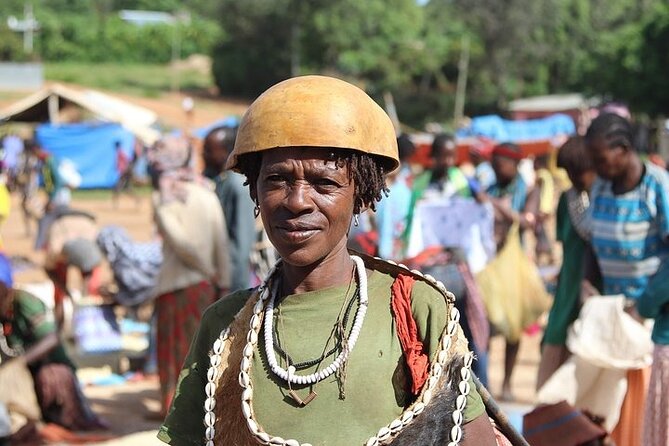
This is Ethiopia at its most human. This five-day journey from Addis Ababa combines village visits, market days, a Lake Chamo boat safari, and long road trips through southern Ethiopia. I especially like the chance to meet Dorze, Konso, Karo, Nyangatom, Hamer, Dassenech, and Ari communities, and I like that private transport and village entrance fees are included.
The main consideration is the pace. You cover a large area in only a few days, with several long drives and an itinerary that appears to list four full touring days despite the advertised five-day duration. Confirm the exact schedule, hotels, flights, and village visits before paying.
In This Review
- Key points to know before booking
- Why the Omo Valley is worth the effort
- Day 1: Arbaminch and the Dorze highlands
- Day 2: Lake Chamo, Konso, and the market calendar
- Day 3: Karo art, Nyangatom culture, and the Hamer visit
- Day 4: Omorate and the Dassenech village
- The missing fifth day deserves clarification
- What the $830 price includes
- Guides, vehicles, and the human side of the trip
- Who should book this Omo Valley tour?
- Final verdict: a strong route with a few details to confirm
- FAQ
- How long is the Omo Valley tour?
- Where does the tour begin?
- What communities are included in the tour?
- When are the Keyafer and Dimeka markets held?
- What is included in the $830 price?
- How many people can join the tour?
Key points to know before booking
- A short flight begins the journey: You fly from Addis Ababa to Arbaminch before heading into the southern highlands.
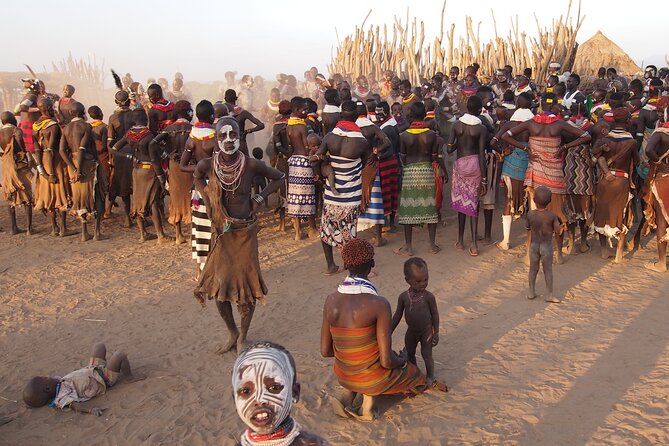
- The villages are the heart of the trip: Visits include Dorze, Konso, Karo, Nyangatom, Hamer, Dassenech, Ari, and possibly Mursi.
- Market days matter: Keyafer market is listed for Thursdays, while Dimeka market is listed for Saturdays.
- You get a private vehicle and guide: The price includes private transport, an air-conditioned vehicle, an English-speaking driver-guide, and professional guiding.
- The group is capped at 13 people: That is small enough to keep the experience more personal than a large coach tour.
- This is a fast, demanding route: You should be comfortable with long drives, early starts, changing road conditions, and a full cultural program.
Why the Omo Valley is worth the effort
The Omo Valley is not a quick side trip from Addis Ababa. It sits far to the south, and reaching its communities takes planning, patience, and several days on the road. That is exactly why a guided itinerary can be useful here. You are not simply looking at scenery through a car window. You are moving between communities with different clothing, customs, artistic traditions, and local settings.
The trip description places strong emphasis on body paint, colorful clothing, clay pigments, jewelry, and elaborate head decorations. These details are not just decoration for a photograph. They show how people use appearance, materials, and shared creativity to express identity. You should approach village visits with respect and let your guide explain when photography is welcome.
I also like the mix of experiences. You are not visiting one community and then repeating the same stop several times. The Dorze and Konso visits offer a different setting from the lower Omo area, while the markets at Keyafer and Dimeka give you a chance to see local trade and daily activity rather than only arranged village encounters.
There is a practical warning here. The Omo Valley is sometimes presented as an easy parade of colorful photo opportunities. That would be a shallow way to experience it. The best part of this journey is learning how people live in demanding surroundings and how cultural expression connects to community life. Go with curiosity, ask permission before taking pictures, and avoid treating people as scenery.
More Omo Valley tours:
- 6 Days Omo Valley Tribes Tours From Addis Ababa
★ 5.0 · 33 reviews - 3 Days Omo Valley Tour
★ 5.0 · 24 reviews - Danakil Depression, Lalibela, Omo Valley and Simien Mountains
★ 5.0 · 23 reviews
Day 1: Arbaminch and the Dorze highlands

The first day starts with a flight from Addis Ababa to Arbaminch. That flight saves valuable road time and lets you begin the cultural program sooner. From Arbaminch, the route climbs into the mountains overlooking the city for a visit to a Dorze village.
The setting is one of the memorable parts of this first stop. The Dorze live in a highland environment, quite different from the hotter areas farther south. The village visit gives you an introduction to Dorze culture and a chance to learn how the community has adapted to its surroundings.
I like this opening because it eases you into the region. You begin with a highland community before moving toward the Omo Valley’s lower and more remote areas. It also gives your guide a chance to explain local customs early in the trip, which can make later village visits more meaningful.
Your admission to the Dorze village is included, as are your guide and transportation. The supplied information does not state how long you spend in the village, what meal arrangements are made, or which hotel is used that night. Ask for those details, especially if you want to know whether there is time for a substantial village walk.
Day 2: Lake Chamo, Konso, and the market calendar
Day 2 begins with a boat safari on Lake Chamo. This changes the rhythm of the tour after the first day in the mountains. Instead of staying on the road, you get time on the water before continuing south toward Turmi.
The itinerary then includes a visit to a Konso village. Konso culture is one of the major highlights of southern Ethiopia, and this stop gives the journey another distinct cultural setting. The value here is comparison. You can begin to see that the Omo region is not one single culture with one set of customs. Each community has its own visual style and traditions.
The schedule also mentions Keyafer market on Thursdays and Dimeka market on Saturdays. This is an important planning point. You cannot assume you will see both markets on one regular trip, since each has a different market day. Ask the operator which market fits your departure date and whether the itinerary will be adjusted around it.
Markets can be more revealing than a short village stop because they bring together buying, selling, transport, clothing, food, and conversation. At the same time, they can be busy and visually intense. Keep your belongings secure, listen to your guide, and ask before photographing people or goods.
The drive to Turmi is part of the day, and it may be tiring. The tour includes private transportation and an air-conditioned vehicle, which is a real advantage on a route with substantial road time. Still, air conditioning does not shorten the drive. If you dislike long hours in a vehicle, this five-day schedule may feel compressed.
Day 3: Karo art, Nyangatom culture, and the Hamer visit
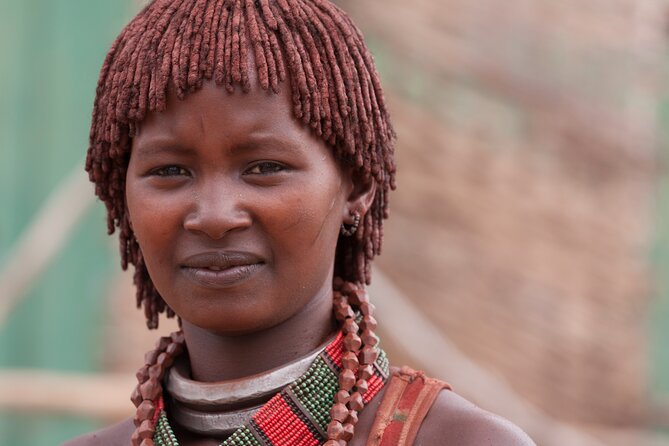
Day 3 takes you to a Karo village, known in the program for skin scarification and ornamental decoration. The Karo are also associated here with striking body paint and personal adornment. Your guide should help explain the meaning and context of these practices rather than leaving you with only a quick visual impression.
This is one of the most distinctive stops on the route, but it also calls for sensitivity. Scarification is a serious cultural practice, not a costume detail. You may find the subject powerful or difficult, and that is normal. Listen carefully, avoid judgmental reactions, and remember that the purpose of the visit is cultural understanding, not collecting dramatic images.
The schedule then continues to a Nyangatom village. Placing Karo and Nyangatom visits on the same day gives you a useful chance to compare two communities within the same broader region. The route is ambitious, though, so confirm how much time is available at each place.
In the afternoon, you visit a Hamer village. The Hamer are among the communities most closely associated with the Omo Valley in popular travel photography, partly because of their clothing, beadwork, hairstyles, and ceremonial traditions. The visit can be visually memorable, but your guide’s explanations are what turn it into more than a photo stop.
The Hamer visit is listed with an included admission fee. That means you should not normally need to pay another entrance charge for the scheduled village visit, although personal purchases, tips, food, and other expenses are not listed as included.
More five-day itineraries:
- 5 DAYS Lalibela, Axum, Tigray churches and Danakil
★ 5.0 · 34 reviews - Danakil Depression and Lalibela 5 Days Tours
★ 5.0 · 28 reviews - 5 Days North Ethiopia Tours
★ 5.0 · 23 reviews - 5 DAYS Axum, Lalibela, Tigray churches and Danakil
★ 4.5 · 22 reviews
Day 4: Omorate and the Dassenech village
Day 4 takes you to Omorate, a town on the Omo River, for a visit to a Dassenech village. This is one of the southernmost points described in the program and gives you a look at a community living close to the river.
The river setting adds a different character to the trip. The Omo is not simply a backdrop. It shapes movement, settlement, trade, and local life. A guide can help you understand why the river matters and how life in this area differs from the highland setting around Arbaminch and the drier zones farther south.
The Dassenech village admission is included. The route then returns to Turmi before continuing to Jinka. On paper, this is a very full day. You should expect considerable time in the vehicle, particularly because the route involves reaching Omorate and then retracing part of the way before continuing north.
Jinka is an important base for the surrounding area. The itinerary includes an Ari village visit and the South Omo Ethnography Museum. The museum is especially useful after several community visits because it can provide wider regional context. You will have seen clothing, body decoration, markets, and village life firsthand, then have a chance to connect those observations with a broader explanation of the area.
The schedule again mentions Keyafer and Dimeka markets on this day, even though they are also listed on Day 2. It also includes admission for a Mursi village, but the day-by-day description does not clearly place a Mursi visit. This is the biggest itinerary detail to clarify. Ask whether Mursi is part of your actual route, an optional extension, or simply included in a broader list of possible admissions.
The missing fifth day deserves clarification
The product is described as a five-day trip with four nights of accommodation, but the published daily plan runs from Day 1 through Day 4. There is no clear Day 5 schedule in the supplied details.
That does not automatically mean the trip is incomplete. The fifth day could be reserved for returning to Arbaminch or Addis Ababa, a flight, or a final transfer. But you should not guess. Before booking, request a written schedule showing where you sleep each night, when the return journey happens, and whether the final day includes sightseeing or only transportation.
This is particularly important if you are connecting with an international flight. The tour offers pickup, but the information does not state the final drop-off time or location. Leave plenty of space between the tour’s expected finish and any onward flight.
What the $830 price includes
At $830 per person, the price needs to be judged against what is bundled into the route. This is not simply a short guided visit. The package includes private transportation, an air-conditioned vehicle, four nights of accommodation, an English-speaking driver-guide, a professional guide, taxes, and listed entrance fees.
The included admissions cover Dorze, Konso, Karo, Nyangatom, Hamer, Dassenech, Ari, Mursi, Dimeka market, and Keyafer market. Since the itinerary does not clearly schedule every one of these places, confirm which fees apply to your exact departure.
The value is strongest if you want one company to organize a complicated southern route. You avoid arranging separate vehicles, guides, hotels, and entrance payments for each community. A maximum group size of 13 is also reasonable. It is not a private trip for one or two people, but it is far more manageable than a large bus tour.
The price does not list meals, drinks, personal purchases, tips, flights, or any other item outside the inclusion section. The first flight to Arbaminch is mentioned in the itinerary, but the information does not clearly say whether that airfare is included in the $830. This is a key question to ask. An apparently good price can change quickly if domestic flights and meals are extra.
Group discounts are offered, which could make the trip better value for families or organized groups. Ask whether the discount applies to all group sizes and whether it changes the room or transport arrangements.
Guides, vehicles, and the human side of the trip
The company identifies an English-speaking driver-guide and a professional guide as part of the package. That combination matters on this route. A good guide can explain cultural differences, manage timing, help with local introductions, and reduce confusion at markets and villages.
Henok has been associated with the company’s guiding work, and Yenew is identified as the company director. If you have a preference, ask whether Henok will lead your departure and who will handle the driving. Do not assume a particular guide is guaranteed unless the company confirms it.
Past guests have described the service as highly organized and praised the warmth of the staff. They also singled out the way guides explain Ethiopia, including local details and the route between stops. That is encouraging, especially on a trip where the quality of interpretation can make a major difference.
The private vehicle is another practical advantage. You will still spend long periods on the road, but you are not sharing a large coach with dozens of people. The maximum of 13 participants makes it easier to ask questions and keep the group together at village visits.
Who should book this Omo Valley tour?
I would recommend this trip to you if you want a tightly organized introduction to southern Ethiopia and prefer cultural contact over resort comfort. It suits photographers who are willing to ask permission, travelers who enjoy markets and museums, and first-time visitors who want a guide for a complicated route.
It is also a good fit for a small group that values private transport and shared costs. The group limit gives you some personal space without the price of a fully private departure.
I would hesitate to recommend it if you need a slow schedule, dislike long drives, or want every day to be clearly mapped before departure. The missing fifth-day plan and the repeated market references need clarification. You should also ask about the domestic flight, meals, exact hotels, and the Mursi visit.
Keep your expectations grounded. Village encounters are not stage shows, and the most respectful visit may not produce the photograph you imagined. The reward is learning how different communities use dress, body art, trade, and the natural world to express who they are.
Final verdict: a strong route with a few details to confirm
This is an ambitious five-day introduction to the Omo Valley, with excellent geographic and cultural variety. I like the included village admissions, private air-conditioned transport, small maximum group size, and the chance to see both community life and regional markets.
The tour earns its price when the domestic flight, hotels, guide arrangements, and meals are clearly explained. Before you book, get the complete Day 5 schedule in writing and confirm exactly which villages you will visit. If those points are settled, I would choose this tour for a practical, well-supported first journey into southern Ethiopia.
FAQ
How long is the Omo Valley tour?
The experience is advertised as approximately five days and includes four nights of accommodation. The published daily schedule describes activities for Days 1 through 4, so you should confirm the plan for Day 5 before booking.
Where does the tour begin?
The tour is based in Addis Ababa, Ethiopia, and pickup is offered. Day 1 includes a flight from Addis Ababa to Arbaminch.
What communities are included in the tour?
The included admissions list Dorze, Konso, Karo, Nyangatom, Hamer, Dassenech, Mursi, and Ari villages. Confirm the exact visit schedule because the daily itinerary does not clearly place every listed village.
When are the Keyafer and Dimeka markets held?
Keyafer market is listed for Thursdays, and Dimeka market is listed for Saturdays. Your departure date will determine which market can fit the route.
What is included in the $830 price?
The listed inclusions are private transportation, an air-conditioned vehicle, four nights of accommodation, an English-speaking driver-guide, a professional guide, taxes, and the stated village and market admission fees. Items outside the inclusion section are not included.
How many people can join the tour?
The maximum group size is 13 travelers. Group discounts are available, although the exact discount terms should be confirmed with the operator.
Just added around Addis Ababa
- 10 Days in Northern Ethiopia Tours★ 4.5 · 3 reviews
- Two days Lake Wenchi and Menagesha Forest★ 5.0 · 3 reviews
- Day Trip to Tiya UNESCO Site & Melka Kunture Archaeological Site★ 4.5 · 3 reviews
- Addis Ababa Half Day Shopping Tour★ 5.0 · 3 reviews
- 6 days 5 nights Addis Abeba sightseeing & Lalibela Rock-Hewn Churches★ 5.0 · 3 reviews
- 12- Day Historical Route of Ethiopia★ 5.0 · 3 reviews
- 6 days Omo valley cultural Tour★ 5.0 · 3 reviews
- Addis Ababa at a Glance★ 5.0 · 3 reviews
Omo Valley Tribal Tours, compared.

6 Days Omo Valley Tribes Tours From Addis Ababa
Read our review →
Lalibela, Axum, Danakil and Omo Valley 8 DAYS
Read our review →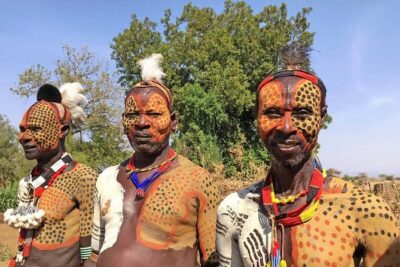
Danakil Depression, Lalibela, Omo Valley and Simien Mountains
Read our review →



9 Days Tours To Danakil Depression, Simen MNP, Lalibela With Omo Valley Tribes
Read our review →Browse the lists this tour appears in