
Reviewed · OMO VALLEY TRIBAL TOURS
Tribes of the Ethiopian Omo Valley – 9 Day Tour
Ethiopia gets wilder south of Addis. This nine-day trip combines Addis Ababa’s museums and churches with remote villages, local markets, wildlife, and some of the most distinctive cultures in the Omo Valley. I especially like the chance to meet Dorze, Erbore, Hamer, Mursi, and Konso communities, and I like that the route includes everyday places such as the Key Afer market, not just formal attractions.
The main caution is the amount of time spent on the road. You will cover long distances between Arba Minch, Turmi, Jinka, Konso, Langano, and Addis Ababa, often on demanding travel days. At $1,111 per person, the tour offers good value if you want transport, a guide, meals, entrance fees, and local support arranged in one package, but it is not a relaxed holiday.
In This Review
- What makes this Omo Valley journey special
- Addis Ababa gives you useful context before the long drive
- Tiya and the first taste of southern Ethiopia
- Lake Chamo and the Dorze village in Chencha
- From Konso and Erbore to Turmi
- The Thursday market at Key Afer
- Mago National Park and the Mursi visit
- Konso, Langano, and the return north
- What the $1,111 price really covers
- Who will enjoy this tour most
- Practical details before you book
- Should you book the 9-day Omo Valley tour?
- FAQ
- How long is the Omo Valley tour?
- What tribes and communities are included?
- Is the Key Afer market held every day?
- Are meals included?
- Is transportation provided?
- What is the cancellation policy?
What makes this Omo Valley journey special
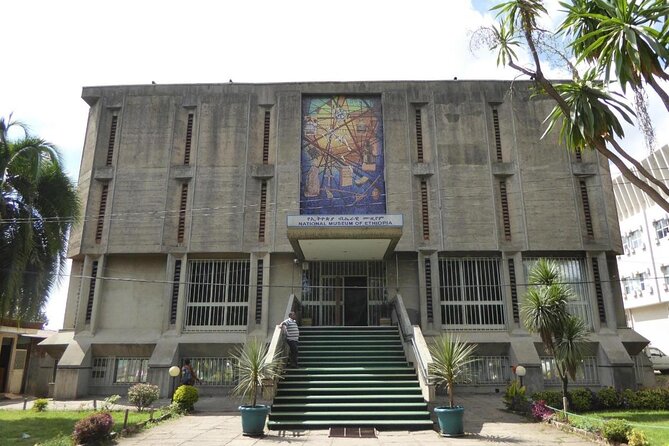
- Lucy and Ethiopia’s cultural story in Addis Ababa: Begin with the National Museum, Ethnological Museum, Holy Trinity Cathedral, St. George’s Cathedral, and Mount Entoto before heading south.
- Tiya’s mysterious carved stelae: Visit a World Heritage archaeological site with 36 monuments and symbols that remain difficult to interpret.
- Dorze food and village life: See a traditional house, watch bread made from false banana, and sample locally made alcohol in Chencha.
- Markets as a window into daily life: The Thursday market at Key Afer brings together Hamer, Benna, Konso, Ari, and other communities from South Omo.
- Mago National Park and the Mursi: Reach the Mursi area with a scout and learn about local customs, including lip plates and donga stick fighting.
- A fully arranged road trip: An air-conditioned vehicle, guide, scout fee, meals, taxes, and entrance charges are included, with a maximum group size of 20.
Addis Ababa gives you useful context before the long drive

Your first day is simple. A company representative meets you at the airport and takes you to a city-center hotel, leaving time to rest after your arrival. That breathing room matters because the next day is full of sightseeing.
The Addis city tour covers a lot in about seven hours. At the National Museum, you see the famous remains of Lucy, an Australopithecus afarensis who lived in Ethiopia about 3.2 million years ago. Lucy is not just a fossil display. She gives you a starting point for understanding why Ethiopia is so important to the story of human origins.
The Ethnological Museum is another strong stop. It occupies Haile Selassie’s former palace and sits among the gardens and fountains of Addis Ababa University. The exhibits help put Ethiopia’s many peoples, languages, religions, and customs into context before you reach the south.
The churches add another layer. Holy Trinity Cathedral is the highest-ranking Orthodox cathedral in Addis Ababa and was built to commemorate Ethiopia’s liberation from Italian occupation. St. George’s Cathedral has its own connection to the Battle of Adwa, where Ethiopia defeated Italy in 1896.
You also visit Mount Entoto, where King Menelik attempted to establish a capital in 1881. The old royal house and the church museum near St. Mary provide a glimpse of Addis before the modern city spread across the hills.
I like this opening because it avoids sending you straight into the Omo Valley without preparation. You get fossils, imperial history, Orthodox Christianity, and highland culture first. In the evening, a traditional Ethiopian restaurant with local food and dancing may be included in the program, offering a lively introduction to the country’s music and cuisine.
More Omo Valley tours:
- 6 Days Omo Valley Tribes Tours From Addis Ababa
★ 5.0 · 33 reviews - 3 Days Omo Valley Tour
★ 5.0 · 24 reviews - Danakil Depression, Lalibela, Omo Valley and Simien Mountains
★ 5.0 · 23 reviews
Tiya and the first taste of southern Ethiopia
On Day 3, you leave Addis and head south toward Arba Minch. This is when the tour changes character. The city sightseeing is over, and the road becomes part of the experience.
The major stop is Tiya, about two hours from the route. The site contains 36 monuments, including 32 carved stone stelae marked with symbols. Their exact age and meaning have not been fully established, which gives the visit an appealing sense of mystery without requiring you to pretend that every carving has a known explanation.
Lunch is planned in Sodo before continuing to Arba Minch. You arrive late in the afternoon, so this is mainly a transfer day with one important archaeological stop. Expect a long day in the vehicle, even with the air conditioning.
Lake Chamo and the Dorze village in Chencha
Day 4 begins with a boat trip on Lake Chamo in Nech Sar Park. The aim is to see large crocodiles, hippos, and water birds in the wild. This is a welcome change of pace after the previous day’s road travel, though the length and conditions of the boat ride can vary.
After lunch in Arba Minch, you head into the hills toward Chencha, home of the Dorze people. The village visit is one of the more hands-on parts of the trip. You enter a traditional Dorze house, watch bread being made from false banana, and try locally produced alcohol.
The false banana, also called enset, is a major food source in parts of Ethiopia. Seeing how it is used gives you more than a quick photograph of a traditional house. It shows how architecture, farming, and food are linked in daily life.
You return to Arba Minch in the evening. The day includes several distinct experiences, but it is still a full schedule. If you prefer slow village visits with lots of time for conversation, you should understand that the wider route requires the group to keep moving.
From Konso and Erbore to Turmi

Day 5 is one of the tour’s longest-feeling stretches. You leave Arba Minch for Turmi, stopping at Karat Konso, Weito, and Erbore along the way.
The Erbore stop is described as an opportunity to photograph local people. Approach this moment with care and patience. A photo can be a pleasant exchange when it is welcomed, but it should not become the entire point of the encounter. Your guide can help you understand what is appropriate.
Karat Konso is also important because the Konso people are part of the cultural focus of the journey. The route gives you an early look at the region before a later stop at the Konso Cultural Centre.
If timing works out, you may attend a bull-jumping ceremony in a Hamer village near Turmi. This is a possibility, not a guaranteed event. The ceremony depends on local timing and circumstance, so you should treat it as a fortunate extra rather than a promised feature.
You rest at a lodge in Turmi that evening. The tour description does not specify the lodging standard, so I would ask the operator for current accommodation details before booking, especially if comfort is important to you.
A few more tours of this kind worth a look:
- Full Day Tour of Addis Ababa with Hotel Pickup and Drop-off
★ 5.0 · 430 reviews - Taste of Ethiopia
★ 5.0 · 406 reviews - Day Trip From Addis Ababa See Historical Monastery,Stunning Nature,Animals,Birds
★ 5.0 · 303 reviews - Addis Ababa: Debre Libanos, Blue Nile Gorge, and Cave Tour
★ 4.5 · 256 reviews
The Thursday market at Key Afer
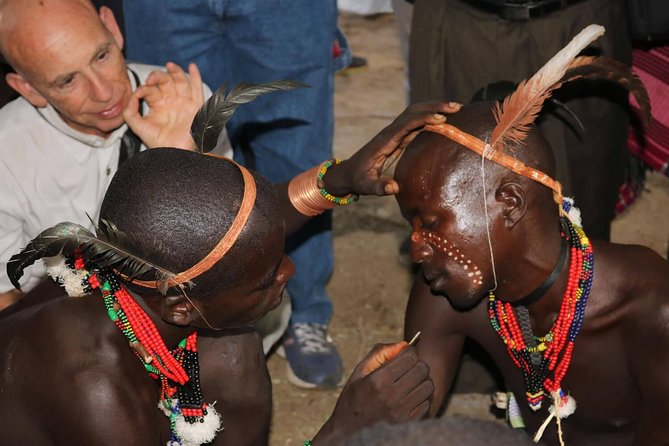
Day 6 takes you from Turmi to Jinka, with a stop at Key Afer. The market operates every Thursday and draws Hamer, Benna, Konso, Ari, and other people from South Omo.
This is one of the most valuable stops on the route because a market shows ordinary life in motion. You may see people arriving from different communities, buying and selling goods, and catching up with one another. It gives you a broader picture than a short village visit arranged only for sightseeing.
The timing matters. If your trip does not place you at Key Afer on Thursday, you will not have the same market experience. Confirm the travel dates carefully if this stop is a major reason for booking.
You reach Jinka late in the afternoon and rest at the hotel. By now, you will have had several long drives, so the simple evening is useful.
Mago National Park and the Mursi visit
On Day 7, you travel into Mago National Park, where the Mursi live. A scout fee is included, which is important for this part of the trip and signals that the visit requires local support.
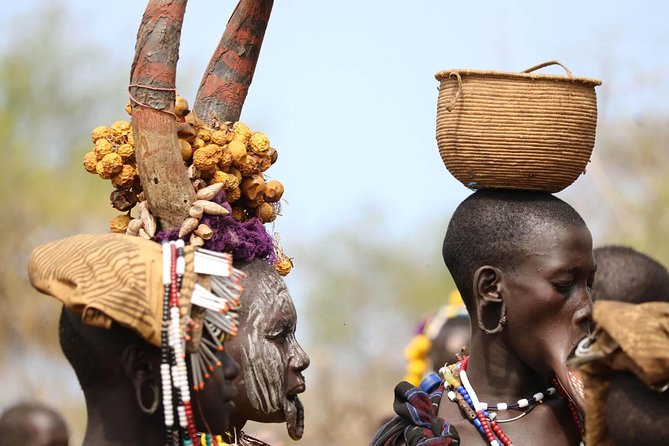
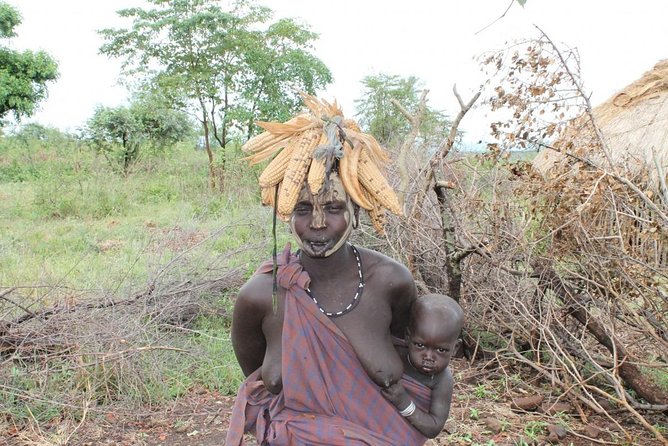
The Mursi are widely known for the lip plates worn by some women and for donga, a stick fight traditionally linked with male status and marriage eligibility. These customs are striking, but they should not be reduced to exotic photo subjects. The best visit is one where you listen to your guide, follow local expectations, and remember that you are entering a lived community, not a museum display.
The excursion takes about five hours before you return to Jinka for lunch. You then drive to Karat Konso. That combination makes this another demanding day, with rougher and more remote travel than the opening portion of the tour.
This is also the part of the trip most likely to test your expectations. The tour promises contact with remote communities, but it cannot promise a ceremony, a particular interaction, or a perfectly staged cultural lesson. You should come ready for a real place with its own schedule.
Konso, Langano, and the return north

After the Mursi excursion and the drive to Karat Konso, Day 8 begins early with a long journey to Langano. The lake is one of the Rift Valley’s best-known recreation areas and offers the chance to swim.
Langano provides a pleasant contrast to the Omo Valley. After several days of village visits and road travel, you can relax beside the water and take a dip. The stop is also practical, since it breaks the return journey toward Addis Ababa.
The final day takes you from Langano back to Addis Ababa in the afternoon. Once you arrive, the program ends. No additional sightseeing or airport transfer is specified for that final stage, so if you are flying out the same day, allow plenty of time and confirm your transport plan.
What the $1,111 price really covers
At $1,111 per person, the cost works out to roughly $123 per day. That is a useful price for a nine-day private-style road program if the listed inclusions match your needs.
The package includes:
- Air-conditioned vehicle
- Professional guide
- Scout fee
- Entrance fees and taxes
- Eight breakfasts
- Eight lunches
- Eight dinners
The meals are a real benefit on a route where independent planning can be awkward. You also avoid arranging separate transport, local guides, park support, and entrance payments at each stop.
Alcoholic drinks are not included, and services not listed are extra. Accommodation is mentioned in the daily plan, with a hotel or lodge used at several points, but the inclusion list does not clearly state that lodging is included. I would ask for a written accommodation breakdown before paying.
The maximum group size is 20. That is not a tiny group, especially during village visits or long road days. Still, it gives the operator enough scale to keep the price below what a very small private trip might cost.
Who will enjoy this tour most
I would recommend this trip to you if you want a broad first look at southern Ethiopia and prefer having the major logistics handled. It suits people who value cultural contact, archaeology, wildlife, and local markets more than resort comfort.
You should have a moderate fitness level. The tour includes boat travel, village walking, remote roads, long drives, and early departures. The physical challenge may not come from strenuous hiking, but from heat, distance, uneven conditions, and repeated days on the move.
The itinerary also suits photographers, with an important reminder: photography should be respectful and guided by local permission. It is less suited to anyone who wants guaranteed ceremonies, leisurely mornings, or a predictable hotel standard every night.
Five published comments connected with this operator give particular praise to the planning and personal attention. One account describes a two-week trip that was adjusted around the couple’s requests, while others highlight careful scheduling, regular contact, and help arranging a custom Ethiopian journey. Those points suggest that the company’s strongest quality may be its willingness to adapt.
I would use that strength before departure. Ask whether the route can be adjusted to match the Key Afer market, how bull-jumping events are handled, what accommodations are planned, and how much time is normally spent in each community.
Practical details before you book
Pickup is offered, and the stated start time is 8:30 a.m. Confirmation is provided at booking. The tour accepts a maximum of 20 people.
The cancellation rule is strict close to departure. You receive a full refund if you cancel at least three full days before the start time. Cancellations or changes made less than three full days ahead are not accepted for a refund, with cut-off times based on local time.
I would also pack for changing conditions between Addis Ababa, the highlands, the hotter Omo Valley, and the lakeside stop. The supplied information does not list a packing guide, so ask the operator what is currently recommended for the season.
Should you book the 9-day Omo Valley tour?
Book it if you want access and structure. The tour reaches places that are difficult to arrange alone, includes local support in Mago National Park, and combines cultural visits with museums, archaeology, wildlife, markets, and a lake stop.
Think twice if you dislike long drives or need detailed accommodation information before committing. The price is attractive because it bundles transport, meals, fees, and guiding, but the route is ambitious and the schedule leaves limited room for unplanned rest.
My advice is to book after confirming three things: the accommodation standard, the exact travel date for the Key Afer market, and what cultural photography guidelines your guide will use. If those answers suit you, this is a strong way to see the Omo Valley in nine days, with the difficult planning handled by Simien Image Ethiopian Tour and Travel Company.
FAQ
How long is the Omo Valley tour?
The tour lasts approximately nine days, beginning with arrival in Addis Ababa and ending after the return drive to Addis Ababa on Day 9.
What tribes and communities are included?
The route includes visits connected with the Dorze, Erbore, Hamer, Mursi, and Konso peoples. It also passes through areas associated with the Benna and Ari communities, especially at the Key Afer market.
Is the Key Afer market held every day?
No. The Key Afer market takes place every Thursday. The tour stops there on Day 6, so your dates are important if you want to attend it.
Are meals included?
Yes. The package includes eight breakfasts, eight lunches, and eight dinners. Alcoholic beverages are not included.
Is transportation provided?
Yes. An air-conditioned vehicle and a professional guide are included. Pickup is offered, and the stated start time is 8:30 a.m.
What is the cancellation policy?
You can receive a full refund if you cancel at least three full days before the experience start time. Cancellations or changes made less than three full days before the start time are not accepted for a refund.
Just added around Addis Ababa
- 10 Days in Northern Ethiopia Tours★ 4.5 · 3 reviews
- Day Trip to Tiya UNESCO Site & Melka Kunture Archaeological Site★ 4.5 · 3 reviews
- Two days Lake Wenchi and Menagesha Forest★ 5.0 · 3 reviews
- 6 days 5 nights Addis Abeba sightseeing & Lalibela Rock-Hewn Churches★ 5.0 · 3 reviews
- Addis Ababa Half Day Shopping Tour★ 5.0 · 3 reviews
- 6 days Omo valley cultural Tour★ 5.0 · 3 reviews
- 12- Day Historical Route of Ethiopia★ 5.0 · 3 reviews
- Addis Ababa City Tour★ 4.5 · 3 reviews
Omo Valley Tribal Tours, compared.

6 Days Omo Valley Tribes Tours From Addis Ababa
Read our review →
Lalibela, Axum, Danakil and Omo Valley 8 DAYS
Read our review →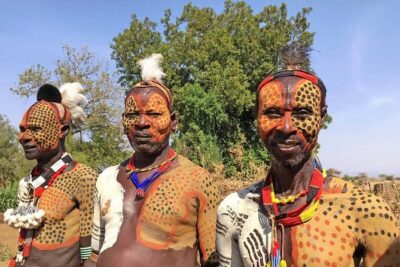
Danakil Depression, Lalibela, Omo Valley and Simien Mountains
Read our review →



9 Days Tours To Danakil Depression, Simen MNP, Lalibela With Omo Valley Tribes
Read our review →Browse the lists this tour appears in