
Reviewed · CITY TOURS
Full day city tour of Addis Ababa
Start with Lucy. This 7 to 9 hour Addis Ababa tour gives you a useful first look at Ethiopia’s capital through its museums, churches, royal sites, and markets. I especially like the included hotel or airport pickup, which removes a major first-day hassle, and the way the route mixes famous sights with everyday city life at Merkato. The included lunch, bottled water, coffee or tea, transport, and entrance fees also make the $82.06 price easier to judge.
The main thing to consider is the pace. Five major stops fill most of the day, and Merkato can be a lot after several hours of museum visits. If you want slow photography, long meals, or detailed time at every church, this schedule may feel tight. Still, the tour has a strong practical advantage: one guide and vehicle connect places that would be awkward to arrange on your own.
In This Review
- Key points at a glance
- What this Addis Ababa day covers
- Meeting Addis Ababa with pickup and transport
- National Museum: two hours with Lucy
- Ethnological Museum in Haile Selassie’s former palace
- St. George’s Cathedral and the 1896 legacy
- Holy Trinity Cathedral and royal tombs
- Lunch, coffee, and a pause in the middle
- Merkato: the final hour and a half
- Is $82.06 a fair price?
- Who should book this city tour?
- Should you book it?
- FAQ
- How long does the Addis Ababa city tour last?
- Where can pickup take place?
- What is included in the price?
- Is Lucy included in the tour?
- How large is the tour group?
- Can I cancel for a full refund?
Key points at a glance
- Lucy anchors the morning: The National Museum includes the famous fossilized humanoid and collections covering Ethiopia’s long human story.
- Two museums, two viewpoints: The National Museum focuses on archaeology, royal objects, and art, while the Ethnological Museum presents Ethiopia’s cultures and social traditions.
- Historic churches add royal context: St. George’s Cathedral dates to 1896, and Holy Trinity Cathedral contains royal thrones and tombs.
- Merkato brings the city down to street level: The final stop is a 90-minute visit to Africa’s largest open market.
- Pickup keeps the day simple: Collection is offered from Bole International Airport or your hotel, with return transport included.
- Small-group potential: The maximum group size is 15 people, enough to keep the tour manageable without promising a private experience.
What this Addis Ababa day covers
This is an orientation tour, not a single-theme outing. In one day, you move from early human history to imperial Ethiopia, Orthodox Christian traditions, university grounds, and modern commerce. That range is the tour’s main strength.
The order gives you a clear storyline. The National Museum introduces Ethiopia’s place in human history. The Ethnological Museum widens the picture to the country’s many nationalities and customs. The churches bring in religion and monarchy, while Merkato shows the city as it functions now.
The tour lasts about eight hours, though the stated range is 7 to 9 hours. That difference likely depends on pickup location, traffic, and how long the group spends at each stop. Addis Ababa is a large capital, so the air-conditioned vehicle matters. You are not simply paying for admission tickets. You are also paying for a full day of transport, coordination, and a guide who helps connect the sites.
The group limit is 15 people. That is not the same as a private tour, but it is small enough to be more workable than a large coach. The strongest praise attached to the experience is for the driver and helpful tour officer, which is important here. City traffic and a packed route can make good driving and steady coordination more valuable than flashy commentary.
More full-day trips:
- Full Day Tour of Addis Ababa with Hotel Pickup and Drop-off
★ 5.0 · 430 reviews - Full-Day Private City Tour of Addis Ababa
★ 5.0 · 147 reviews - Addis Ababa City Tours Full Day With Hotel Pickup And Drop Off.
★ 5.0 · 51 reviews
Meeting Addis Ababa with pickup and transport
Pickup is offered from Bole International Airport or your hotel. That makes this especially useful if your time in Addis Ababa is short, or if you have just arrived and do not want to arrange separate transport between five different places.
Airport pickup can also make the tour work as a first-day introduction, but you should pay attention to your arrival timing. The tour takes 7 to 9 hours, so a late arrival may not fit comfortably into the schedule. The supplied details do not promise luggage storage or a special airport layover arrangement, so confirm that point before booking if you are connecting through Addis Ababa.
An air-conditioned vehicle is included. That gives you a comfortable base between stops and keeps the day more practical than moving around by a series of independent rides. Bottled water is also included, along with coffee or tea.
The itinerary is full, but not absurdly so. The listed stop times add up to about six hours and 35 minutes, leaving the rest of the day for driving, pickup, lunch, and transitions. Traffic can affect the final length. I would keep the day open rather than schedule a tight evening commitment.
National Museum: two hours with Lucy
The National Museum is the best first stop for understanding why Ethiopia matters far beyond Addis Ababa. The centerpiece is Lucy, the fossilized humanoid whose remains helped make Ethiopia central to the study of early human ancestry.
You also get royal items, art, and archaeological material. That broader collection matters because Lucy alone can turn the museum into a quick photo stop. The two-hour allocation gives you time to see the fossil and understand the wider story of Ethiopia’s past.
I like beginning here because it gives the rest of the day more meaning. After seeing evidence of very early human life, you can place Ethiopia’s later kingdoms, religious traditions, and imperial era into a much longer timeline. The museum is described as one of the most important in sub-Saharan Africa, so this is not filler before the churches.
The drawback is that two hours can feel long if you only want to see Lucy. It can also feel short if you enjoy reading every display. Your guide’s help is useful here, since a focused route through the collection will make the visit less tiring.
Admission is included. That removes the need to handle another payment and makes it easier to keep the group moving.
Ethnological Museum in Haile Selassie’s former palace
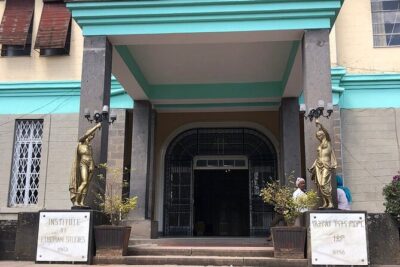
The Ethnological Museum occupies the former palace of Emperor Haile Selassie. It is set among the gardens and fountains of the university’s main campus, giving the stop a different mood from the National Museum.
The museum presents Ethiopia’s cultural and social life across two floors. You can expect displays about the country’s different nationalities and cultural materials, along with the former palace setting itself. The building is part of the story, not just a container for exhibits.
The 1-hour-40-minute visit is a good length for this stop. It gives you time to see the main rooms and displays without asking you to spend another full morning indoors. I would pay attention to the contrast between the museum’s imperial rooms and its wider presentation of Ethiopian life. That contrast helps explain how national identity, regional customs, religion, and royal power fit together.
This stop is particularly useful if you want more than monuments. The National Museum deals heavily with archaeology and early human history. The Ethnological Museum shifts the focus to people, customs, and social traditions. Together, the two museums give the day much more substance than a route based only on landmarks.
A few more tours of this kind worth a look:
- Taste of Ethiopia
★ 5.0 · 406 reviews - Day Trip From Addis Ababa See Historical Monastery,Stunning Nature,Animals,Birds
★ 5.0 · 303 reviews - Addis Ababa: Debre Libanos, Blue Nile Gorge, and Cave Tour
★ 4.5 · 256 reviews - Addis Ababa Guided City Tour With Airport & Hotel Pick Up
★ 5.0 · 237 reviews
St. George’s Cathedral and the 1896 legacy
St. George’s Cathedral receives 45 minutes. Emperor Menelik built it in 1896, giving the church a direct link to Ethiopia’s imperial period.
The shorter visit makes sense after the two museums. You have enough time to take in the building, its religious importance, and the historical setting without turning the day into a church tour. Admission is included.
The information provided does not promise a particular service, guide talk, or interior display schedule, so treat the visit as a guided sightseeing stop rather than a guaranteed religious ceremony. Dress and conduct should be respectful at any active place of worship.
St. George’s works well in the sequence because it brings history out of display cases. After seeing royal objects and cultural collections, you encounter a historic church still connected to Ethiopia’s Orthodox tradition.
Holy Trinity Cathedral and royal tombs
Holy Trinity Cathedral receives 40 minutes. It is described as the largest Orthodox Church in Ethiopia and is known for its distinctive architecture and survival through important periods of the country’s past.
The cathedral contains royal thrones and tombs belonging to the emperor and members of the royal family. Those details give the visit a clear focus. You are not only looking at a church building. You are also seeing a place tied to Ethiopia’s monarchy.
The short stop should be enough for a first introduction, but it will not suit anyone hoping to study every architectural feature. If the cathedral is your main interest, you may want to ask the guide how the time will be divided and what you should not miss.
Placed after St. George’s, Holy Trinity lets you compare two important Orthodox sites in the same day. Their different connections to imperial history help you see why religious buildings are central to Addis Ababa’s story.
Lunch, coffee, and a pause in the middle
Lunch is included, as are coffee or tea and bottled water. The provided details do not specify the restaurant, menu, or dietary arrangements, so you should ask about special food needs before the tour begins.
The timing of lunch is listed between the morning cathedral and the Ethnological Museum in the general overview, while the stop list places the museums before the churches. Either way, the day includes a meal rather than leaving you to solve food on your own.
That matters on a long city tour. A proper break can reset your attention before the final market visit. Coffee or tea is also a fitting addition in Ethiopia, a country strongly associated with coffee culture, although the tour information does not promise a dedicated coffee ceremony.
Because lunch details are limited, do not book this experience solely for a particular cuisine or dining setting. Think of the meal as a useful inclusion that keeps the day moving.
Merkato: the final hour and a half
Merkato is the tour’s most street-level stop. It is described as Africa’s largest open market, and the itinerary allows 90 minutes to see it.
This is where the day shifts from museums and monuments to trade, movement, and ordinary city life. You may find a more crowded and intense setting than at the earlier stops. The market is not a polished shopping center, and that is precisely why it adds something important to the tour.
A guide is valuable here. You can focus on the route and the experience instead of trying to work out where to go next. The tour description does not list specific shopping items, fixed purchases, or included souvenirs, so consider this a guided market visit rather than a shopping package.
Ninety minutes is enough for an introduction, but not for a complete survey of an enormous market. If shopping is your top priority, the schedule may leave you wanting more time. If you simply want to see how Addis Ababa trades and socializes, the final stop should give you a strong taste.
The market comes at the end for a reason. After learning about Ethiopia’s past and cultural groups, you finish in a place where the capital’s present-day energy is on display.
Is $82.06 a fair price?
At $82.06 per person, the tour is not the cheapest way to see Addis Ababa. But the price includes several costs that can add up quickly: an air-conditioned vehicle, guide, hotel or airport pickup and drop-off, lunch, bottled water, coffee or tea, entrance fees, and taxes.
The value is strongest if you are new to the city or have only one free day. Organizing five major sights independently would require separate transport, admission payments, route planning, and timing. You would also lose the benefit of having one person connect the museums, churches, palace, and market.
The value is weaker if you are already comfortable navigating Addis Ababa and want to choose your own meal, spend longer at one museum, or shop at Merkato for several hours. The fixed schedule is the trade-off for convenience.
The maximum of 15 people is another factor. A group this size can keep the price below a private tour, though the experience may feel less personal when everyone gathers at a small exhibit or church interior. The positive note about the driver and tour officer gives some reassurance that the practical side of the day receives attention.
The tour is booked an average of 54 days ahead. That suggests you should reserve early if your dates are fixed, especially if airport pickup is important.
Who should book this city tour?
I would recommend it to first-time visitors who want a broad introduction without spending their first day working out transport. It also suits people on a short Addis Ababa stay, visitors arriving at Bole International Airport, and anyone who prefers a planned route with entry fees and lunch handled.
It is a good fit for history fans because Lucy, royal objects, former palace rooms, churches, and imperial tombs all appear in one day. It also suits culture-focused visitors who want the Ethnological Museum and Merkato, not just a parade of buildings.
You should think twice if you dislike group schedules, prefer long unscripted meals, or want to spend an entire day shopping. The tour is also not the best choice if one museum is your only priority. Its strength is range, not deep specialization.
Most travelers can participate, and the experience is near public transportation, though pickup is already offered. Free cancellation is available if you cancel at least 24 hours before the start time. Changes or cancellations inside that window are not accepted for a refund.
Should you book it?
Book this Addis Ababa tour if you want the city’s major themes in one well-organized day: early human history, imperial Ethiopia, Orthodox Christianity, cultural traditions, and modern commerce. The included transport, meals, admissions, and airport or hotel pickup make the $82.06 price reasonable for a first visit.
Skip it if you want complete freedom or a slow, specialist tour of one subject. For most first-time visitors with limited time, the route offers a sensible introduction, and the praise for the excellent driver and helpful tour officer is especially relevant to a busy city day.
FAQ
How long does the Addis Ababa city tour last?
The experience lasts approximately 7 to 9 hours, with the tour summary describing it as an 8-hour city tour.
Where can pickup take place?
Pickup is offered from Bole International Airport or your hotel, with drop-off also included.
What is included in the price?
The price includes lunch, coffee or tea, bottled water, an air-conditioned vehicle, all entrance fees, and all taxes.
Is Lucy included in the tour?
Yes. The National Museum visit includes the fossilized humanoid Lucy, along with archaeological objects, royal items, and art.
How large is the tour group?
The experience has a maximum of 15 people.
Can I cancel for a full refund?
Yes. You can cancel for a full refund if you do so at least 24 hours before the experience start time. Cancellations or changes made less than 24 hours before the start are not accepted for a refund.
Just added around Addis Ababa
- 10 Days in Northern Ethiopia Tours★ 4.5 · 3 reviews
- Day Trip to Tiya UNESCO Site & Melka Kunture Archaeological Site★ 4.5 · 3 reviews
- Two days Lake Wenchi and Menagesha Forest★ 5.0 · 3 reviews
- Addis Ababa Half Day Shopping Tour★ 5.0 · 3 reviews
- 6 days 5 nights Addis Abeba sightseeing & Lalibela Rock-Hewn Churches★ 5.0 · 3 reviews
- 12- Day Historical Route of Ethiopia★ 5.0 · 3 reviews
- 6 days Omo valley cultural Tour★ 5.0 · 3 reviews
- Northern Ethiopia (Historic route)★ 5.0 · 3 reviews
City Tours, compared.
Addis Ababa Guided City Tour With Airport & Hotel Pick Up
Read our review →

Authentic Addis Ababa City Tour with a Local Guide
Read our review →

Browse the lists this tour appears in