

Reviewed · TOURS
Walking Tour of Addis Abeba – Discover Addis the Authentic way
Addis Ababa rewards curious walkers. This private six-and-a-half-hour tour links the city’s busiest market, major museums, coffee culture, and public squares in one well-planned day. I like the small maximum of 10 people, which should make it easier to ask questions and adjust the pace. I also like the choice between Tomoca Coffee and a traditional Ethiopian coffee ceremony. The main caution is simple: six hours on foot, with market crowds and city traffic, can feel tiring if you prefer a gentle sightseeing day.
The route gives you more than postcard sights. You move from spice stalls and recycling yards to Lucy’s fossil display, socialist-era monuments, and street food around Meskel Square. Guides such as Beki and Gashaw have earned especially warm praise for making the day personal, flexible, and easy to follow.
In This Review
- Five things to know before you book
- Why this walking tour works for first-time visitors
- Mercato: the city in concentrated form
- Zoma Museum: the quieter change of pace
- The National Museum and Lucy’s place in Ethiopia
- Tomoca Coffee or a traditional ceremony
- Tiglachin Memorial and the socialist chapter
- Meskel Square and the final city pause
- The walking, transport, and pace
- Is $70 good value?
- Who should book this experience?
- FAQ
- How long is the Walking Tour of Addis Ababa?
- What places are included?
- Is the National Museum admission included?
- Can I choose between Tomoca Coffee and a coffee ceremony?
- Is lunch included?
- How many people can join the tour?
- Can I cancel for a full refund?
- Should you book this Addis Ababa walking tour?
Five things to know before you book
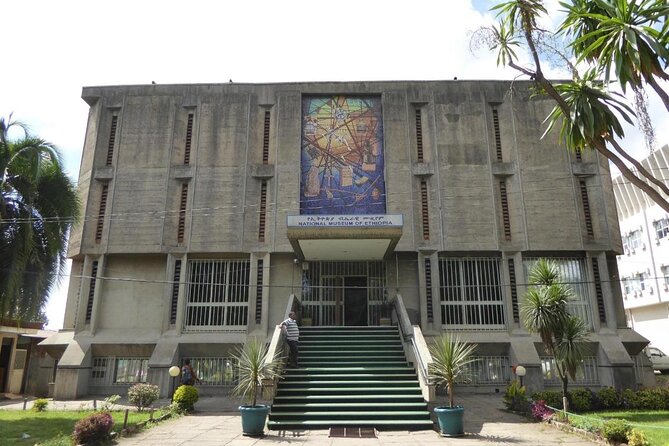
- Mercato is the day’s most intense stop: You’ll see spice sellers, incense, coffee, grains, metal recycling, and local food preparation areas.
- The tour mixes walking with local transport: One account included a donkey van, taxi, Uber, and street bus, showing how flexible the route can be.
- Coffee is not an afterthought: You can visit the old Tomoca Coffee branch or choose a traditional ceremony.
- Zoma Museum adds a quieter cultural stop: This lesser-known museum gives the day a different feel from the main sights.
- You can choose the National Museum: It includes the famous Lucy display and a broad introduction to Ethiopia.
- The private format matters: Your guide can spend more time on subjects that interest you instead of moving a large group along.
Why this walking tour works for first-time visitors

Addis Ababa can feel hard to read at first. The city is large, busy, and spread across hills and broad roads. A private walking tour helps you make sense of it through direct contact with markets, museums, cafés, monuments, and public spaces.
The route is not only a sightseeing checklist. It connects different sides of the capital. At Mercato, you see commerce and daily work. At the National Museum, you get a long view of Ethiopian culture and human origins. At Tomoca, you pause over the country’s famous coffee. Later, Tiglachin Memorial and Meskel Square add political and public life to the picture.
I particularly like the way the tour uses walking as its main thread but does not treat walking as a rule. Addis is not a city where every useful connection should be made on foot. The flexible format may include a taxi, street bus, Uber, or another local ride when that helps the day run better.
Your guide is the key to the experience. Beki is praised for being friendly and going out of his way to make the day memorable. Gashaw is praised for showing visitors what they wanted and adding more along the way. The strongest part of the tour is likely to be the explanation between stops, not simply the places themselves.
More walking tours:
- Addis Ababa Walking Tour
★ 5.0 · 4 reviews - Walking tours
★ 5.0 · 11 reviews
Mercato: the city in concentrated form
The opening stop at Mercato lasts about 90 minutes, and that is enough time to see several sections without trying to cover every corner. It is described as Africa’s biggest open-air market, but the useful point for you is what the market reveals about Addis Ababa: trade, repair, food, transport, and neighborhood life all meet here.
A guide with local experience can take you beyond the most obvious stalls. The route includes the spice market, incense sellers, coffee and cereal areas, and a place where old metal and plastic are recycled. You may also see the preparation of false banana food, an unusual detail that gives the market a stronger local character than a standard shopping visit.
This is a place to watch your footing and stay close to your guide. The market is active, crowded, and full of movement. You are not visiting a polished shopping center, so expect a working market rather than a tidy attraction arranged for sightseeing.
The admission ticket is not included, though the tour information does not give a separate ticket price. Bring some patience and keep your focus on what is happening around you. The point is not only to buy something. It is to see how goods move through the city and how ordinary work shapes Addis Ababa.
For many people, Mercato will be the most memorable stop. It offers the clearest sense of the city as a living place rather than a collection of monuments.
Zoma Museum: the quieter change of pace
Zoma Museum is included as an off-the-beaten-path stop, and it gives the itinerary a useful pause after Mercato. The museum is less widely known than Addis Ababa’s National Museum, so it can feel like a discovery within a day already built around local life.
The supplied route information does not provide a fixed time for Zoma Museum, and it does not list a separate admission cost. That makes it wise to ask your guide how long the visit will be and how it fits with the rest of the day.
What makes the museum valuable is the contrast. Mercato is about motion, trade, and dense street activity. Zoma offers space to look at Ethiopian art and culture at a slower pace. You will likely appreciate it most if you want a city tour that includes more than markets and famous landmarks.
Because the tour is private, you can tell your guide how much time you want here. If museums are a high priority, ask to linger. If you are more interested in street life, the guide may be able to keep the visit focused and preserve time for the walking route.
The National Museum and Lucy’s place in Ethiopia
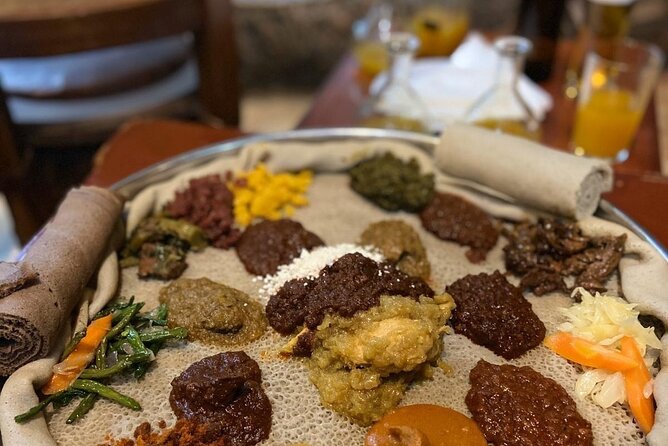
The National Museum of Ethiopia receives about an hour, with admission included. It is presented as a broad introduction to Ethiopia’s history, culture, and natural world, which makes it a useful stop early in your understanding of the country.
The major draw is Lucy, the famous human ancestor skeleton. Seeing Lucy in person gives the museum a clear focus, but the value goes beyond one display. This is the place to connect Ethiopia with the wider story of human origins and to place the country’s past in a larger frame.
An hour is enough for a purposeful visit, but not for a slow examination of every room. If you like museums, you may want more time than the schedule allows. The private setup helps here because you can ask your guide to explain the sections that matter most to you.
After the museum, the route continues on foot toward Piassa. Along the way, you see the King Menelik II Statue at the heart of the city, near the point described as Addis Ababa’s Zero Kilometer. This section works well because the museum gives you a broad historical view, then the walk places that story back into the modern city.
A few more tours of this kind worth a look:
- Full Day Tour of Addis Ababa with Hotel Pickup and Drop-off
★ 5.0 · 430 reviews - Taste of Ethiopia
★ 5.0 · 406 reviews - Day Trip From Addis Ababa See Historical Monastery,Stunning Nature,Animals,Birds
★ 5.0 · 303 reviews - Addis Ababa: Debre Libanos, Blue Nile Gorge, and Cave Tour
★ 4.5 · 256 reviews
Tomoca Coffee or a traditional ceremony
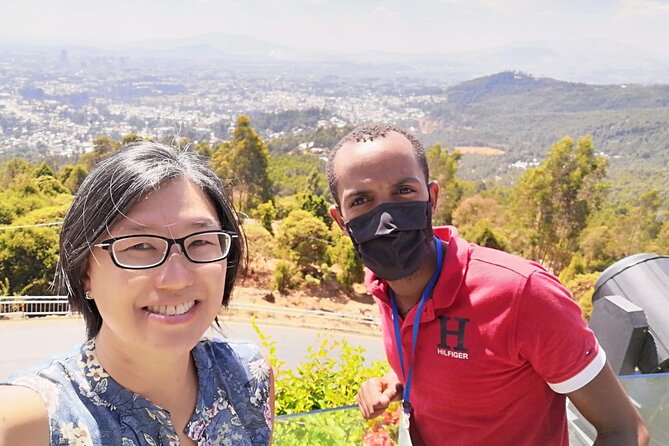
Coffee receives about 40 minutes, with coffee or tea included. You can choose a visit to Tomoca Coffee at the Atlas branch, one of the city’s old coffee shops, or a typical Ethiopian coffee ceremony in a convenient location.
Tomoca is the easier choice if you want to experience a long-established café and taste Ethiopian coffee in a straightforward setting. It also adds another everyday city stop to the route. You are not only learning about coffee in the abstract. You are pausing at a place where coffee is part of ordinary urban life.
The ceremony is the better choice if you want cultural context and a slower social experience. The tour information does not specify the exact location or format of the ceremony, so ask your guide what will be arranged on the day.
The choice is a real advantage. Some people want a classic café stop, while others prefer to see how coffee is prepared and shared in Ethiopia. Either option gives your feet a needed break.
Tiglachin Memorial and the socialist chapter

The tour then reaches Tiglachin Memorial, with about 30 minutes allocated. This is described as the only remaining standing memorial connected to Ethiopia’s 17 years of socialism.
The monument also recalls the relationship between Ethiopia and Cuba and commemorates Cuban soldiers who died during the Ethio-Somalian War. That makes the stop useful for understanding a political period that can receive less attention on a standard city tour.
There is no included admission ticket listed for this stop. The value here lies in the guide’s explanation and in seeing the memorial within the city, rather than expecting a large museum or a long indoor visit.
Thirty minutes should be enough for photographs and a clear explanation. If modern Ethiopian politics interests you, use this moment to ask questions. A good guide can help connect the monument to the wider story of the capital without turning the day into a lecture.
Meskel Square and the final city pause

Meskel Square is the final major stop, with about 45 minutes set aside. It is one of Addis Ababa’s largest open public areas and is used for festivals, concerts, protests, and other gatherings.
The square has been renovated for easier walking, sightseeing, and sitting. Its open design offers a different experience from Mercato’s tight market lanes. This is a good place to look back over the day and see Addis Ababa as a capital built for public life.
Street food is another reason to save room for this stop. The tour notes that the area is a useful place to find trendy Ethiopian street foods, though lunch itself is not included. Plan to pay separately if you want a meal or snacks.
The phrase Ethiopian Time Square is a playful way to describe the role of the square, but the comparison should not make you expect a polished commercial district. Meskel Square is more open, civic, and local. Its importance comes from how people use it.
The walking, transport, and pace
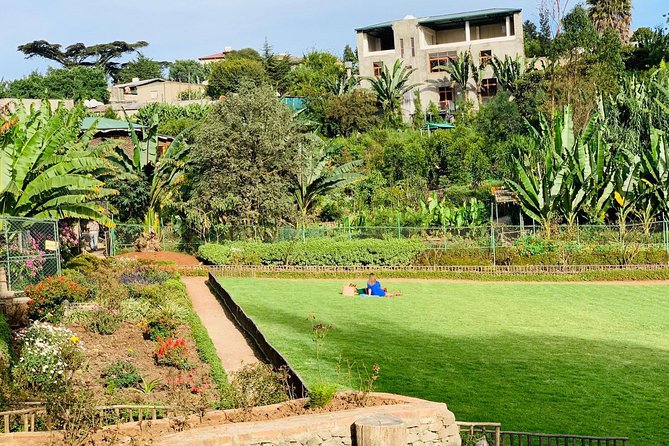
The experience lasts around six hours and 30 minutes, so pace matters. You are likely to walk several kilometers, and the route includes markets, streets, museum areas, and open squares. Wear practical shoes and expect some standing.
The format is private, but it is not necessarily walking every minute. One detailed account described using a donkey van, taxi, Uber, and street bus during the day. That suggests your guide may use local transport to connect sections or to make the route feel more like daily Addis Ababa.
This flexibility is one of the tour’s best features. You get a walking experience without being trapped by a route that ignores traffic, distance, or fatigue. Tell your guide early if you want more walking, more museum time, or a shorter stretch between stops.
Pickup is offered, and the tour is near public transportation. Confirmation is received at booking. Most people can participate, but the day’s length and walking should still be considered carefully if you have limited stamina.
Is $70 good value?
The price is $70 per person. For a private tour lasting about six and a half hours, with a small group limit of 10, that can be fair value if you want guidance rather than simply a list of sights.
The price includes coffee and tea, admission to the National Museum, and the guide’s time. It does not include lunch, the Mercato admission ticket, or the Tiglachin Memorial admission ticket. The information does not state a separate ticket cost for Zoma Museum, so confirm that detail before you go.
You are also paying for flexibility. A large group tour may move faster and provide less room for questions. Here, you can spend more time at Mercato, ask about Ethiopian history at the National Museum, or choose coffee in the style that suits you.
I would see this as good value for a first day in Addis Ababa, especially if you are arriving without much local context. It is less compelling if you want a relaxed museum day, a food-focused tour, or a route with no unplanned transport.
Who should book this experience?
I would recommend it to first-time visitors who want a broad introduction to Addis Ababa in one day. It suits people who like markets, public spaces, museums, history, and coffee, and who are willing to walk through an active city rather than view it from an air-conditioned vehicle.
It is also a good fit for solo visitors and couples who want the freedom of a private guide. The guides’ personal style seems to be a major part of the value. Beki and Gashaw are specifically praised for friendliness, clear explanations, and adapting the day to individual interests.
You may want something else if you dislike crowds, uneven street conditions, or a schedule that packs several different types of stop into one day. Six and a half hours can pass quickly, but it can also feel full. A private tour helps, though it cannot remove the city’s traffic, noise, or market activity.
Free cancellation is available up to 24 hours before the local start time. Changes or cancellations inside that window are not accepted for a refund, and the tour needs a minimum number of people to operate.
FAQ
How long is the Walking Tour of Addis Ababa?
The tour lasts approximately six hours and 30 minutes.
What places are included?
The route includes Mercato Market, Zoma Museum, the National Museum of Ethiopia, Tomoca Coffee or a traditional coffee ceremony, Tiglachin Memorial, Piassa, the King Menelik II Statue, and Meskel Square.
Is the National Museum admission included?
Yes. Admission to the National Museum of Ethiopia is included.
Can I choose between Tomoca Coffee and a coffee ceremony?
Yes. You can choose to visit Tomoca Coffee at the Atlas branch or take part in a traditional Ethiopian coffee ceremony.
Is lunch included?
No. Lunch is not included in the tour price.
How many people can join the tour?
The maximum group size is 10 people, and the experience is described as private.
Can I cancel for a full refund?
Yes, if you cancel at least 24 hours before the experience start time. Cancellations made less than 24 hours in advance are not refunded.
Should you book this Addis Ababa walking tour?
Book it if you want to understand Addis Ababa through its markets, museums, coffee shops, monuments, and public spaces in one day. The strongest reasons are the private format, the flexible transport, the choice of coffee experience, and the chance to see Mercato with a guide who knows how to move beyond the obvious stalls.
Skip it if you want a slow, highly specialized tour or if six hours of walking sounds unpleasant. For most first-time visitors, though, $70 buys a useful introduction with plenty of local texture. Bring good shoes, leave room for questions, and treat the schedule as a framework rather than a race.
Just added around Addis Ababa
- 10 Days in Northern Ethiopia Tours★ 4.5 · 3 reviews
- Two days Lake Wenchi and Menagesha Forest★ 5.0 · 3 reviews
- Day Trip to Tiya UNESCO Site & Melka Kunture Archaeological Site★ 4.5 · 3 reviews
- 6 days 5 nights Addis Abeba sightseeing & Lalibela Rock-Hewn Churches★ 5.0 · 3 reviews
- Addis Ababa Half Day Shopping Tour★ 5.0 · 3 reviews
- 6 days Omo valley cultural Tour★ 5.0 · 3 reviews
- 12- Day Historical Route of Ethiopia★ 5.0 · 3 reviews
- Addis Ababa City Tour★ 4.5 · 3 reviews
Tours, compared.
Full Day Tour of Addis Ababa with Hotel Pickup and Drop-off
Read our review →
Addis Ababa Guided City Tour With Airport & Hotel Pick Up
Read our review →
Breathtaking Nature, Wildlife and Cave Church Tour – Free Pickups
Read our review →


Authentic Addis Ababa City Tour with a Local Guide
Read our review →Browse the lists this tour appears in