

Reviewed · OMO VALLEY TRIBAL TOURS
Omo Valley Tribes 6 Days Tours
Meet Ethiopia’s southern communities up close. This six-day route links Addis Ababa with Lake Chamo, Dorze, Konso, Hamer, Dassanech, Mursi, Bana, and Ari communities, giving you a broad look at the Omo Valley, where more than 200,000 people speak 47 languages.
I like the range of experiences packed into the route, from Lucy at the National Museum to crocodiles and hippos on Lake Chamo. I also like that the tour includes professional guides, entrance fees, a scout, accommodation, and a car with driver, which removes much of the planning work.
The main consideration is the amount of time spent on the road. The route covers a large section of southern Ethiopia, and lunches, dinners, drinks, and any local flight are extra. The final day also needs careful clarification, since it lists a drive from Jinka to Addis Ababa without giving a travel time.
In This Review
- Key points to know before booking
- What this six-day route is really about
- Day 1: Addis Ababa, Lucy, churches, and Merkato
- Day 2: Tiya and the long road to Arba Minch
- Day 3: Lake Chamo, crocodiles, hippos, and Dorze homes
- Day 4: Konso terraces, Bana pastoralists, and Turmi
- Day 5: Omorate and the Dassanech people
- Day 6: Mursi and Ari communities around Jinka
- Guides, drivers, and the practical difference they make
- What the $1,400 price includes and leaves out
- Who will get the most from this Omo Valley tour
- Should you book the six-day route?
- FAQ
- Where does the Omo Valley Tribes tour begin?
- How long is the tour?
- What is the price per person?
- What language is available?
- Is accommodation included?
- Is a professional guide included?
- Is the Lake Chamo boat trip included?
- Are lunch and dinner included?
- Are local flights included?
- Can I cancel for a full refund?
Key points to know before booking
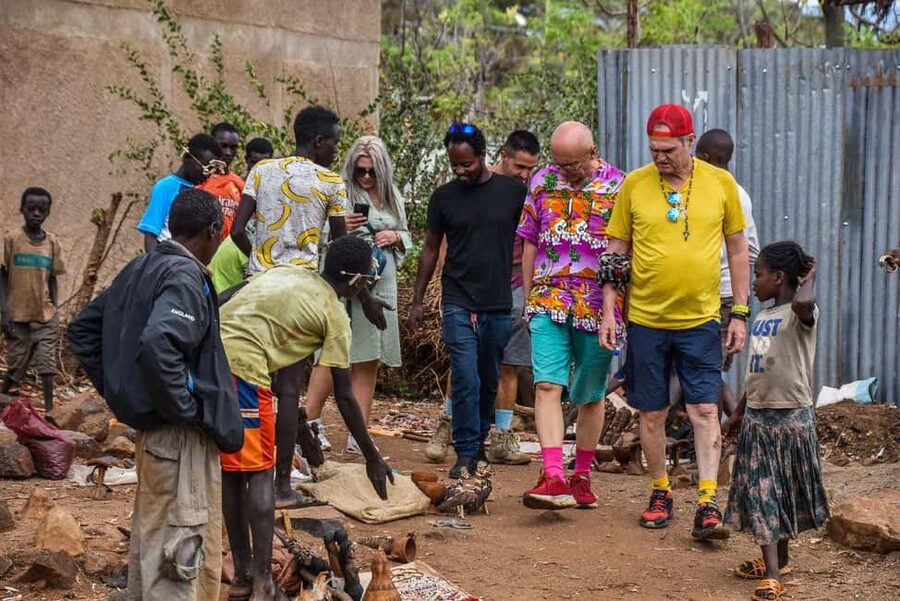
- Lake Chamo boat trip: Look for crocodiles resting near the shore, hippos in the water, and many kinds of birds.
- Dorze mountain village: See the tall, beehive-shaped homes that make this community one of the most memorable stops.
- Konso’s stone terraces: Visit a UNESCO World Heritage site known for carefully built agricultural terraces and local coffee.
- Omo Valley communities: Meet Bana, Hamer, Dassanech, Mursi, and Ari people, each with distinct dress, homes, and traditions.
- Long-distance route: The tour covers Addis Ababa, Arba Minch, Konso, Turmi, Omorate, and Jinka in six days.
- Strong guide service: The English-speaking driver and local guides are important strengths, especially in places where cultural context matters.
What this six-day route is really about
This is not a relaxed hotel-based holiday. It is a moving tour through southern Ethiopia, with each day bringing a different setting and community.
The Omo Valley is particularly interesting because it is not one single cultural area. More than 200,000 people live across the region, speaking 47 languages. The route introduces you to several groups, but it cannot explain every part of their lives in six days. Think of it as a focused introduction rather than a complete study of the region.
The value comes from the variety. You move from museums and archaeological remains to lakes, mountain villages, terraced farmland, pastoral communities, and low huts built from plant materials. That variety gives the tour a clear purpose, even when the driving days are demanding.
The price is listed at $1,400 per person. That is a serious amount, but it includes six nights of accommodation with breakfast, a private car with a professional driver, a professional guide, entrance fees, a scout fee, and the Lake Chamo boat trip. The value improves if you want a guided route and prefer not to arrange several hotels, drivers, and local visits yourself.
Still, ask about the group size before paying. The price is per person, but no group size is given. Also budget separately for lunch, dinner, alcohol, tips, and possible flights. Those costs can change the final total.
More Omo Valley tours:
- 6 Days Omo Valley Tribes Tours From Addis Ababa
★ 5.0 · 33 reviews - Lalibela, Axum, Danakil and Omo Valley 8 DAYS
★ 5.0 · 29 reviews - 3 Days Omo Valley Tour
★ 5.0 · 24 reviews
Day 1: Addis Ababa, Lucy, churches, and Merkato
Your arrival day begins with a hotel transfer in Addis Ababa. After you refresh, the sightseeing starts with the National Museum.
The museum’s main draw is Lucy, the famous early hominid fossil. This is a useful first stop because it gives the rest of your trip a wider human story. You are not simply heading south to see present-day communities. You are also beginning in a city connected to some of the most important discoveries about early human development.
Next comes Holy Trinity Cathedral, built during the Second World War. The itinerary gives only a short description of the stop, so your guide’s explanation will matter here. Ask about the cathedral’s construction and its place in Addis Ababa’s religious life.
The Ethnographic Museum follows. It was once the palace of Emperor Haile Selassie, so the visit combines royal rooms with displays about Ethiopia’s different communities. This is a helpful introduction before you reach the south, where clothing, homes, and traditions vary sharply from one group to another.
The day ends at Merkato, described as the biggest market in East Africa. This is a busy way to finish your first day, and it gives you an early sense of Addis Ababa as a commercial center. Keep your cash secure and stay close to your guide in the crowded market area.
You spend the night at Triple-E Hotel and Spa in Addis Ababa. Since the itinerary begins sightseeing after arrival, confirm your arrival time and the exact schedule if your flight lands late.
Day 2: Tiya and the long road to Arba Minch
After an early breakfast, you head south toward Arba Minch. The most important stop is Tiya, a UNESCO World Heritage site with engraved standing stones.
Tiya is known for a distinct type of carved stelae found in southern Ethiopia. The stones are the northernmost example of this particular tradition, giving the stop value beyond its size. Your guide can help explain the markings and why the site matters.
After Tiya, the route continues to Welayta for lunch. Lunch is not included, so keep Ethiopian birr or other usable cash ready. The tour then continues to Arba Minch, where you stay at Paradise Lodge.
This is a road-heavy day. The itinerary does not give the total driving time, so ask for a realistic estimate before departure. The early breakfast and long transfer mean you should keep the morning simple and carry water, personal medication, and anything you need during the drive.
The benefit of this day is that Tiya breaks up the journey with a meaningful archaeological visit. The drawback is that you spend much of the day in transit, leaving less time for Arba Minch itself.
Day 3: Lake Chamo, crocodiles, hippos, and Dorze homes
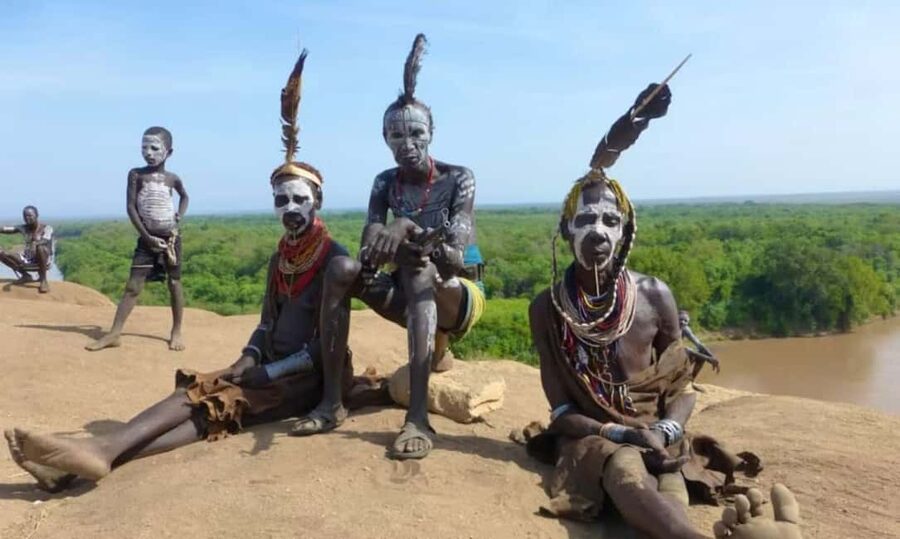
The day begins with a boat trip on Lake Chamo. The main stop is known locally as the crocodile market, but there is no buying or selling involved. It is simply a place where crocodiles leave the lake and rest near the shore.
You may also see hippos and different kinds of birds. The boat ride adds a welcome change after the long drive of the previous day, and the wildlife viewing gives the tour more variety than a series of village visits alone.
After Lake Chamo, you drive into the Gughe Mountains to visit a Dorze village. The Dorze are known for their tall, beehive-shaped huts, which are among the most visually distinctive homes on the route. The buildings are an important part of the visit, not just a backdrop for photographs.
The itinerary returns to Arba Minch for lunch before continuing to Konso. Again, lunch is at your own expense. You spend the night at Kanta Lodge in Konso.
This day has a good balance of water, wildlife, mountain scenery, and cultural visits. The practical catch is that it includes several transfers. If you prefer slow travel, you may find the schedule tight. If you want many different experiences in one trip, this is one of the strongest days.
More six-day itineraries:
- 6 Days tour Package (Simien Mountains, Lalibela, and Danakil Depression)
★ 5.0 · 32 reviews - 6 Days Lalibela, Omo Valley and Harar
★ 5.0 · 15 reviews - 6 Days Bale Mountains Trekking
★ 5.0 · 10 reviews - 6 Days Omo valley Tribal Tour (Starts Arba Minch End Jinka)
★ 5.0 · 7 reviews
Day 4: Konso terraces, Bana pastoralists, and Turmi
Konso is one of the key cultural stops. The community is known for terracing, and the site has UNESCO World Heritage status.
The terraces show how farming has been organized in difficult terrain. This is a place where the physical setting and human work are closely connected. You also learn that Konso produces one of Ethiopia’s best-known types of coffee, adding a food connection to the visit.
The route then continues to a Bana village. The Bana are described as indigenous pastoral and semi-nomadic people living in the harsh environment of the lower Omo Valley. Their way of life differs from the agricultural setting around Konso.
The men’s hair is often shaped with a colorful clay cap decorated with feathers. This is one of the specific visual details you may notice during the visit, but try to give equal attention to the community’s daily life and environment. A good local guide can help keep the visit from becoming only a photo stop.
After Bana, you continue to Turmi, home of the Hamer people. You spend the night at Emerald Lodge in Turmi.
This is an important transition day. The route leaves the higher agricultural areas and moves toward communities associated with pastoral life in the lower Omo Valley. The itinerary does not promise a cultural ceremony, and any ceremony or festival entrance fee is excluded. Do not assume one will take place during your visit.
Day 5: Omorate and the Dassanech people
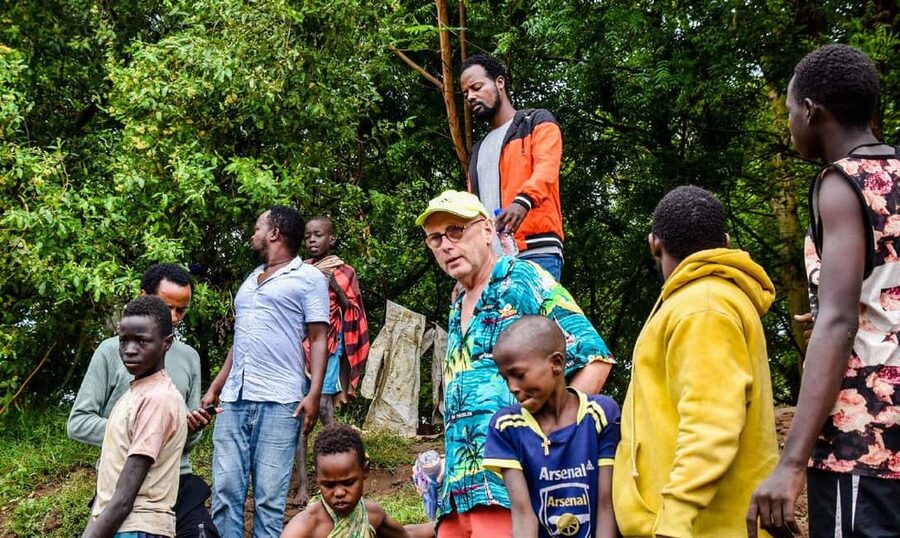
The fifth day takes you from Turmi to Omorate, about 75 kilometers away, with a listed driving time of roughly two hours. The destination is the Dassanech community, described as the people of the delta.
The Dassanech live on the northern shore of Lake Turkana. This gives the visit a strong geographic identity, since the community’s life is linked to the delta and the lake area.
You return to Turmi for lunch, at your own cost, then continue to Jinka. The overnight stay is at Jinka Resort.
The value of Omorate is the chance to see a different Omo Valley community rather than treating the region as one uniform culture. The tour introduces several groups in a short period, and this comparison is one of its best features.
The limitation is time. A visit to Omorate, a return to Turmi, lunch, and a transfer to Jinka makes for another full day. If you want long conversations or extensive time in each community, six days may feel too short. If your goal is an overview of several groups, the pace makes sense.
Day 6: Mursi and Ari communities around Jinka
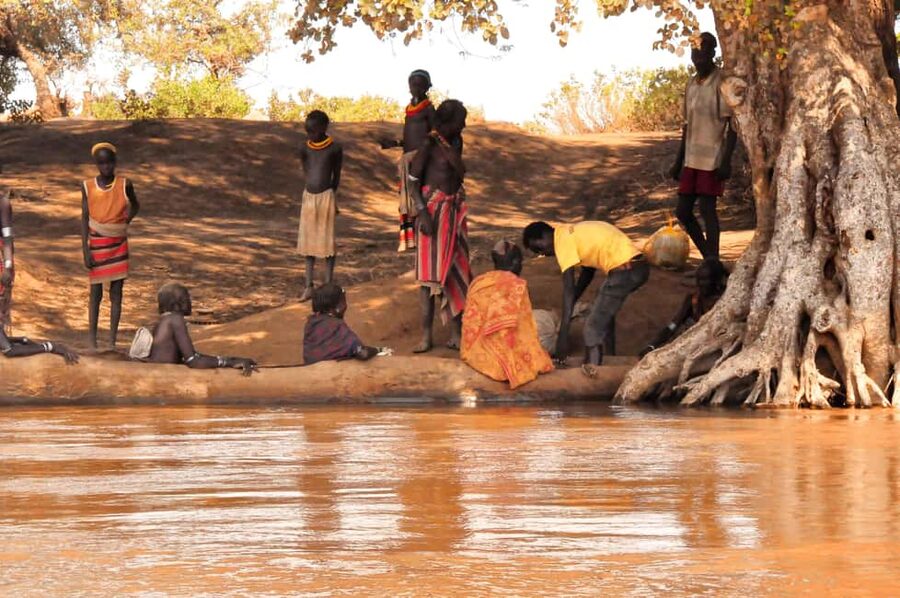
The final day begins with an excursion from Jinka to visit the Mursi. The itinerary describes their homes as low huts made from straw and leaves.
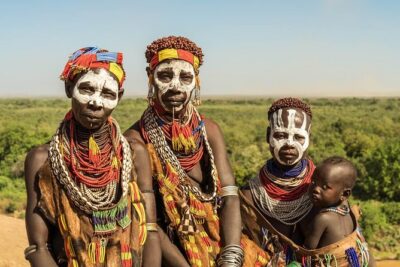
It also notes a well-known form of body adornment: some Mursi women wear terra cotta plates in stretched lower lips and ear lobes. This is a culturally specific practice, but it should not be treated as a spectacle detached from the people who practice it. Your local guide and scout are especially important here, helping you understand how to behave respectfully.
After visiting the Mursi, you return to Jinka for lunch. You then visit the Ari people, described as the largest population in the lower Omo Valley.
The Ari visit gives the final day a useful contrast. You have already seen several communities with different homes, dress, and livelihoods. Meeting the largest population in the lower Omo Valley broadens that picture before the trip ends.
The schedule says drive Jinka to Mago, return to Jinka, and then drive to Addis Ababa. It does not state how long the journey to Addis takes, and it also lists a local flight as an excluded cost. Ask the provider to confirm the exact end-of-tour transport before booking. If a local flight is needed or preferred, it will not be covered by the $1,400 price.
Guides, drivers, and the practical difference they make

The strongest praise focuses on the English-speaking driver and local guides. The driver is described as kind and polite, and the support from the local guides helped make the trip feel full of interesting experiences and adventures.
That matters on this route. A driver handles the long road connections, while local guides and a scout are important at cultural sites and community visits. The package includes a professional guide, entrance fees, and a scout fee, so you are not left to arrange every local requirement on your own.
Service may not be perfectly consistent at every hotel. One account describes some local guides and hotels as less focused on satisfying visitors, with certain hotels feeling greedy. I would treat this as a reason to keep expectations practical. Accommodation is included, but this is not presented as a luxury hotel tour, even though Paradise Lodge and the other named properties provide a clear overnight plan.
Ask who will guide each community visit, what is included in village fees, and how photography is handled. The provided details do not give a photography policy, so you should clarify it before taking pictures.
What the $1,400 price includes and leaves out
The included services are substantial:
- Accommodation with breakfast
- Professional guide
- Professional driver
- Car transportation
- Entrance fees
- Scout fee
- Lake Chamo boat trip
The exclusions are just as important:
- Lunch
- Dinner
- Tips
- Alcoholic drinks
- Local flights
- Entrance to cultural ceremonies or festivals
I see the price as reasonable for someone who wants a planned, multi-stop route with a vehicle, driver, guide, hotels, and several entry costs bundled together. It is less attractive if you already have a car, know the region, or want to arrange basic guesthouses and meals independently.
The biggest unknown is group size. A private car for a small party can offer better control over stops and luggage, while a larger shared group may make the per-person price more appealing. Ask this question directly before booking.
Carry cash, as requested in the practical information. You will need it for meals and other personal expenses. Your passport is also listed as something to bring.
The tour is available in English. You can reserve and pay later, and cancellation is allowed up to 24 hours before the start for a full refund. The experience is not suitable for babies under one year or people over 140 kilograms.
Who will get the most from this Omo Valley tour
I would recommend this route to you if you want a broad first look at southern Ethiopia and prefer having transport, accommodation, and local support arranged in advance.
It suits people who are especially interested in:
- Indigenous communities and cultural practices
- Archaeological and UNESCO-listed sites
- Traditional homes and farming methods
- Wildlife on Lake Chamo
- A structured route through several towns and villages
- English-language guiding
It may not suit you if you dislike long road journeys, want plenty of free time, or expect every meal and transport cost to be included. It also needs more planning if your final return to Addis Ababa depends on a flight, since the listed price excludes local flights and the final driving time is not stated.
The best way to approach the tour is with curiosity and restraint. You are visiting living communities, not an open-air museum. Listen to the guides, ask before taking photographs, and remember that a short visit cannot explain everything about a group’s identity.
Should you book the six-day route?
Book it if you want a well-organized introduction to the Omo Valley with a strong mix of museums, UNESCO sites, wildlife, mountain villages, and community visits. The kind English-speaking driver, local guides, included boat trip, and broad itinerary give the tour real value.
Before booking, confirm the group size, the precise final-day transport, the hotel arrangements, and the expected cost of meals and flights. If those details fit your plans, the tour offers an efficient way to reach places that would be difficult to connect on your own.
FAQ
Where does the Omo Valley Tribes tour begin?
The tour begins with arrival and sightseeing in Addis Ababa, Ethiopia.
How long is the tour?
The tour lasts six days.
What is the price per person?
The listed price is $1,400 per person.
What language is available?
The available tour language is English.
Is accommodation included?
Yes. Accommodation with breakfast is included.
Is a professional guide included?
Yes. A professional guide is included, along with a professional driver and a car.
Is the Lake Chamo boat trip included?
Yes. The boat trip on Lake Chamo is included.
Are lunch and dinner included?
No. Lunch and dinner are not included.
Are local flights included?
No. Local flights are excluded from the price.
Can I cancel for a full refund?
Yes. You can cancel up to 24 hours in advance for a full refund.
Just added around Ethiopia
- 10 Days in Northern Ethiopia Tours★ 4.5 · 3 reviews
- Lalibela 2-Day Eco Trekking Tour★ 5.0 · 3 reviews
- Day trek to Simeien Mountains★ 5.0 · 3 reviews
- Full Day Tour in Lalibela★ 5.0 · 3 reviews
- Day Trip to Tiya UNESCO Site & Melka Kunture Archaeological Site★ 4.5 · 3 reviews
- Two days Lake Wenchi and Menagesha Forest★ 5.0 · 3 reviews
- 4 Days tour in omo valley.★ 4.5 · 3 reviews
- 6 days 5 nights Addis Abeba sightseeing & Lalibela Rock-Hewn Churches★ 5.0 · 3 reviews
Omo Valley Tribal Tours, compared.

6 Days Omo Valley Tribes Tours From Addis Ababa
Read our review →
Lalibela, Axum, Danakil and Omo Valley 8 DAYS
Read our review →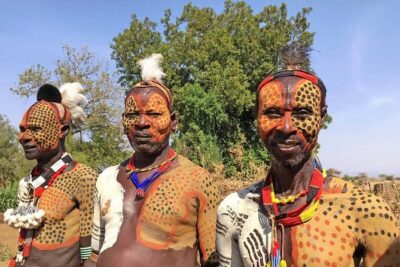
Danakil Depression, Lalibela, Omo Valley and Simien Mountains
Read our review →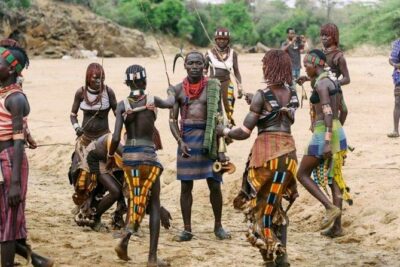


9 Days Tours To Danakil Depression, Simen MNP, Lalibela With Omo Valley Tribes
Read our review →Browse the lists this tour appears in