
Reviewed · GUIDED
Addis Ababa: Guided Expedition through Ethiopia’s Capital
Addis Ababa rewards curious eyes. I like the way this tour links Lucy and Ethiopia’s past with Merkato’s noisy, everyday trade, then adds coffee, churches, crafts, and mountain views. I also like the personal touch reported from guides such as Joe and Mike, who adjusted plans, helped with photos, and explained daily life as well as history.
The main consideration is pace. A half-day format can cover a surprising amount, but you will not linger everywhere. Merkato may feel intense, Mount Entoto can be cool and high, and the itinerary may stretch toward a full day depending on stops, traffic, and your guide.
In This Review
- Key points at a glance
- Why this Addis Ababa tour works well for a short visit
- Meeting your guide and finding the city’s story
- The National Museum and the story of Lucy
- Holy Trinity Cathedral and Beata LeMariam
- Local workshops, textiles, and jewelry
- Merkato, where Addis does business
- Ethiopian coffee from ceremony to café
- Mount Entoto and the final city view
- A packed route with room for human touches
- What the $50 price really covers
- Who should book this Addis Ababa experience?
- Should you book it?
- FAQ
- What is included in the $50 price?
- Which major sights are included?
- Is the tour suitable for a layover?
- Is coffee included?
- Can I buy souvenirs?
- What language is spoken on the tour?
- What is the cancellation policy?
Key points at a glance
- Lucy at the National Museum: A useful first stop for understanding Ethiopia’s place in human history.
- Merkato market: A direct look at commerce, bargaining, spices, crafts, and ordinary city life.
- Two sides of coffee culture: The traditional ceremony is paired with stops at coffee shops such as Tomoca.
- Mount Entoto views: A scenic finish above the city, with a clear change from street-level Addis.
- Guides who adapt: Joe, Mike, Michael, and Kasseye are praised for clear explanations, flexibility, and personal care.
- Strong value at $50: Transport, entrance fees, bottled water, coffee, and a professional English-speaking guide are included.
Why this Addis Ababa tour works well for a short visit
Addis Ababa can be hard to read in a few hours. Its major sights are spread across a large metropolitan area, and the city shifts quickly from grand avenues to small workshops, market lanes, churches, cafés, and steep hills.
This guided outing gives you a framework. You are not simply driven from one photo stop to another. The route brings together Ethiopia’s archaeology, religion, food, trade, crafts, and modern city life. That mix is the chief strength.
I would give this tour serious thought if you have a long layover or only one evening in the capital. Several people describe seeing a great deal in roughly four hours, while others experienced it as a longer afternoon or day. The exact rhythm appears to depend on the departure, traffic, and how much time you spend at Merkato or local food stops.
At $50 per person, the value is good if the tour runs smoothly. You receive transportation, entrance fees, bottled water, coffee, and an English-speaking guide. You still pay for personal shopping, extra food, souvenirs, optional activities, and anything not named in the package. That matters in a city where you may quickly want a pastry, a craft, a piece of jewelry, or a small souvenir.
A few more tours of this kind worth a look:
- Full Day Tour of Addis Ababa with Hotel Pickup and Drop-off
★ 5.0 · 430 reviews - Taste of Ethiopia
★ 5.0 · 406 reviews - Day Trip From Addis Ababa See Historical Monastery,Stunning Nature,Animals,Birds
★ 5.0 · 303 reviews
Meeting your guide and finding the city’s story

The experience begins with a meeting and welcome from a local guide. That first contact matters in Addis Ababa because the quality of the explanation can shape your whole impression of the city.
The strongest personal praise goes to Joe, Mike, and Michael. Joe is described as patient, warm, and clear, with a gift for explaining places in a way that makes the sequence easy to follow. Mike receives repeated praise for his energy, photographs, flexibility, and ability to cover a great deal of ground. Michael is described as especially attentive and willing to show local places beyond the basic route. Kasseye is praised for bringing Ethiopian and African history to life.
You should still understand that guides differ. A tour like this is not a fixed audio program. Your day will reflect the guide assigned, the weather, traffic, opening conditions, and your own questions. That flexibility can be a major benefit. One guide adjusted the route to spend more time at Merkato, while another helped a visitor see more than expected during a short layover.
Transportation is included, which makes a real difference. You can move between distant parts of the city without arranging separate taxis, and the guide can help keep the day organized. The tradeoff is that city traffic can eat into sightseeing time. Keep your schedule realistic if you need to return to the airport or catch a connecting flight.
The National Museum and the story of Lucy
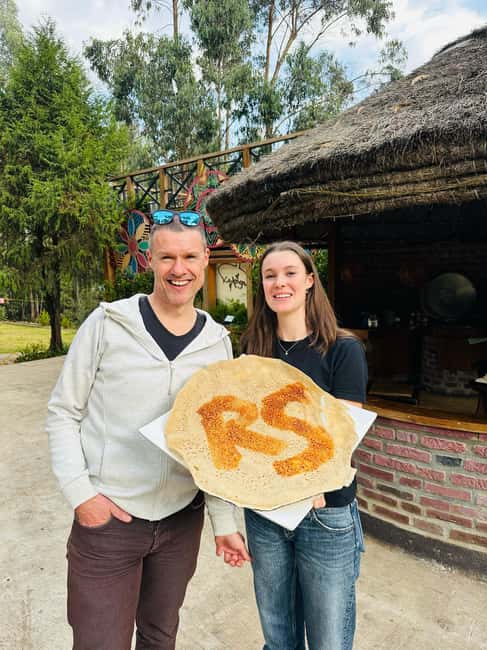
The National Museum is one of the most important stops because it gives the rest of the tour a firm base. Its best-known treasure is Lucy, the famous fossil associated with early human history.
A guide can make this visit far more useful than a quick look at a display case. You can ask questions, connect the fossil to Ethiopia’s place in scientific research, and understand why this country is central to discussions about human origins. Kasseye receives special praise for explaining Lucy and the wider story of Ethiopia and Africa in an accessible way.
Do not expect a huge museum visit with time for every room. On a compact city tour, the stop is part of a wider route. If archaeology is your main interest, you may wish you had longer. If you want a first introduction to Ethiopia, the museum provides exactly the right amount of context before the city becomes more immediate and personal.
The National Museum also helps prevent a common travel mistake: treating Addis Ababa as only a gateway to other parts of Ethiopia. This stop reminds you that the capital has its own major cultural importance.
Holy Trinity Cathedral and Beata LeMariam
The Holy Trinity Cathedral brings a different tone. Here, architecture, worship, imperial history, and religious art come together in a setting that feels more reflective than the market.
Your guide can explain the cathedral’s place in Ethiopian religious life and point out architectural details or artifacts that are easy to miss alone. The value is not only the building itself. It is the chance to understand how faith and national identity connect in Ethiopia.
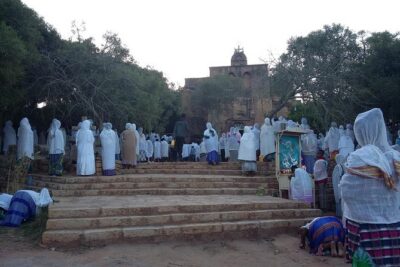
A stop at Beata LeMariam church has also been praised as a welcome addition. It is the kind of smaller religious site that can make the day feel less like a checklist of famous attractions. You may see a more intimate side of local worship and church tradition, though the exact visit can depend on time and access.
Dress respectfully for religious sites. The provided information does not give a formal clothing rule, but modest clothing is a sensible choice for churches. Approach these places as active religious spaces, not just historic interiors, and follow your guide’s instructions about photographs and behavior.
Something different, still within Addis Ababa:
- Addis Ababa: Debre Libanos, Blue Nile Gorge, and Cave Tour
★ 4.5 · 256 reviews - Addis Ababa Guided City Tour With Airport & Hotel Pick Up
★ 5.0 · 237 reviews - Breathtaking Nature, Wildlife and Cave Church Tour – Free Pickups
★ 5.0 · 225 reviews - Full-Day Private City Tour of Addis Ababa
★ 5.0 · 147 reviews
Local workshops, textiles, and jewelry
The artisan portion adds hands-on character to the day. You may see traditional crafts, handwoven textiles, and intricate jewelry being made or displayed.
I like this stop because it gives economic and artistic context. A finished textile in a shop can look attractive, but seeing the work behind it helps you understand why the object matters. You also get a chance to ask about materials, patterns, and techniques.
This is a shopping opportunity, but it should not feel compulsory. Personal purchases are not included, and prices may vary. If you want a souvenir, ask your guide to explain the quality and the normal buying process. A visitor reported purchasing a refrigerator magnet for about 80 birr, which gives you an idea of the kind of small keepsake available, though prices can change.
Keep your expectations practical. This is not a dedicated craft workshop or a formal buying seminar. It is a brief window into local production, added to a day already packed with museums, churches, markets, coffee, and views.
Merkato, where Addis does business
Merkato is likely to be the most intense stop. It is described as Africa’s largest open-air market, and the experience is less polished than a tourist shopping street. You move through working market lanes filled with goods, people, and constant negotiation.
You may find spices, handmade crafts, textiles, jewelry, household goods, and other daily necessities. The point is not simply to buy something. Merkato shows you how Addis Ababa trades, moves, and earns a living.
This is where a local guide is especially useful. Chris appreciated being able to spend extra time at the market, and other guides took visitors to places they would not have chosen alone. A guide can help you read the setting, decide where to pause, and avoid wasting time in a huge area.
Merkato is also the part most likely to feel tiring. The lanes can be crowded, the pace can be quick, and you may need to keep belongings secure. Wear comfortable shoes and carry only what you need. If you dislike busy commercial areas, tell your guide early so the visit can be adjusted.
For many people, though, this will be the most authentic part of the tour. Museums explain a country. Markets show how people live today.
Ethiopian coffee from ceremony to café
Coffee is not a decorative extra here. It is a social practice with meaning, time, and ritual.
The traditional coffee ceremony gives you a chance to learn how coffee fits into Ethiopian society while tasting freshly brewed coffee. The experience is more valuable when your guide explains the steps and social setting instead of treating it as a quick beverage stop.
The tour may also include a modern coffee shop and a traditional café. Tomoca is singled out as a memorable stop, while another experience included two contrasting coffee shops. That pairing is smart. You see how Addis holds onto established coffee customs while also supporting a modern café culture.
You may also encounter Ethiopian pastries or local food along the way. One guide bought pastries for a visitor, and another included Ethiopian food and dancing during an evening visit. These details are not guaranteed as a standard part of every departure, so treat them as possible additions rather than promised inclusions.
Coffee can be a highlight, but it may not suit everyone. If caffeine affects you strongly, ask about the serving size or pace yourself. Bottled water is included, which is helpful during a long day of walking and driving.
Mount Entoto and the final city view
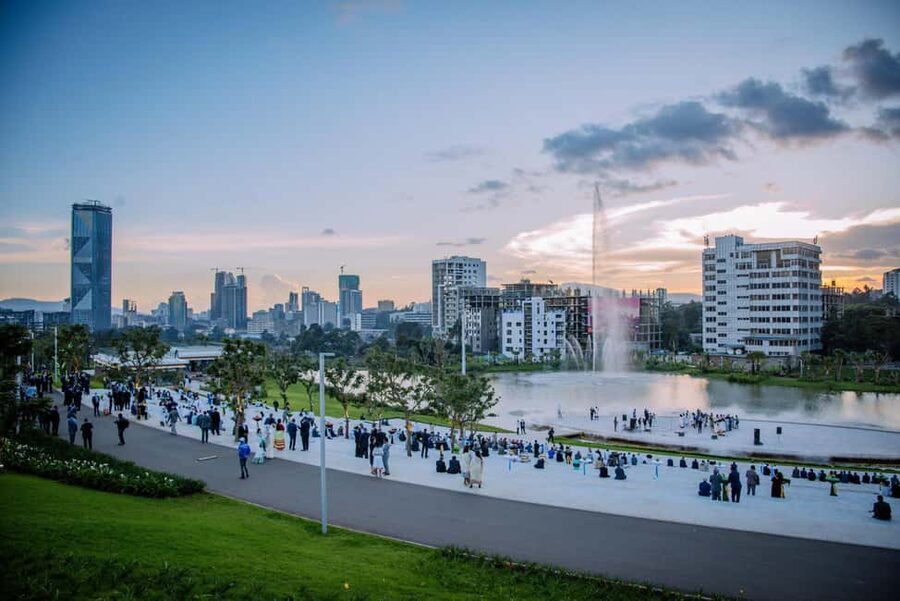
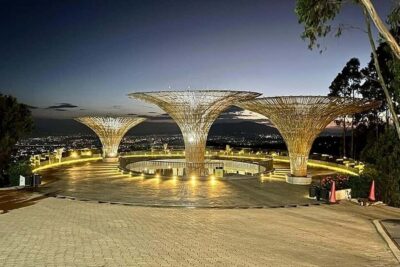
The drive to Mount Entoto changes the mood again. After the close quarters of Merkato and the city’s busy streets, you reach a high viewpoint overlooking Addis Ababa.
The attraction is the broad view across the capital. You can look back over the places you have visited and see how large and varied the city really is. The stop works best late in the route, when you have enough context to recognize the contrast between central streets, market districts, and the higher ground around the city.
Bring a light layer if you are sensitive to cooler air. The tour specifically warns that it is not suitable for people with altitude sickness, so take that limitation seriously. The information does not give an exact elevation or guarantee a particular weather condition, but the mountain setting can feel different from central Addis.
This is also your best photo stop. Mike is praised for taking photographs and videos, and other guides helped visitors get pictures during rain by holding an umbrella. Still, pack for changing conditions rather than relying on a guide to solve every weather problem.
A packed route with room for human touches
The itinerary’s biggest strength is variety. In a single outing, you can encounter a fossil, cathedral, church, craftwork, market trade, coffee customs, food, and a mountain view.
The risk is that variety can become a rush. Some people will love moving constantly and getting a broad introduction. Others will want more time in the museum, more quiet at the cathedral, or a slower look at the market. Tell your guide what matters most. The experience appears flexible enough to make sensible changes, especially when time is limited.
Personal care is a repeated theme in the strongest accounts. One guide held an umbrella during rain so a visitor could take photographs. Others arranged pickups and returns at the Skylight Hotel, answered long lists of questions, or stayed attentive when attractions were closing. Those actions matter more than polished commentary because they make a short city visit feel manageable.
The language provided is English. If you want detailed discussion about history, religion, or politics, ask questions as you go. The guides are praised for covering Ethiopia’s past, daily life, and geopolitics, but your experience will be best when you help shape the conversation.
What the $50 price really covers
The $50 price is fair for a guided city introduction, especially if you are visiting for a layover. Transport alone can become a nuisance when major stops are spread across Addis Ababa. Add entrance fees, bottled water, coffee, and a professional guide, and the package removes several small costs and planning chores.
The price is less compelling if you want a slow, specialist visit to one subject. An archaeology fan may prefer to spend much longer at the National Museum. A serious shopper may want an entire day at Merkato. A coffee enthusiast may prefer a dedicated coffee-focused experience.
Budget extra money for personal expenses. Souvenirs, extra snacks, meals, and optional activities are not included. Flights, accommodation, travel insurance, and personal transport are also outside the package.
You can reserve and pay later, and cancellation is allowed up to 24 hours before the experience for a full refund. That is useful when international flight plans are uncertain, especially for a layover.
Who should book this Addis Ababa experience?
I would recommend it most strongly to first-time visitors, solo visitors, and people with limited time. The route gives you a broad introduction without asking you to solve Addis Ababa’s transport and sightseeing puzzle alone.
It also suits people who prefer conversation over silent sightseeing. The best parts depend on the guide explaining what you are seeing, answering questions, and adjusting the pace. If you want a strictly timed, highly formal tour, the human variation may feel less predictable.
The experience is not suitable for babies under one year, people over 70, or anyone with altitude sickness, according to the stated restrictions. Intoxication, alcohol and drugs, explosive substances, and military-style clothing are not allowed.
Should you book it?
Book it if you want the big picture of Addis Ababa in a short window. The combination of Lucy, Holy Trinity Cathedral, local crafts, Merkato, Ethiopian coffee, and Mount Entoto gives you more than a simple drive past landmarks.
I would especially choose it for a long layover or a first afternoon in the capital. Ask for time at Merkato if daily life interests you, or more explanation at the National Museum if archaeology is your priority. The value is strongest when you communicate your interests and accept that traffic and local conditions may affect the order.
Skip it only if you want a slow, single-subject visit or complete control over every minute. For most people seeking a friendly, practical introduction to Addis Ababa, $50 is a sensible buy.
FAQ
What is included in the $50 price?
The price includes transportation, entrance fees for included attractions, bottled water, an Ethiopian coffee experience, and an English-speaking professional guide.
Which major sights are included?
The route includes the National Museum, home of Lucy, Holy Trinity Cathedral, local artisan areas, Merkato, a coffee experience, and Mount Entoto for city views.
Is the tour suitable for a layover?
Yes. The experience is well suited to a short stay, and it has been completed in compact half-day formats, including outings of about four hours.
Is coffee included?
Yes. An Ethiopian coffee experience is included. The route may also include coffee shops such as Tomoca, though additional food or café purchases are not specified as included.
Can I buy souvenirs?
Yes. Personal purchases are allowed but are not included in the price. Souvenirs may include small items such as refrigerator magnets, crafts, textiles, and jewelry.
What language is spoken on the tour?
The stated tour language is English.
What is the cancellation policy?
You can cancel up to 24 hours in advance for a full refund. You can also reserve your place and pay later.
Just added around Addis Ababa
- 10 Days in Northern Ethiopia Tours★ 4.5 · 3 reviews
- Day Trip to Tiya UNESCO Site & Melka Kunture Archaeological Site★ 4.5 · 3 reviews
- Two days Lake Wenchi and Menagesha Forest★ 5.0 · 3 reviews
- Addis Ababa Half Day Shopping Tour★ 5.0 · 3 reviews
- 6 days 5 nights Addis Abeba sightseeing & Lalibela Rock-Hewn Churches★ 5.0 · 3 reviews
- 12- Day Historical Route of Ethiopia★ 5.0 · 3 reviews
- 6 days Omo valley cultural Tour★ 5.0 · 3 reviews
- Addis Ababa at a Glance★ 5.0 · 3 reviews
Guided, compared.
Addis Ababa Guided City Tour With Airport & Hotel Pick Up
Read our review →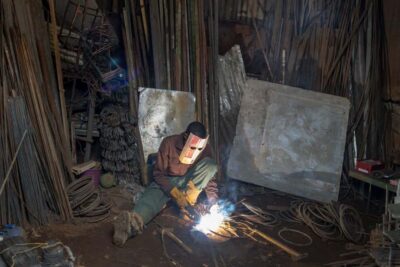
Authentic Addis Ababa City Tour with a Local Guide
Read our review →
Ethiopia Tigray Tours: Guided tour of Tigray rock hewn churches
Read our review →
Private Half Day Guided tour in Addis Ababa New Flower
Read our review →
Browse the lists this tour appears in