
Reviewed · DANAKIL DEPRESSION TOURS
3 Days Desert Adventure: Discover Danakil’s Hidden Wonders!
The Danakil does not do ordinary scenery. This three-day journey takes you across Ethiopia’s Afar Region to salt flats, sulfur springs, volcanic pits, and Erta Ale, one of the few places on Earth with a permanent lava lake. I like the small group limit of 10, which should make the long drives and rough desert stops easier to manage. I also like that the price includes a 4WD vehicle, meals, guides, camping equipment, local fees, and security support.
The main catch is the heat. Temperatures can reach 50 degrees Celsius, and comfort is basic once you leave the air-conditioned vehicle. You should also clarify the exact pickup airport, flight arrangements, and the apparent difference between wine being included and alcohol being excluded before you pay.
In This Review
- Key points to know before you go
- Why the Danakil Depression feels so different
- Day 1: Afdera, salt water, and a night under the stars
- Day 2: Dallol’s sulfur colors and the road to Erta Ale
- Day 3: Sunrise over volcanic pits
- What the $350 price really covers
- Comfort, safety, and the heat factor
- Who will enjoy this three-day adventure
- Practical questions to settle before departure
- Should you book the Danakil tour?
- FAQ
- How long is the Danakil Depression tour?
- What is the tour price?
- Where does the tour start?
- Are domestic flights included?
- How hot can the Danakil region become?
- Is Erta Ale an active volcano?
- What languages are available from the guides?
- What is included in the tour price?
- Can I cancel the booking?
Key points to know before you go
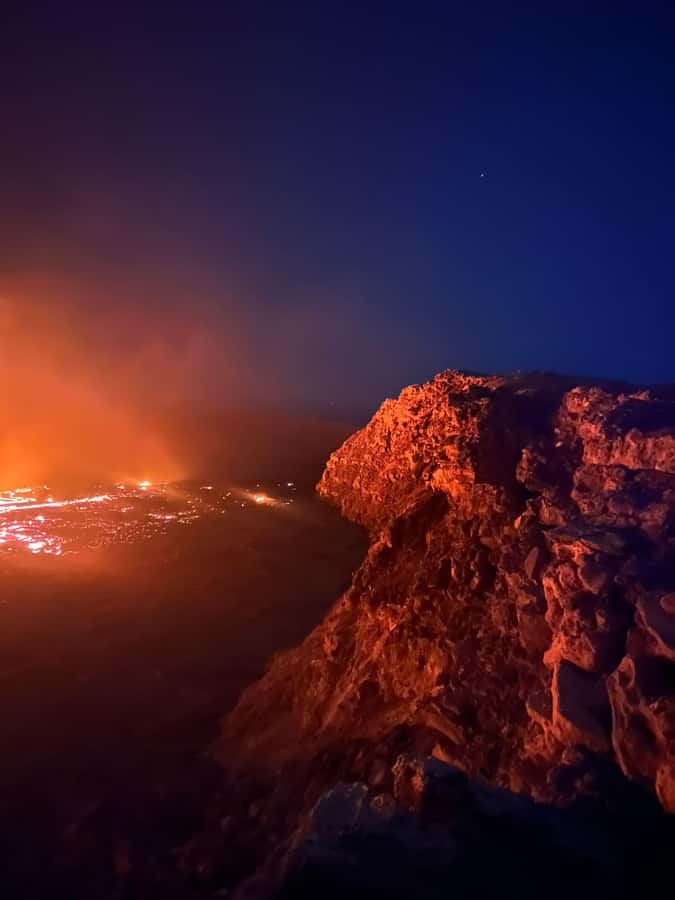
- Erta Ale after dark: Trek toward an active shield volcano and see boiling lava at the summit if conditions allow.
- Salt lake below sea level: Visit salt flats and a highly saline lake where the Afar people extract salt.
- Camping under open stars: Sleep on a wooden bed or mattress with sheets and blankets at desert camps.
- Long 4WD transfers: Expect extended drives across hot, empty terrain, with air conditioning in the Land Cruiser.
- Small organized group: The tour accepts no more than 10 participants and includes English, Amharic, and German guiding.
- Strong practical value: At $350 per person, the package covers many costly essentials, though domestic flights are extra.
Why the Danakil Depression feels so different
The Danakil Depression is not one attraction. It is a broad, harsh region where salt, heat, volcanic activity, and low elevation shape nearly everything you see. The route passes through the Afar Region, where daily life is closely tied to salt, desert travel, and a difficult climate.
You will spend much of the tour inside a 4WD vehicle. That is not wasted time. The roads and open desert routes are part of the experience, and the changing heat tells you how far you are moving into one of the hottest places on Earth.
The trip is run by Simien Mountains Outstanding Nature Tours. A small group of 10 keeps the convoy more manageable and gives you a better chance to stay close to your guide at the volcanic and sulfur sites. Guides are available in English, Amharic, and German.
The tour has a high overall rating of 4.7 from five recorded ratings. The strongest praise centers on organization, transport, food, guiding, and the ability to provide comfort in a very uncomfortable environment. That is useful here. The Danakil is not a place where luxury is realistic, so good planning matters more than fancy facilities.
More Danakil expeditions:
- 3 Days Danakil Depression Tour
★ 4.5 · 135 reviews - 3 Days Danakil Depression Tours Via Semera
★ 5.0 · 47 reviews - 12 Days SIMIEN MOUNTAIN-LALIBELA-DANAKIL-TIGRAY CHURCHES
★ 5.0 · 45 reviews
Day 1: Afdera, salt water, and a night under the stars
The first day begins at 9:00 a.m. from Semera or Mekele Airport. The supplied pickup instructions focus on Semera Airport, where your guide and driver will wait with the company name, your booking details, or your name. If you are arriving through Mekele, confirm the meeting point well before departure.
The drive heads toward the Danakil Depression as the temperature rises. The air-conditioned 4WD Land Cruiser is one of the most important inclusions in the trip. Without it, the long transfers would be much harder, especially during the hottest part of the day.
A lunch stop comes at Afdera, an Afar village known for its salt lake. This is more than a break for food. It gives you a short look at how people live in a region shaped by salt and heat. Local cuisine is included, though the exact dishes are not specified, so you should expect a simple desert meal rather than a broad restaurant menu.
The route continues toward Hamed Ela. After reaching Dallol, there is time to rest at camp with tea or coffee before heading onward to a saltwater lake more than 100 meters below sea level. The timing description places several Dallol and salt-lake activities across the first two days, so ask for the final day-by-day schedule before departure. Desert plans can also shift with heat and local conditions.
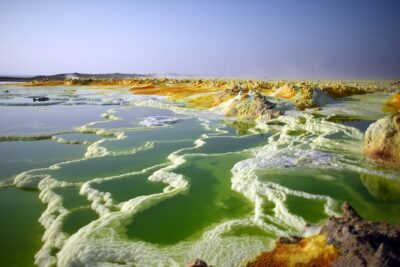
At the salt flats, you will see the practical side of the region. Afar salt workers extract salt by evaporating water from the lake, leaving broad crusts and deposits across the ground. The setting is stark and photogenic, but it is also exposed. Bring sun protection, cover your skin, and protect your camera from salt and dust.
A swim in the floating salt lake is offered. The water is highly saline, so you may float more easily than in ordinary water. Rinse carefully afterward if fresh water is available, and follow your guide’s instructions around the lake. The salt can sting cuts and irritated skin.
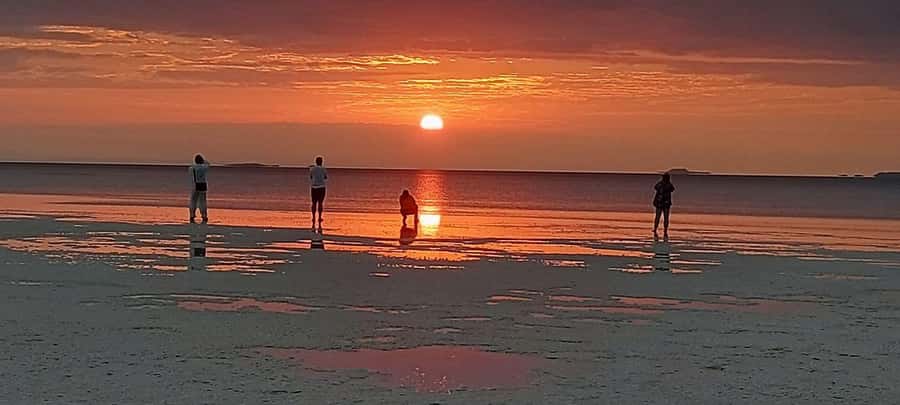
The sunset brings out red salt formations and changing tones across the flats. The drivers may add music, dancing, and jumping to the evening, which gives the camp a social feel after a long day in the vehicle. It may not suit you if you prefer a quiet wilderness stop, but it adds warmth to an otherwise severe place.
Dinner includes tea and coffee. Sleeping arrangements are simple but more practical than a bare tent: wooden beds with mattresses and sheets are provided, and you may sleep outdoors under the stars. The open-air setup is one of the memorable parts of the trip, though you should not expect hotel-level privacy or climate control.
Day 2: Dallol’s sulfur colors and the road to Erta Ale
Day two starts early. That is a sensible plan because the heat becomes harder to handle as the morning moves on, and sunrise gives the salt and sulfur features cooler light.
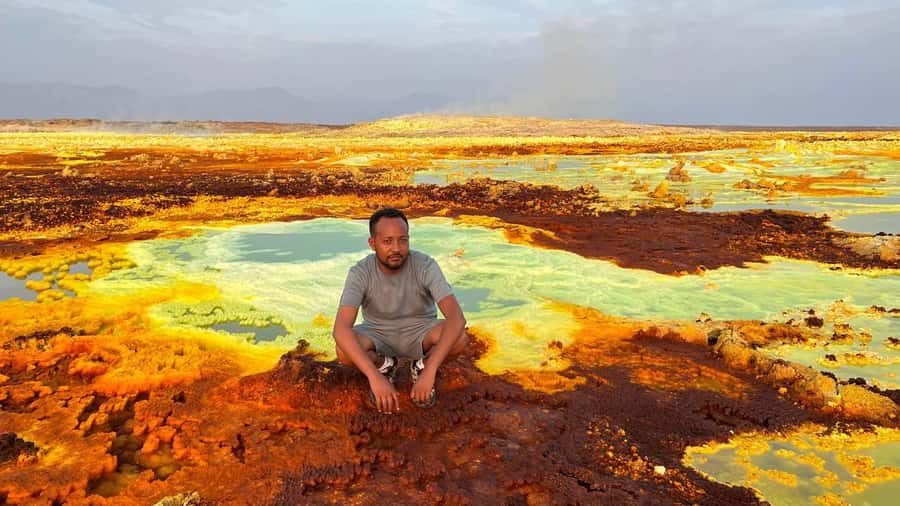
Dallol sits about 116 meters below sea level and is among the lowest places on Earth. The area is known for sulfur springs, hot springs, colorful salt deposits, salt mountains, and unusual mineral formations. The colors come from the area’s volcanic and chemical activity, not from landscaped gardens or painted scenery. This is raw geology, and it looks almost unreal.
You will need to stay close to the guide here. Sulfur springs and hot ground are not places for casual wandering. The tour includes local guides, scout and police services, and community fees, which are valuable additions in such a remote area. The presence of security support also reflects the fact that this is not an independent road trip.
The schedule says you return to camp for breakfast before continuing toward Erta Ale. That order may sound unusual after an early visit, but it allows the main group to eat before the next long transfer. Breakfast, lunch, snacks, and dinner are included throughout the desert portion.
Erta Ale is a shield volcano with a large caldera and a summit height of about 613 meters. Its permanent lava lake is the major prize of the tour. The supplied information describes it as one of only five permanent lava lakes in the world, though what you can see at the rim depends on volcanic activity, visibility, and local safety decisions.
The trek up to the volcano cone is the most physically demanding part of the trip. The route description does not give a distance or walking time, so you should ask the operator about current trail conditions and the expected pace. In the heat, even a moderate climb can feel serious. Carry water, wear sturdy shoes, and use the breaks provided by the guide.
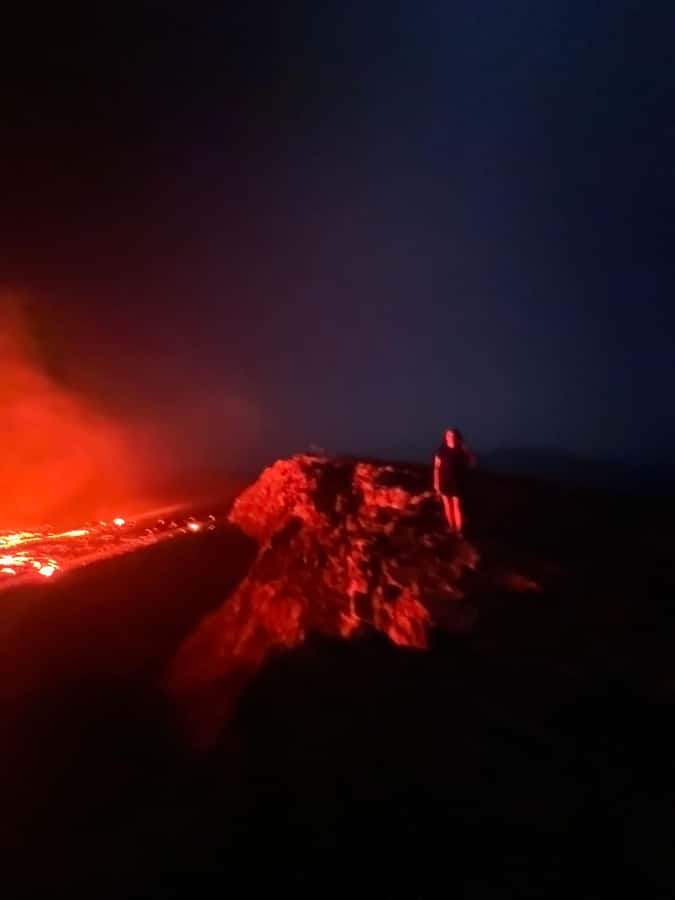
At the top, you may see boiling lava and the huge caldera. The appeal is obvious: you are close to an active volcano rather than looking at one from a distant viewpoint. The drawback is equally clear. The area is hot, rocky, and remote, and there is no guarantee that the lava will be clearly visible at every visit.
The group returns to camp around 8:00 p.m. for dinner. The Erta Ale camp is described as an outdoor rocky site with flower mattresses, bed sheets, and blankets. That wording suggests a basic sleeping arrangement rather than a tented camp with enclosed rooms. The stars should be excellent if the sky is clear, but the ground, heat, and limited facilities may test your patience.
Day 3: Sunrise over volcanic pits
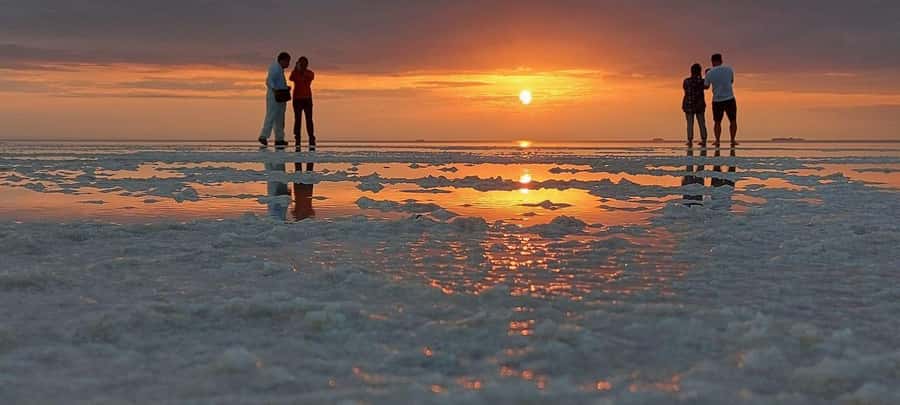
The final morning starts early for sunrise at Erta Ale’s northern pit crater. You then take a short walk to the southern and central pits, which show older volcanic structures and the shape of the volcano’s summit area.
The main pit crater is described as about 200 meters deep and 350 meters across. The smaller southern pit is about 65 meters wide and roughly 100 meters deep. These measurements help you understand the scale. You are not simply looking into a hole in the ground. You are seeing a major volcanic formation from close range.
The exact visibility of lava, smoke, or heat may change. Your guide will control where you can go, and you should not step beyond marked or advised areas for a better photograph. The point of this morning is to see the volcanic structures in cooler light before the sun becomes too strong.
After returning to camp, you will have a final desert breakfast and time to rest before packing the camping equipment. The return drive ends between 2:00 and 4:00 p.m., allowing a planned 5:30 p.m. flight to Addis Ababa from either Mekele or Semera. Do not assume that timing is guaranteed. Desert roads can be slow, so confirm the safest airport and flight plan with the operator.
More three-day trips:
- 3 Day Danakil Depression Ertale and Dallol Tours
★ 5.0 · 44 reviews - 3 Days Dankile Depression group Tours
★ 5.0 · 40 reviews - 3 Days Danakil Depression Tour from Semera City
★ 4.7 · 34 reviews - 2-Night 3-Day Danakil Depression Tour without Flights
★ 4.8 · 31 reviews
What the $350 price really covers
At $350 per person, this is a strong package price for a remote three-day expedition. The included 4WD transport, driver, local guide, entrance fees, community fees, meals, bottled water, camping equipment, camel hire, and scout and police services remove many extra costs that can quickly add up in the Danakil.
The food coverage is especially useful. Breakfast, lunch, snacks, and dinner are included, along with tea and coffee. You do not need to depend on shops in a region where supplies are limited. Bottled water is included too, but given the heat, ask how much is supplied each day and bring a refill strategy if permitted.
Camel hire is listed as part of the package, though the itinerary does not specify exactly when or how the camels are used. Ask about this if it matters to you. Wine is also listed among the inclusions, while alcohol is excluded in the separate exclusions section. That is a clear point to settle before booking.
Domestic flights are not included. The operator says it can provide the domestic flight ticket from Addis Ababa to Semera after a briefing in Addis the day before, but the price section says flights are excluded. Treat this as an arrangement that needs confirmation, not as a free flight.
The tour offers free cancellation up to 24 hours before departure and a reserve-now, pay-later option. Those terms are useful when your Ethiopian route is still changing, but check the exact booking conditions for flights and any separately arranged services.
Comfort, safety, and the heat factor
The Danakil is a demanding destination. Temperatures can reach 50 degrees Celsius, and even short walks may feel intense. The air-conditioned Land Cruiser helps during the drives, but you will still spend time outside at salt flats, sulfur springs, volcanic pits, and camps.
Pack light, breathable clothing that covers your arms and legs. A wide hat, sunglasses, sunscreen, sturdy footwear, and a head covering are practical choices. Carry personal medication and tell your guide about health concerns before leaving the airport.
The included scout and police service is reassuring, particularly because the route passes through isolated areas. Local guides also matter at sulfur springs and volcanic sites, where the safest path may not be obvious. Listen closely to instructions and do not trade safety for a close photograph.
The camping is part of the attraction, but it is not luxurious. Wooden beds, mattresses, sheets, and blankets are provided, yet the setting remains rocky, hot, and exposed. If you need air conditioning, private bathrooms, or a regular bed every night, this trip will feel too rough.
Who will enjoy this three-day adventure
I would recommend this tour to you if you want unusual geology, remote desert travel, and a close look at an active volcano. Photographers, outdoor-minded visitors, and people who value rare natural settings will get the most from the route.
The trip also suits anyone who prefers an organized expedition. The guide, driver, meals, security support, camping gear, and small group remove much of the planning burden. You can focus on the scenery instead of arranging vehicles, permits, and local support at every stop.
I would hesitate to recommend it if you struggle with extreme heat, long drives, basic camping, or early starts. The scenery is extraordinary, but the physical conditions are not softened by the scenery. A high rating for organization does not turn the Danakil into a comfortable resort.
The small group limit is a real advantage. With no more than 10 participants, loading the vehicle, stopping at viewpoints, and moving as a group should be easier than with a large coach party. The guides and drivers also receive high praise for professional service, food, transport, and organization.
Practical questions to settle before departure
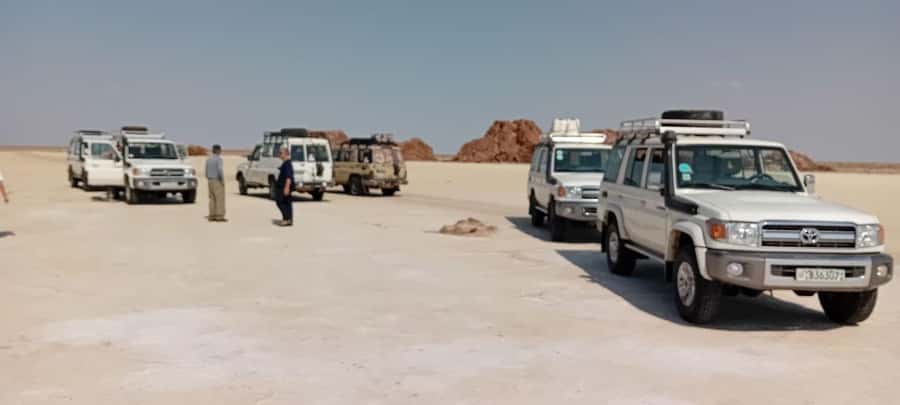
The advertised route gives two possible starting airports, Semera and Mekele, but the pickup instructions describe Semera in detail. Confirm the correct arrival point, the flight time, and how the return airport fits your Addis Ababa connection.
Ask for the latest program too. Dallol, the salt lake, and the sunrise stops appear in slightly different places in the written timing, and the exact order may change. That does not weaken the experience, but it matters if you need to plan flights or judge how much time you have at each site.
Also confirm what wine included means, since alcohol is separately listed as excluded. Clarify camel use, the amount of bottled water, current volcanic conditions, and the expected walking time at Erta Ale. These are small questions that can prevent large surprises.
Should you book the Danakil tour?
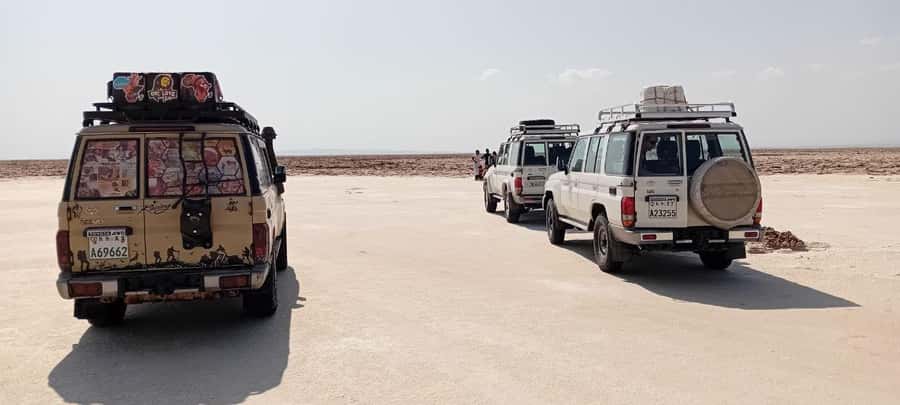
Book it if you want Ethiopia at its most elemental: salt underfoot, sulfur in the air, lava at a volcanic rim, and stars above a simple desert bed. The $350 price offers good value because it covers transport, food, local support, camping, and security in a difficult region.
Skip it if extreme heat or rough camping sounds miserable rather than exciting. Before paying, confirm the airport, domestic flight arrangements, final itinerary, alcohol policy, and Erta Ale conditions. If those details work for you, this is a rare and well-supported way to reach one of the world’s most unusual natural areas.
FAQ
How long is the Danakil Depression tour?
The tour lasts three days.
What is the tour price?
The advertised price is $350 per person.
Where does the tour start?
The experience can start from Semera or Mekele Airport. Pickup instructions specifically explain meeting the guide and driver at Semera Airport, so confirm the correct airport before departure.
Are domestic flights included?
Domestic flights are listed as excluded from the tour price. The operator also says it can provide the Addis Ababa to Semera domestic flight ticket after a briefing in Addis, so you should confirm the exact arrangement.
How hot can the Danakil region become?
Temperatures can reach up to 50 degrees Celsius. The 4WD Land Cruiser has air conditioning and ventilation for the driving portions.
Is Erta Ale an active volcano?
Yes. Erta Ale is described as an active shield volcano with a permanent lava lake at its summit.
What languages are available from the guides?
Guiding is available in English, Amharic, and German.
What is included in the tour price?
The price includes entrance fees, community fees, desert meals, bottled water, air-conditioned 4WD transport, local guides, camping equipment, scout and police services, camel hire, and wine as listed in the inclusions.
Can I cancel the booking?
You can cancel up to 24 hours in advance for a full refund, according to the stated cancellation terms.
Just added around Ethiopia
- 10 Days in Northern Ethiopia Tours★ 4.5 · 3 reviews
- Lalibela 2-Day Eco Trekking Tour★ 5.0 · 3 reviews
- Day trek to Simeien Mountains★ 5.0 · 3 reviews
- Full Day Tour in Lalibela★ 5.0 · 3 reviews
- Day Trip to Tiya UNESCO Site & Melka Kunture Archaeological Site★ 4.5 · 3 reviews
- Two days Lake Wenchi and Menagesha Forest★ 5.0 · 3 reviews
- 4 Days tour in omo valley.★ 4.5 · 3 reviews
- 6 days 5 nights Addis Abeba sightseeing & Lalibela Rock-Hewn Churches★ 5.0 · 3 reviews
Danakil Depression Tours, compared.
12 Days SIMIEN MOUNTAIN-LALIBELA-DANAKIL-TIGRAY CHURCHES
Read our review →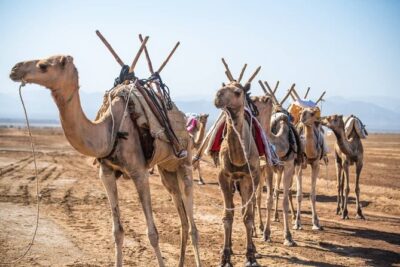
3 Day Danakil Depression Ertale and Dallol Tours
Read our review →3 Days Danakil Depression Tour from Semera City
Read our review →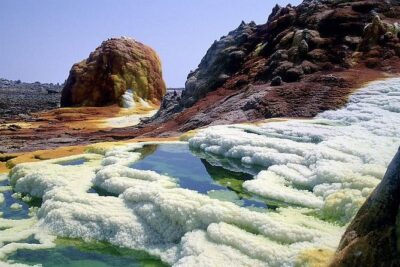
5 DAYS Lalibela, Axum, Tigray churches and Danakil
Read our review →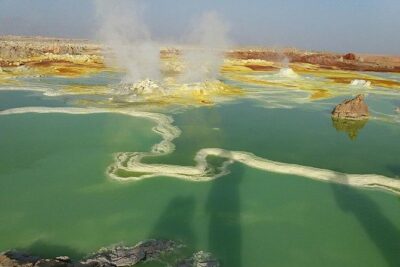
6 Days tour Package (Simien Mountains, Lalibela, and Danakil Depression)
Read our review →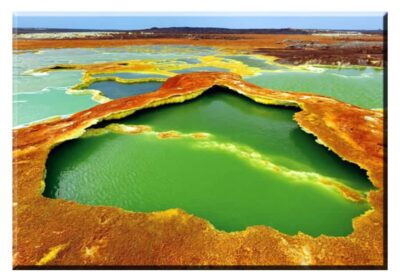
2-Night 3-Day Danakil Depression Tour without Flights
Read our review →Browse the lists this tour appears in