
Reviewed · DANAKIL DEPRESSION TOURS
3-Day Danakil Depression Expedition
Here, the earth looks freshly invented. This three-day Ethiopia expedition pairs Dallol’s sulfur colors with Lake Assale, salt plains, and the Erta Ale volcano. I like the included airport transfers and the fact that your meals, water, camping gear, guides, drivers, and security escort are covered. The main concern is that the advertised route and timing need clarification, especially the references to Lalibela, four nights of lodging, and a three-day Danakil schedule.
I also like the small-group limit of 15 people and the use of air-conditioned Toyota 4WD vehicles. You should be ready for long, rough drives, punishing heat, basic open-air camping, and a trip that is physically demanding rather than restful.
In This Review
- Key details before you book
- Why the Danakil Depression feels so unusual
- Starting at Semera Airport
- Day 1: Lake Assale and open-air camping
- Day 2: Dallol before the heat builds
- Erta Ale needs a clearer explanation
- Day 3: Afdera and the return to Semera
- What the $469.82 price includes
- The human side: guides, drivers, and communication
- Who should book this expedition?
- Should you book the 3-Day Danakil Depression Expedition?
- FAQ
- Where does the tour start?
- Where does the tour end?
- Is airport pickup included?
- How many people can join the tour?
- Are meals included?
- Is camping equipment provided?
- Can I cancel for a full refund?
Key details before you book
- Dallol begins before sunrise on Day 2, giving you the best chance to see the geothermal colors before the worst heat arrives.
- Lake Assale sits far below sea level, and the sunset stop is one of the gentler, more beautiful moments in a tough trip.
- Erta Ale is included by name, but the supplied day-by-day schedule gives much more detail about Dallol than the volcano, so ask exactly what volcano access involves.
- Six liters of water per person per day are provided in the Danakil area, a serious and welcome amount for this hot, dry region.
- Security is built into the operation, with local guides, scouts, soldiers, and police escorting the group.
- The Lalibela connection is unclear, since the overview mentions Lalibela while the meeting point and detailed route begin at Semera Airport.
Why the Danakil Depression feels so unusual
The Danakil Depression is not a normal sightseeing stop. It is a place of salt, heat, mineral deposits, mud, and harsh volcanic terrain. You are not coming for shade, polished facilities, or easy roads. You are coming to see natural forces working in plain sight.
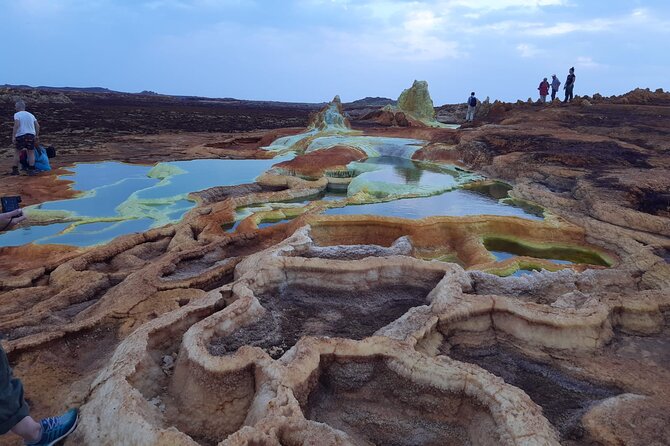
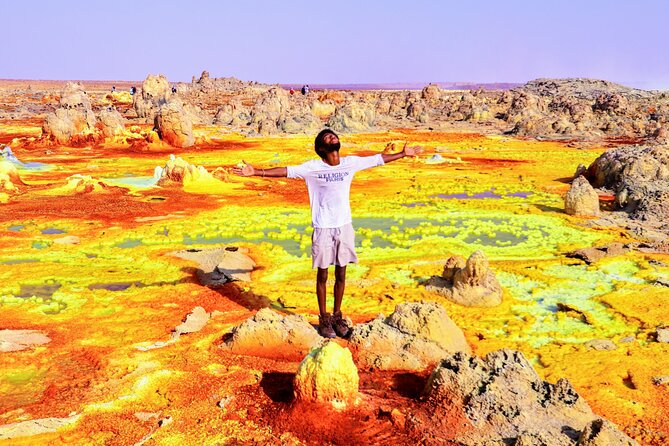
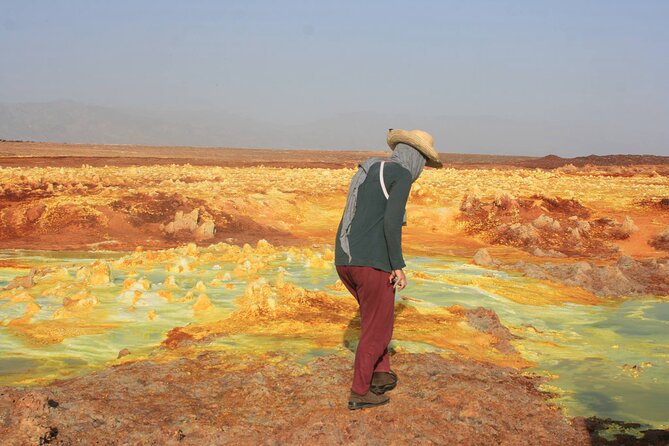
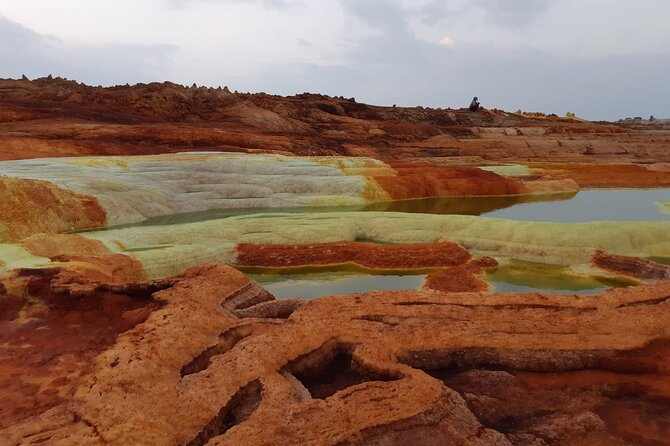
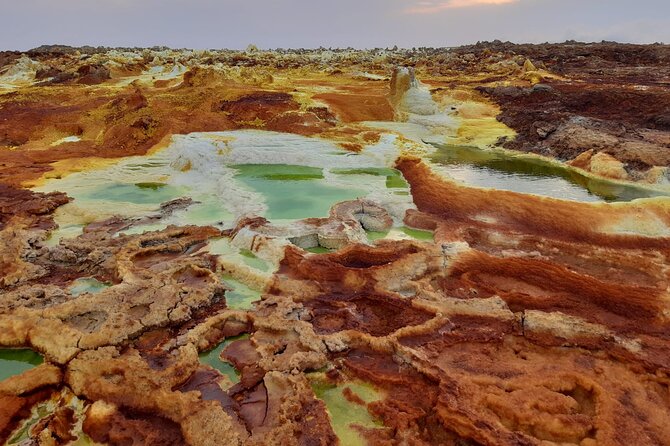
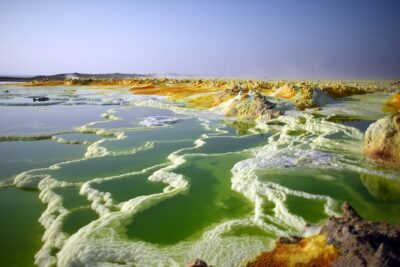
The trip focuses on the Afar region, where the ground can look yellow, green, orange, white, or brown because of mineral and chemical activity. At Dallol, the colors are not painted onto the ground. They form through geothermal processes, which makes the scene feel strange and almost unreal.
The setting also gives the expedition its limits. Heat affects every decision. The early start on Day 2 is sensible, since walking around the geothermal area later in the day would be much less comfortable. You will need to listen closely to your guide, drink steadily, and treat the supplied water as essential equipment, not a small extra.
The tour uses a maximum of 15 people. That is not a private trip, but it is far more manageable than a large convoy. You can expect a shared 4WD vehicle, shared meals, and a group pace shaped by the slowest person in the party.
More Danakil expeditions:
- 3 Days Danakil Depression Tour
★ 4.5 · 135 reviews - 3 Days Danakil Depression Tours Via Semera
★ 5.0 · 47 reviews - 12 Days SIMIEN MOUNTAIN-LALIBELA-DANAKIL-TIGRAY CHURCHES
★ 5.0 · 45 reviews
Starting at Semera Airport
The official meeting point is Sultan Alimirah Hanfare Airport in Semera, the capital of Ethiopia’s Afar region. Airport pickup is included, which matters here because Semera is a practical starting point rather than a place where you want to arrive and negotiate transport on your own.
From the airport, you join experienced drivers in Toyota 4WD vehicles with air conditioning. The vehicles carry the camping equipment, food, water, and supplies needed for the expedition. Fuel and driver allowances are also included in the price.
The support team is a major part of the experience. You have an English-speaking driver or guide, a local Afar guide, a road leader connected with the regional tourism authorities, cooks, and security personnel. Scouts, soldiers, and police escort are listed as part of the Danakil operation.
That arrangement gives the tour a serious, organized feel, but it also tells you something important: this is remote travel. The escort is not decorative. You are visiting an area where local conditions, distance, heat, and road quality require planning.
One practical warning: the overall description refers to Lalibela and includes an English-speaking Lalibela church guide, yet the stated start and end point for the Danakil portion are both in Semera. Another part of the information says the wider journey may involve Lalibela and travel toward Mekele. Before paying, confirm whether your price covers only the Danakil trip or a combined Lalibela and Danakil program.
Day 1: Lake Assale and open-air camping
Day 1 begins with a morning flight to Semera, followed by pickup at the airport. From there, the 4WD convoy heads toward Hamedela and the Lake Assale area. The drive takes about eight hours, so you should think of this as a road day with sightseeing rather than a series of quick stops.
The destination is Lake Assale, where you visit in the late afternoon for sunset. The lake is one of the region’s defining sights, and its position below sea level adds to the sense that you have entered a place unlike ordinary Ethiopia. The changing light should make this one of the calmer and more photogenic portions of the expedition.
The overnight stay is open-air camping. The provided setup includes beds, mattresses, pillows, clean sheets, camping gear, and sleeping bags. The operator also recommends bringing your own sleeping bag, a sensible suggestion if you care about warmth, cleanliness, or personal comfort.
The phrase open-air matters. You should not picture a hotel room or a fully enclosed camp with modern facilities. You will be sleeping in a very basic setting, and heat, dust, and the remote location are part of the deal.
Water provision is unusually important here. Six liters per person per day are supplied in the Danakil area, along with bottled water, coffee, tea, snacks, and non-alcoholic drinks with meals. Carrying and drinking enough water is one of the key reasons to choose an organized expedition rather than attempting this region with improvised transport.
Dinner is prepared by the cook team, and meals are listed as included for the Danakil portion. There is some conflicting information around food on the wider Lalibela or transfer days, so ask for a written breakdown if your booking includes more than the three-day desert section.
Day 2: Dallol before the heat builds
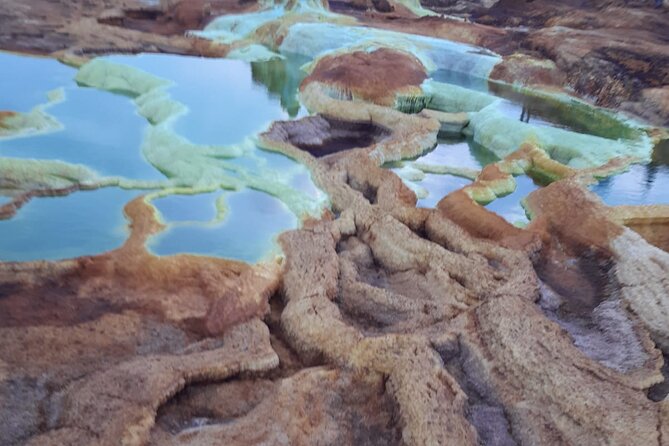
Day 2 is the visual high point. You wake early and drive before sunrise to the Dallol geothermal site. This timing is practical, not merely scenic. The morning gives you cooler conditions and better light for the mineral colors.
Dallol is known for sulfur formations, geothermal pools, salt, and mud. The description emphasizes chemical activity taking place in front of you, and that is the right way to approach the stop. This is not a museum display. The ground itself is the subject.
Your local guide matters here. You need clear instructions about where to walk and where not to step. Stay with the group, follow the marked route given by the guide, and avoid treating the colorful pools as harmless decoration.
After Dallol, you drive to a salt and mud mountain cave beneath the crater area. The transfer is described as taking about ten minutes, but the value of the stop is not measured by driving time. It offers a different texture and form after the broad mineral fields.
Breakfast is served as a picnic near the cave. That sounds simple, but a meal in this setting is part of the pleasure. You are eating close to a strange natural formation, with no restaurant or paved visitor center between you and the terrain.
The route then continues across the salt plains. You visit Lake Karum, described as a cold saltwater pool in the intense heat, and meet salt miners before leaving the area. The salt workers give the place a human story. This is not only a trip to see unusual colors. It also shows how people work within an environment that looks almost impossible to inhabit.
The listed duration is about eight hours. That includes driving, stops, walking, meals, and time around the geothermal sites. The day may feel longer because heat and glare take energy quickly.
More three-day trips:
- 3 Day Danakil Depression Ertale and Dallol Tours
★ 5.0 · 44 reviews - 3 Days Dankile Depression group Tours
★ 5.0 · 40 reviews - 3 Days Danakil Depression Tour from Semera City
★ 4.7 · 34 reviews - 2-Night 3-Day Danakil Depression Tour without Flights
★ 4.8 · 31 reviews
Erta Ale needs a clearer explanation
Erta Ale is one of the headline attractions, and the tour title promises a visit to the volcano. Yet the detailed three-day schedule gives extensive information about Dallol, Lake Assale, salt mining, and Afdera, while offering little practical detail about the Erta Ale portion.
That matters because access, walking distance, departure time, and overnight arrangements can change the character of the trip. Ask these questions before booking:
- Is the Erta Ale visit included in the three days exactly as described?
- How close does the vehicle drive to the volcano?
- Is a walk required, and if so, how long?
- Is the volcano seen by day or at night?
- Does the Erta Ale visit replace any Dallol or Afdera stop?
- Is additional camping required beyond the stated night at Hamedela?
Do not assume that a volcano name in the title tells you all you need to know. The supplied information clearly includes Erta Ale as a highlight, but the practical details are thin.
Day 3: Afdera and the return to Semera
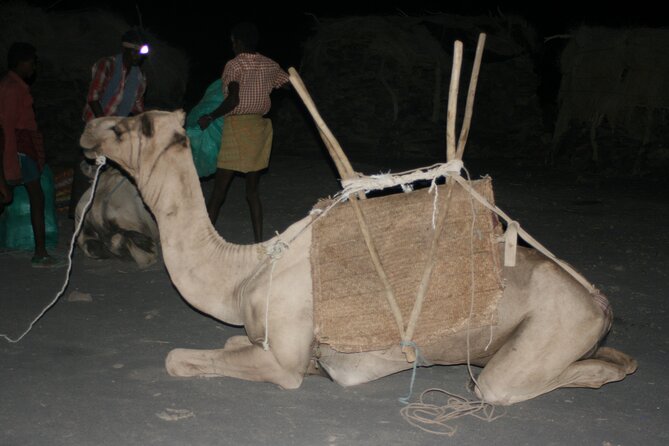
Day 3 begins with breakfast and a drive to Afdera, a salt lake town. The town is described as a major center for salt production and distribution, at about 102 meters below sea level. It is also identified as one of the hottest-feeling points in the Danakil Depression.
You have lunch in town, see the salt lake, walk along the salt farms, and then begin the return drive to Semera. This final day takes about seven hours, followed by a late-afternoon flight back to Addis Ababa.
Afdera is valuable because it connects the spectacular scenery with working life. The salt industry gives you a clearer sense of why this region matters to local communities. The salt plains are not simply empty terrain. They are part of a trade and work system.
The drawback is the amount of time spent in transit. Across three days, you have two substantial road days and one very full sightseeing day. If you want a relaxed schedule, this is not the right trip. If you accept long drives as the price of reaching remote places, the structure makes more sense.
The stated end point is back at the Semera meeting point, with a flight to Addis in the afternoon. Confirm the flight details and the exact final handoff, especially if you have an onward connection.
What the $469.82 price includes
At $469.82 per person, the price is attractive for a remote expedition if the listed services are delivered as described. You are not paying only for a vehicle and a guide. The cost covers airport transfers, 4WD transport, fuel, driver expenses, guides, cooking, camping equipment, meals, drinks, bottled water, snacks, sleeping bags, camels, and security support.
The inclusion of local security is particularly important in a remote area. The local guide and regional road leader also add practical value that a general sightseeing guide could not provide.
The description says there are no hidden lodging fees and that four nights of accommodation are included. That claim does not line up neatly with a three-day schedule that specifically describes open-air camping. Ask for the exact number and type of nights included. You want to know if those nights belong to a wider Lalibela and Danakil package or to the desert trip alone.
Tips for guides and drivers are not included. Personal insurance is also excluded. You should budget separately for gratuities and arrange insurance that covers this type of remote, physically demanding excursion.
The value drops sharply if you expect hotel comfort, detailed volcano access, or a smooth, fixed schedule. The value improves if you want a fully supported route into a difficult region and would otherwise need to arrange vehicles, food, permits, local help, and security yourself.
The human side: guides, drivers, and communication
The best parts of this trip depend on the field team. A good local guide can explain the mineral colors, salt work, geography, and local conditions while keeping you safe around geothermal features. An organized cook team can make a huge difference after a long day in the heat.
The feedback is not uniformly positive. One experience included complaints about rude drivers and guides, as well as confusion over which meals and drinks were included on the broader journey. The operator apologized for the driver involved in travel from Lalibela toward Mekele and said that person would no longer work with the company.
That response is useful, but you should still set expectations before departure. Confirm the route, meal coverage, number of nights, airport transfers, and Erta Ale arrangements in writing. Clear questions now can prevent frustration later.
Solo visitors can join, and one person traveling alone had a smooth experience with the agency. The small-group format can make solo travel easier, though the remote setting means you will spend a great deal of time with the same group and crew.
Who should book this expedition?
I would recommend it to you if you enjoy unusual natural places, accept rough roads, and want the security of a prepared support team. It suits people who see heat, dust, open-air camping, and long drives as part of the adventure rather than as service failures.
You should think carefully if you have a bad back or struggle with rough vehicle travel. One account described the road as very hard, and that warning deserves attention. The combination of 4WD transport, uneven terrain, heat, and extended driving can be tiring even for a fit person.
This is also not ideal if you need a tightly timed holiday. The published schedule includes flights, remote roads, and several moving parts. Ask about delays and connections before adding a same-day international flight or an important appointment.
Children must be accompanied by an adult. Service animals are allowed, and the activity is described as suitable for most people, but that broad wording does not remove the need to consider heat, road conditions, and camping.
Should you book the 3-Day Danakil Depression Expedition?
Book this trip if your priority is access to Dallol, Lake Assale, salt country, Afdera, and the wider Danakil region with transport, food, water, camping equipment, and security arranged for you. The scenery can be startling, and the strongest praise focuses on the surreal setting, the remote adventure, and the feeling of seeing a place few ordinary tours can reach.
Hold off until the operator clarifies the Lalibela connection, four-night accommodation claim, food on every travel day, and the exact Erta Ale plan. At this price, the package can be good value, but only if the advertised inclusions match your actual route.
Free cancellation is available up to 24 hours before the local start time for a full refund. After that point, the amount paid is not refunded, and late changes are not accepted. Use that window to confirm the details that matter most.
FAQ
Where does the tour start?
The tour starts at Sultan Alimirah Hanfare Airport, also called Semera Airport, in Semera, Ethiopia.
Where does the tour end?
The activity ends back at the Semera meeting point. The Day 3 schedule then describes a late-afternoon flight back to Addis Ababa.
Is airport pickup included?
Yes. Transfer from and to the airport is included in the tour price.
How many people can join the tour?
The maximum group size is 15 people.
Are meals included?
Breakfast, lunch, and dinner are included for the Danakil portion, along with bottled water, coffee or tea, snacks, and non-alcoholic drinks. The information about meals on wider Lalibela or transfer days is not fully consistent, so confirm those details before booking.
Is camping equipment provided?
Yes. Camping equipment, beds, mattresses, pillows, clean sheets, cooking equipment, and sleeping bags are listed as included. Bringing your own sleeping bag is recommended.
Can I cancel for a full refund?
Yes, if you cancel at least 24 hours before the experience start time. Cancellations made less than 24 hours in advance are not refunded, and late changes are not accepted.
Just added around Ethiopia
- 10 Days in Northern Ethiopia Tours★ 4.5 · 3 reviews
- Lalibela 2-Day Eco Trekking Tour★ 5.0 · 3 reviews
- Day trek to Simeien Mountains★ 5.0 · 3 reviews
- Full Day Tour in Lalibela★ 5.0 · 3 reviews
- Day Trip to Tiya UNESCO Site & Melka Kunture Archaeological Site★ 4.5 · 3 reviews
- Two days Lake Wenchi and Menagesha Forest★ 5.0 · 3 reviews
- 4 Days tour in omo valley.★ 4.5 · 3 reviews
- 6 days 5 nights Addis Abeba sightseeing & Lalibela Rock-Hewn Churches★ 5.0 · 3 reviews
Danakil Depression Tours, compared.
12 Days SIMIEN MOUNTAIN-LALIBELA-DANAKIL-TIGRAY CHURCHES
Read our review →
3 Day Danakil Depression Ertale and Dallol Tours
Read our review →3 Days Danakil Depression Tour from Semera City
Read our review →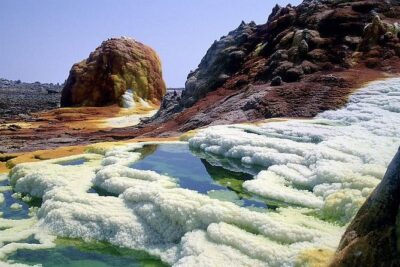
5 DAYS Lalibela, Axum, Tigray churches and Danakil
Read our review →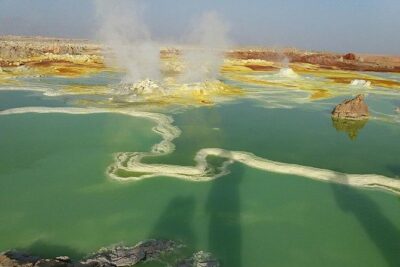
6 Days tour Package (Simien Mountains, Lalibela, and Danakil Depression)
Read our review →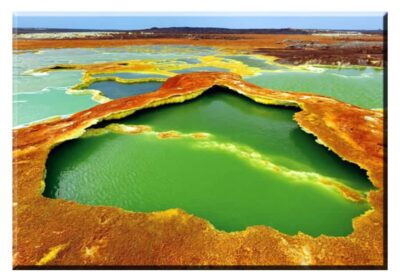
2-Night 3-Day Danakil Depression Tour without Flights
Read our review →Browse the lists this tour appears in