
Reviewed · DANAKIL DEPRESSION TOURS
2 Nights 3 Days Visiting Danakil Depression
The earth still moves here. This three-day journey through Ethiopia’s Danakil Depression combines Erta Ale Volcano, Dallol’s mineral colors, Afdera salt lake, camel caravans, and two nights in the desert. I like the small maximum group of 10 and the fact that transport, meals, accommodation, taxes, and entrance fees are included. I also like the strong praise for the organizing team, especially Gashaw and guides such as Tsehayu, whose coordination and friendly service are repeatedly highlighted. The main drawback is the hard travel rhythm: rough roads, long vehicle days, camping, and a 3 a.m. start demand moderate fitness and a good tolerance for discomfort.
This is not a soft-edged sightseeing holiday. You spend much of the time in an air-conditioned vehicle, then step into one of the most unusual places on the planet. The price of $400 per person is appealing for a three-day, full-board trip, but you should read the schedule carefully. The final day includes the return drive to Semera and a flight at 5 p.m., so delays could make the timetable feel tight.
In This Review
- Key points to know before booking
- Why the Danakil Depression is so unusual
- Day 1: Semera, Afdera, and the road to Kurswad
- The 3 a.m. visit to Erta Ale Volcano
- Day 2: Salt mining, camel caravans, and Hamedila
- Day 3: Dallol’s colored ground and the return to Semera
- What the $400 price really includes
- The people and the pace make the difference
- What to pack and how to prepare
- Who will enjoy this Danakil trip most
- Should you book the 2-night Danakil tour?
- FAQ
- Where does the Danakil Depression tour begin?
- How long does the tour last?
- What are the main places visited?
- What time does the Erta Ale visit begin?
- What is included in the $400 price?
- How many people can join the tour?
Key points to know before booking
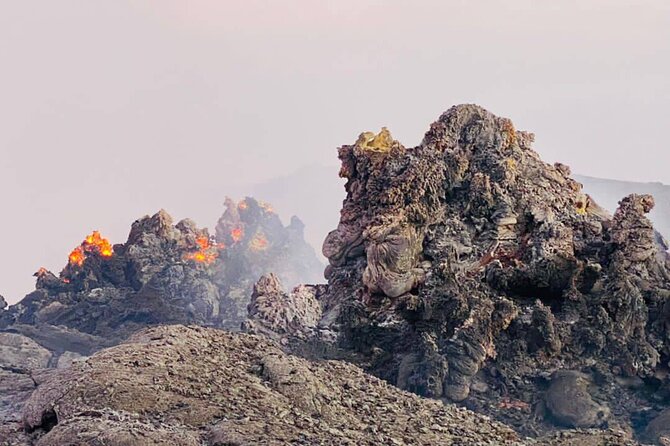
- Erta Ale begins before sunrise: You leave the Kurswad camp around 3 a.m. for the active volcano, then return for breakfast.
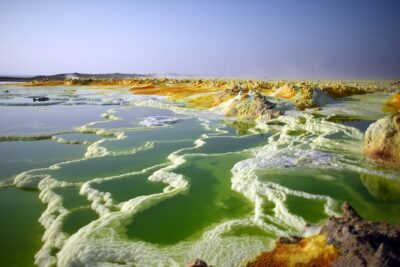
- Dallol supplies the visual drama: Mineral pools and colored ground create an almost otherworldly setting, but you will need to follow local guidance closely.
- Afdera adds a quieter stop: The salt lake breaks up the long first drive and gives you a look at the region’s stark geography.
- Camel caravans are part of the story: The salt mining market connects the scenery with the work and trade of the Afar region.
- The tour stays small: The stated maximum is 10 people, a useful size for managing long drives and early starts.
- The package covers the basics: Air-conditioned transport, accommodation, full-board meals, taxes, and listed fees are included.
Why the Danakil Depression is so unusual
The Danakil Depression is the northern part of the wider Afar Depression, which reaches across Ethiopia, Djibouti, and Eritrea. It lies at the meeting point of three tectonic plates, where the African and Asian landmasses have been pulling apart by roughly 1 to 2 centimeters each year.
That movement has created a broad depression more than 100 meters below sea level. The result is a place shaped by salt, volcanic activity, mineral deposits, and extreme geological change. You are not simply looking at colored ground. You are seeing the effects of a region that is still being formed.
The area also matters to human history. The remains of Lucy, an early human ancestor dating back about 3.2 million years, were found in the Afar region in 1974. Lucy is now displayed at the National Museum in Addis Ababa. This tour does not include the museum, but that wider story gives the Danakil more meaning than its striking photographs alone.
I find this context useful because the region can otherwise feel like a collection of strange colors and difficult roads. The volcano, salt lake, mineral fields, and desert camps are all connected by the same active earth beneath your feet.
More Danakil expeditions:
- 3 Days Danakil Depression Tour
★ 4.5 · 135 reviews - 3 Days Danakil Depression Tours Via Semera
★ 5.0 · 47 reviews - 12 Days SIMIEN MOUNTAIN-LALIBELA-DANAKIL-TIGRAY CHURCHES
★ 5.0 · 45 reviews
Day 1: Semera, Afdera, and the road to Kurswad
The tour begins in Semera, the capital of Ethiopia’s Afar region and the stated meeting point. Pickup is offered, and the operator arranges the transfer from Semera into the Danakil area.
The first day is a substantial travel day, listed at about eight hours. You drive toward Kurswad by way of Afdera, stopping at Lake Afdera along the route. This is a good first stop because it gives you a sense of the region’s scale before the more famous volcanic sights appear.
Lake Afdera is a salt lake in a dry setting, and its presence helps explain why salt has long been central to local trade. You might find the stop more about atmosphere and geography than a long, structured attraction visit. That is part of the appeal. The Danakil is not a theme park with neatly arranged points of interest. Much of the experience comes from watching the terrain change through the vehicle window.
The included air-conditioned vehicle matters here. Eight hours on rough desert roads would be far harder without some protection from the heat and dust. Still, air conditioning does not turn the trip into a comfortable coach holiday. You should expect long stretches in the vehicle, repeated stops, and a road experience that one enthusiastic account described as difficult.
You spend the night camping at Kurswad. The information provided does not specify the exact campsite facilities, so you should ask the operator what bedding, washing arrangements, and toilet facilities are available before departure. The tour includes accommodation, but that does not necessarily mean hotel-style comfort in the desert.
The 3 a.m. visit to Erta Ale Volcano
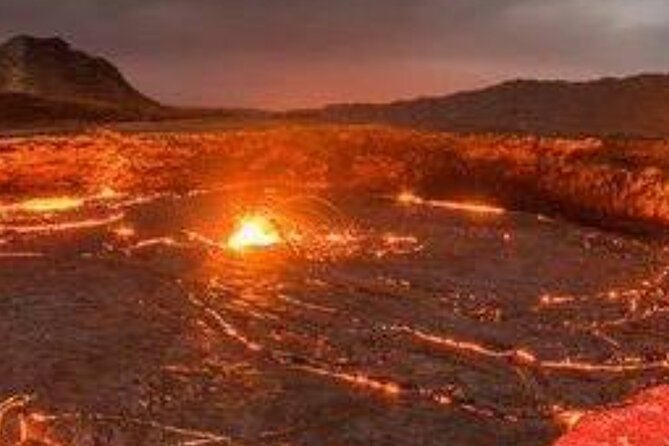
The Erta Ale visit begins around 3 a.m., making it the most demanding part of the schedule. You travel from the Kurswad camp to the active volcano, then return to camp for breakfast.
The early hour is practical. In a hot, low-lying desert, the cooler darkness is a better time for movement. It also gives the volcano visit a strong sense of occasion. You leave camp while much of the desert is still quiet, then return after the excursion for a meal and a chance to rest.
The tour description calls Erta Ale active, and several people praised the volcano as one of the defining parts of the trip. The exact viewing conditions can vary, and the provided information does not promise a particular level of visible lava activity. That is worth remembering. A live volcano is a natural event, not a scheduled performance.
You should also take the physical requirement seriously. The tour asks for moderate fitness, and the early departure adds another challenge. Even if you are comfortable with walking, a pre-dawn outing after a long drive can be tiring. Pack practical clothing, sturdy shoes, water, and a headlamp if the operator does not supply one. Those are sensible preparations for a dark, uneven desert visit, though you should confirm the equipment list before going.
One useful strength of this tour is its coordination. The praise for Gashaw focuses on planning, leadership, and keeping the journey moving. That matters most during an early departure, when a loose schedule would quickly become frustrating.
Day 2: Salt mining, camel caravans, and Hamedila
After breakfast, you drive toward Dallol. This section is listed at roughly five hours and includes a visit to a salt mining market and the camel caravans that carry salt across the region.
This may be the most culturally important part of the route. Dallol’s colors are the obvious photographic draw, but the salt market shows how people use this harsh place. The camels are not arranged for a staged display. They are part of a working system that links desert extraction with transport and trade.
I like this stop because it gives the Danakil a human scale. You see more than empty ground and volcanic features. You get a glimpse of labor, movement, and the long relationship between the Afar people and the salt-rich desert.
Be respectful with photographs, especially around workers and local communities. The supplied information does not set out a detailed photography policy, so ask your guide before taking close-up pictures. A good guide can also help explain what you are seeing without turning the stop into a rushed photo break.
The overnight stop is at Hamedila. Like Kurswad, this is a desert camp rather than a conventional hotel stay. Full-board meals are included, which is a real value on a route where independent food options are limited. The package also includes accommodation and listed fees, so the main extra costs should be personal expenses not covered in the program.
The schedule leaves room for several stops, and one account specifically praised the team for making frequent stops without letting them drag on. That balance is useful on a long road trip. You want time to see the salt trade and take photographs, but you also need the group to keep moving.
More three-day trips:
- 3 Day Danakil Depression Ertale and Dallol Tours
★ 5.0 · 44 reviews - 3 Days Dankile Depression group Tours
★ 5.0 · 40 reviews - 3 Days Danakil Depression Tour from Semera City
★ 4.7 · 34 reviews - 2-Night 3-Day Danakil Depression Tour without Flights
★ 4.8 · 31 reviews
Day 3: Dallol’s colored ground and the return to Semera
After breakfast at Hamedila, you visit Dallol, described as a beautiful and colorful crater. This is the visual centerpiece of the itinerary.
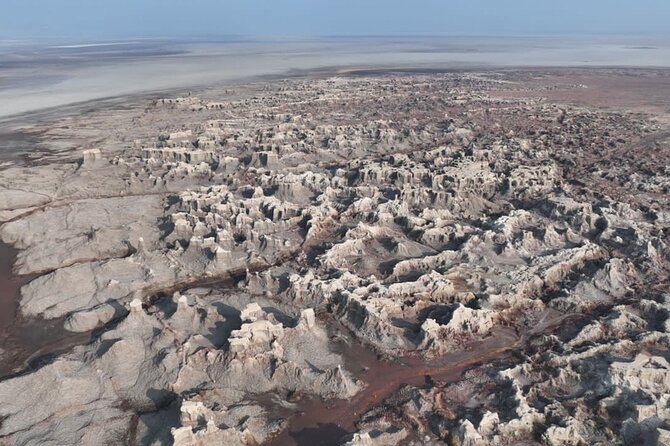
Dallol is known for mineral formations and intensely colored ground created by the interaction of salt, heat, and volcanic fluids. The setting can look almost unreal, with sharp contrasts that make ordinary travel photographs seem heavily edited. Here, the colors are part of the natural setting.
This is also where you should pay attention to your guide rather than wandering off for a better angle. The tour information does not spell out every safety rule, but Dallol is an active geological area. Stay with the group, follow instructions, and avoid treating the colorful ground as harmless decoration.
The final day is listed at about eight hours. After Dallol, you drive back to Semera to catch the last flight to Addis Ababa at 5 p.m. That makes the departure time an important part of your planning. The tour is designed to connect with that flight, but you should not book a separate, nonrefundable evening arrangement in Addis without allowing for possible road delays.
This final drive also means Day 3 is not a relaxed finish. You see Dallol in the morning, then spend much of the day returning to Semera. If you want more time in the region, a longer itinerary may suit you better. If you have limited time in Ethiopia, this schedule efficiently covers the main Danakil sights.
What the $400 price really includes
At $400 per person, this is a strong-value package if all the stated inclusions are delivered as planned. You receive:
- Air-conditioned vehicle transport
- Accommodation for two nights
- Full-board meals
- All listed fees and taxes
- Pickup service
- A small-group format with no more than 10 people
The value comes from the logistics. The Danakil is not an easy place to explore independently, and the cost of vehicles, drivers, food, camps, local coordination, and transfers can add up quickly. You are paying not only for sightseeing but also for someone else to organize a difficult route.
The price does not cover other expenses that are not listed. Bring money for personal purchases and confirm what the operator considers an extra before you go. Because the information does not specify the precise camping setup or every item of equipment, ask those questions before paying the balance.
The 100 percent recommendation rate and five-star overall score from 12 published ratings suggest a very positive record, though the sample is small. The praise is consistent in a few areas: friendly staff, smooth coordination, small-group attention, and memorable volcano and Dallol visits. Several people also valued the help of Gashaw, while Tsehayu is named as a guide who made the journey feel well organized.
The people and the pace make the difference
A Danakil trip can be tiring even when the scenery is extraordinary. The operator’s strongest asset appears to be its staff. Gashaw is repeatedly singled out for arranging the trip, welcoming people in Semera, and handling the practical side of the journey. That kind of coordination is especially valuable when the program includes camping, long drives, a 3 a.m. start, and a same-day flight connection.
The small group helps as well. With up to 10 people, the guide has a better chance of answering questions and keeping everyone together. It also makes the vehicle less anonymous than a large bus tour. You should still confirm the expected group size for your date, since the stated figure is a maximum rather than a guarantee of a full departure.
The pace is brisk. The itinerary covers Afdera, Erta Ale, salt mining, camel caravans, Hamedila, Dallol, and the return to Semera in only three days. That efficiency is useful, but it leaves little spare time. You should choose this tour for access to the main sights, not for leisurely mornings or long stays at each location.
What to pack and how to prepare
The supplied details point to a trip that needs practical preparation. You should be ready for:
- Long vehicle journeys, including an eight-hour first day and an eight-hour final day
- Camping at Kurswad and Hamedila
- A departure around 3 a.m. for Erta Ale
- Moderate physical activity
- Desert conditions and limited conventional facilities
- A fixed return schedule tied to the 5 p.m. flight from Semera
Bring light, breathable clothing, sturdy footwear, sun protection, a refillable water bottle, personal toiletries, and a small bag for the camp portions. A warm layer can also be useful during the early morning departure, though conditions vary.
Do not assume every comfort item is supplied. Ask about bedding, showers, toilets, drinking water, luggage limits, and the exact pickup arrangement in Semera. These questions are not signs of fussiness. They are the sensible way to prepare for two nights outside standard hotel conditions.
The operator confirms bookings at the time of reservation, and the tour is near public transportation in its starting area. Cancellation is free up to 24 hours before the local start time. Changes or cancellations inside that window are not accepted for a refund.
Who will enjoy this Danakil trip most
I would choose this tour if you want the main sights in a short block of time and you value having transport, food, and local coordination arranged for you. It fits an active visitor who can handle long drives, an early start, basic camping, and a demanding desert route.
It is also a good option if you are traveling through Ethiopia on a tight schedule. The plan covers the best-known Danakil highlights without requiring a week in the region. The included flight connection back to Addis Ababa adds useful structure, provided you are comfortable with the tight final-day timing.
I would hesitate if you need hotel comforts, dislike rough roads, or want a flexible photography trip. The schedule is too packed for that. I would also ask detailed questions before booking if you have mobility concerns, since only moderate physical fitness is specified and the tour includes a volcano visit, camping, and a difficult road journey.
Should you book the 2-night Danakil tour?
Book it if Erta Ale and Dallol are high on your Ethiopia wish list and you want a practical package at a reasonable price. The combination of full-board meals, accommodation, transport, listed fees, and a small group makes $400 attractive, especially when paired with the repeated praise for Gashaw, Tsehayu, and the wider team.
Go in with the right expectations. This is a demanding desert expedition, not a polished resort excursion. You will trade comfort for access to salt lakes, working camel caravans, active volcanic ground, and colors that make the Danakil one of Ethiopia’s most unusual places. Ask about camp facilities and equipment before departure, pack for the heat and early morning, and protect your final flight connection by following the schedule closely.
FAQ
Where does the Danakil Depression tour begin?
The tour starts in Semera, Ethiopia. Pickup is offered in the starting area.
How long does the tour last?
The experience lasts approximately three days and includes two nights of accommodation.
What are the main places visited?
The itinerary includes Lake Afdera, Erta Ale Volcano, a salt mining market, camel caravans, Hamedila, and Dallol.
What time does the Erta Ale visit begin?
The group leaves for Erta Ale at around 3 a.m. and returns to the camp for breakfast.
What is included in the $400 price?
The price includes an air-conditioned vehicle, all listed fees and taxes, accommodation, and full-board meals.
How many people can join the tour?
The tour has a maximum group size of 10 people.
Just added around Ethiopia
- 10 Days in Northern Ethiopia Tours★ 4.5 · 3 reviews
- Lalibela 2-Day Eco Trekking Tour★ 5.0 · 3 reviews
- Day trek to Simeien Mountains★ 5.0 · 3 reviews
- Full Day Tour in Lalibela★ 5.0 · 3 reviews
- Day Trip to Tiya UNESCO Site & Melka Kunture Archaeological Site★ 4.5 · 3 reviews
- Two days Lake Wenchi and Menagesha Forest★ 5.0 · 3 reviews
- 4 Days tour in omo valley.★ 4.5 · 3 reviews
- 6 days 5 nights Addis Abeba sightseeing & Lalibela Rock-Hewn Churches★ 5.0 · 3 reviews
Danakil Depression Tours, compared.
12 Days SIMIEN MOUNTAIN-LALIBELA-DANAKIL-TIGRAY CHURCHES
Read our review →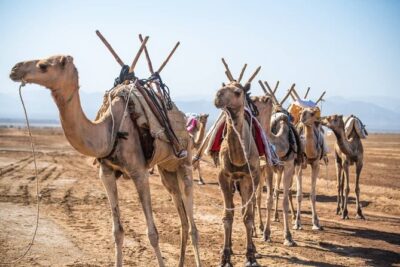
3 Day Danakil Depression Ertale and Dallol Tours
Read our review →3 Days Danakil Depression Tour from Semera City
Read our review →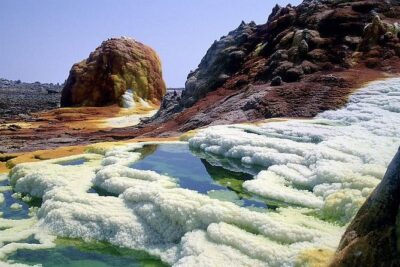
5 DAYS Lalibela, Axum, Tigray churches and Danakil
Read our review →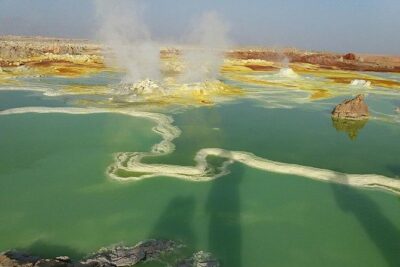
6 Days tour Package (Simien Mountains, Lalibela, and Danakil Depression)
Read our review →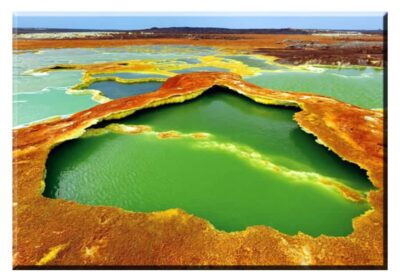
2-Night 3-Day Danakil Depression Tour without Flights
Read our review →Browse the lists this tour appears in