
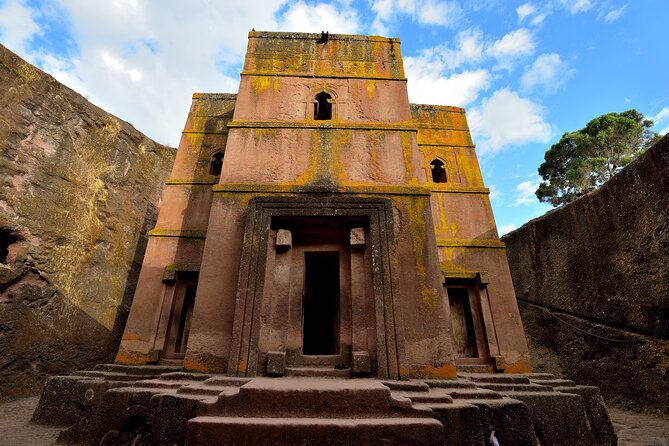
Reviewed · ROCK-HEWN CHURCHES OF LALIBELA
2 Days 1 night tour to Lalibela Rock-hewn churches
Stone churches, living faith, and one packed night. This two-day Lalibela tour gives you a focused look at Ethiopia’s famous rock-hewn churches, with a local guide-driver meeting you at the airport and leading you through all three main church areas. I especially like the chance to visit both the Earthly Jerusalem and Heavenly Jerusalem groups, and I value the early morning church service when the schedule allows. The main drawback is time: two days is enough for the central sights, but the schedule leaves little room for a slow, flexible visit.
The tour costs $387 per person, excluding domestic flights and personal expenses. That price can make sense if you want a private experience with airport pickup, a guide, admission to the churches, dinner, breakfast, and a transfer back to the airport. Still, check what hotel is arranged and remember that lunch, drinks, tips, and flights are not included.
In This Review
- Key points to know before booking
- Why Lalibela deserves two focused days
- Day 1 morning: entering Earthly Jerusalem
- Midday pause: lunch and hotel check-in
- Day 1 afternoon: Heavenly Jerusalem and St. George
- Day 2 before breakfast: worship at first light
- The guide: why Muluye matters
- Is $387 per person good value?
- Walking, timing, and practical comfort
- Who should book this Lalibela tour?
- Should you book the two-day Lalibela experience?
- FAQ
- Where does the tour begin?
- How long does the tour last?
- Are the church admission fees included?
- Are meals included?
- Are domestic flights included?
- Can I cancel for a full refund?
Key points to know before booking
- Six churches in the first compound: The morning visit covers the group known as Earthly Jerusalem, the first major section of the complex.
- Four more churches in Heavenly Jerusalem: The afternoon continues with a second group before reaching St. George’s Church.
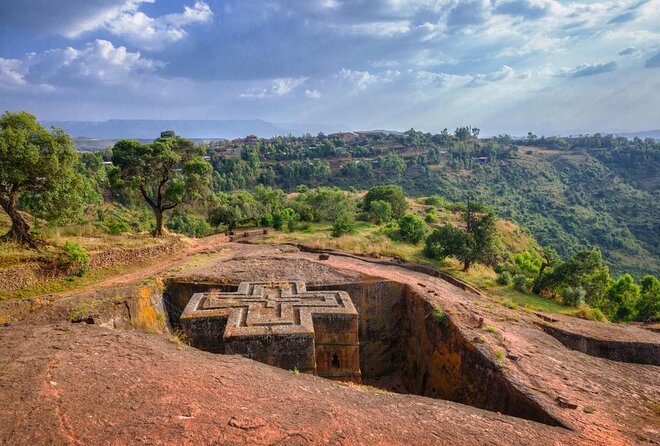
- St. George is the visual centerpiece: The Church of the House of St. George is presented as the masterpiece of the rock-hewn complex.
- A local guide adds real value: Muluye Tsegaw, also called Mulie, is from Lalibela and is closely connected with the local religious community.
- Early worship may be possible: If church schedules allow, you can attend a service before breakfast on Day 2.
- Private and tightly planned: Only your group participates, but the short stay requires punctual starts and a willingness to keep moving.
Why Lalibela deserves two focused days
Lalibela is not simply an archaeological stop where you walk past old buildings and take photographs. The churches remain active places of worship. Priests, worshipers, and religious traditions are part of the setting, so the visit has a strong spiritual side as well as an architectural one.
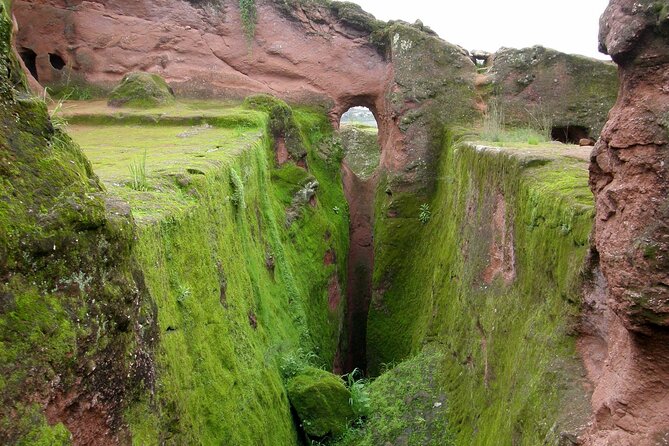
The churches were created during the Zagwe dynasty under an Ethiopian king. They were carved directly from living rock, rather than built from separate blocks. That basic fact is easy to understand in a sentence, but it becomes far more striking when you look down into a church cut below ground level, walk through narrow passages, and see details shaped from the same stone.
I like this tour because it gives the churches a clear order. You do not have to work out the layout alone or spend your limited time deciding which area to visit first. A local guide can also explain the religious meaning, construction methods, and connection between the separate churches.
The experience suits a first visit to Lalibela, especially if you have only one night. It also suits private groups that want to ask questions and adjust the pace where possible. If you want long photography sessions, extended hikes, or time to sit quietly in every church, you may find the schedule too compressed.
More Lalibela church tours:
- Visiting Lalibela churches
★ 5.0 · 40 reviews - Tour 11 monolithic rock churches & museum in Lalibela & cave church with mummies
★ 5.0 · 37 reviews - Lalibela, Axum, Danakil and Omo Valley 8 DAYS
★ 5.0 · 29 reviews
Day 1 morning: entering Earthly Jerusalem
Your guide-driver meets you at Lalibela Airport at 7:00 in the morning. That early start matters. You have a lot to see before lunch, and the first group contains six churches.
This area is called Earthly Jerusalem. It is described as the first group to be built, and it gives you a strong introduction to Lalibela’s unusual form of sacred architecture. Instead of approaching a conventional church from the street, you may find yourself walking through carved courtyards, rock passages, and lowered spaces.
The best part of this section is the change in scale. From a distance, the churches can look like isolated stone structures. Up close, you begin to see that the surrounding ground, walls, trenches, steps, and interiors are all linked to the same rock-cut design.
I would let your guide set the order and resist trying to rush ahead for photographs. The value here comes from understanding how each church relates to the others. Muluye Tsegaw, known to some guests as Mulie, has been praised for explaining architectural details clearly and for answering questions about local religious practice.
His connection with Lalibela is especially useful. He was born there and is part of the religious community, which can add context that a general guidebook cannot provide. You can ask about the churches, the Zagwe dynasty, worship customs, and the role the buildings still play today.
The first compound lasts about six hours as part of the wider Day 1 visit. That does not mean every minute is spent inside a church. You will also move between areas, listen to explanations, and handle the practical business of a hotel check-in and lunch break.
Midday pause: lunch and hotel check-in
After the morning church visit, you check in at your hotel and have lunch. The tour includes dinner and breakfast, but lunch is not listed as included, so plan to pay for it yourself.
This pause is welcome. Lalibela’s church areas involve walking, steps, uneven surfaces, and repeated movement between outdoor and indoor spaces. You will appreciate a little time to sit down before the afternoon visits.
The schedule does not specify the hotel category or property. That is one point I would clarify before booking, especially because the tour price includes overnight accommodation in practice but does not spell out the hotel standard in the details provided. The information also does not state the room arrangement, so ask if you are booking for more than one person.
The break is not just a practical stop. It helps divide a demanding sightseeing day into two manageable parts. Without it, the churches could blur together. With lunch and a short rest, you return to the stonework with a clearer head.
Day 1 afternoon: Heavenly Jerusalem and St. George
After lunch and some relaxation, you continue to the second group, called Heavenly Jerusalem. Four churches are located in this compound.
The change from one group to the next helps you see that Lalibela is not a single monument. It is a connected religious center with different clusters, passages, and architectural forms. Your guide’s explanation is important here because the names and layout can otherwise become confusing during a short visit.
This section is also a good moment to ask questions that came up during the morning. The tour is private, so you are not tied to the interests of a large coach group. You can ask Muluye to spend more time on a particular carving, church plan, or religious detail.
The final major stop is the Church of the House of St. George, commonly known as St. George’s Church. The description calls it the masterpiece of the complex, and it is the church most often associated with Lalibela’s distinctive appearance.
Its carved form is the kind of sight that makes the entire visit worthwhile. Rather than rising from the ground, the church is cut down into it. The surrounding trench helps reveal the full shape, and the rock-cut setting makes the building feel separate from ordinary construction.
You may want to save some energy for this final stop. The day is full, and the route includes walking between church compounds. Comfortable shoes are sensible, and modest clothing is important because these are active religious places, not abandoned ruins.
The exact amount of free time at each church is not specified. If photography matters to you, tell the guide early in the day. That gives him a chance to understand your priorities while still keeping the schedule on track.
More evening outings:
- 2-Night 3-Day Danakil Depression Tour without Flights
★ 4.8 · 31 reviews - Lalibela One Night/two Days
★ 5.0 · 8 reviews - Lalibela One Night/two Days
★ 4.5 · 8 reviews - Yod Abyssinia Cultural Night: Dinner, Music, and Dance
★ 5.0 · 7 reviews
Day 2 before breakfast: worship at first light
The second day begins with an optional early morning church service, if church schedules allow. The service takes place before breakfast and can be one of the most meaningful parts of the trip.
This is where Lalibela feels most different from a standard sightseeing excursion. You are not only looking at old stone buildings. You may have the chance to see them functioning as places of prayer for local worshipers.
The timing is important. An early service means leaving the hotel before breakfast, then returning afterward to eat. The tour does not promise that the service will be available every day, so treat it as a possibility rather than a guaranteed performance arranged for visitors.
You should approach this part with care. Dress respectfully, follow your guide’s instructions, and remember that worship comes before sightseeing. The service may be atmospheric, but it is not a tourist show.
After the service, you return for breakfast. Then the tour ends with a transfer to Lalibela Airport. The Day 2 visit is listed as about one hour, so there is no planned second full day for extra churches or a relaxed town visit.
The guide: why Muluye matters
The strongest feature of this tour is its local guiding. Muluye, also written as Mulie or Muluya in the supplied information, is repeatedly praised for his local connections, polite manner, punctuality, and clear explanations.
That praise is specific. He is described as someone who can discuss church architecture, local culture, and Ethiopian religious life. He is also noted as being from Lalibela and connected with the religious community. For a place where faith and architecture are closely joined, that background can make a major difference.
I would not treat the guide as a minor extra. At Lalibela, a good explanation helps you notice details that would otherwise pass by. The same carved doorway can be a decorative feature, a religious symbol, or part of a wider design idea. A local guide can help you put it in context.
The private format gives you another advantage. Only your group takes part, so you can ask direct questions and request attention to your interests. It should also make the experience easier for couples, families, or friends who prefer not to follow a large group.
The tradeoff is that the tour depends heavily on the assigned guide and the agreed schedule. Confirm that Muluye will lead your tour if that is important to you. The information identifies him prominently, but it does not formally guarantee that every booking will have the same person.
Is $387 per person good value?
At $387 per person, this is not the cheapest way to see Lalibela. The price excludes domestic flights, alcoholic drinks, personal needs, tips, and lunch. Those extra costs can add up, especially if you are flying into Lalibela specifically for this visit.
The value improves if you want convenience. Airport pickup is offered, the guide-driver meets you on arrival, admission to the churches is included, and the package includes dinner and breakfast. You also receive a private tour rather than joining a larger group.
For someone with only one night, that structure can be worth paying for. You avoid spending precious hours arranging transport or trying to understand the church layout on your own. You also have a local person to help with timing and cultural questions.
The price is harder to justify if you already have accommodation, transport, and a guide arranged separately. In that case, compare the full cost of the tour with the cost of hiring a local guide and paying entrance fees on your own.
Ask a few practical questions before paying: Which hotel is included? Is lunch entirely your responsibility? Are airport transfers included both ways? The description clearly promises pickup and a return airport transfer, but confirming the details removes uncertainty.
Walking, timing, and practical comfort
The tour is marked as suitable for most people, and it is near public transportation. Still, the church visits involve walking through historic religious compounds, so you should expect uneven ground and changes in level.
The schedule is the main physical challenge. Day 1 covers the major church groups before and after lunch. The pace may feel comfortable for some people and hurried for others. If you need frequent rests, tell the guide at the start.
Wear shoes that handle stone surfaces well. Bring water and keep your clothing respectful for church visits. The supplied information does not give a detailed accessibility description, so anyone with mobility concerns should ask the operator for current conditions before booking.
The early service on Day 2 can also affect your rest. You return to the hotel for breakfast afterward, but the tour ends with the airport transfer, leaving no spare sightseeing block.
Weather can affect the experience. If poor weather causes cancellation, you are offered another date or a full refund. For other cancellations, you must cancel at least three full days before the local start time to receive a full refund. Changes or cancellations inside that window are not refunded.
Who should book this Lalibela tour?
I would recommend it most strongly to:
- First-time visitors with only one night in Lalibela
- Couples or small private groups who want personal guiding
- People interested in Ethiopian Orthodox worship as well as architecture
- Visitors who value airport pickup and a planned schedule
- Anyone who wants local cultural explanations instead of only photographs
I would be more cautious if you want a slow visit. The tour does not include a spare day, a detailed countryside program, or guaranteed time for additional churches outside the main groups described.
It is also not the right choice if you want every cost covered. Flights, lunch, alcoholic drinks, tips, and personal expenses remain outside the $387 price.
Should you book the two-day Lalibela experience?
Book it if you have limited time and want the main rock-hewn churches explained by a local guide. The combination of private touring, airport transfers, included admission, dinner, breakfast, and a possible early service gives you a useful amount of structure in a very short stay.
The strongest reason to choose it is Muluye’s local connection and reputation for attentive guiding. The strongest reason to hesitate is the tight schedule and the extra costs beyond the advertised price.
If you can accept one full sightseeing day, one night, and an early departure, this is a sensible way to see Lalibela without wasting time on arrangements. Before booking, confirm the hotel, lunch arrangements, airport timing, and guide assignment. Then bring patience, respectful clothing, and enough time to look up from your camera. The churches reward attention.
FAQ
Where does the tour begin?
The tour begins at Lalibela Airport in Lalibela, Ethiopia. The listed start time is 7:00 am, and pickup is offered.
How long does the tour last?
The experience lasts approximately two days and includes one overnight stay in Lalibela.
Are the church admission fees included?
Yes. Admission to the Rock-Hewn Churches of Lalibela is included.
Are meals included?
Dinner and breakfast are included. Lunch is not listed among the included services, so you should budget separately for it.
Are domestic flights included?
No. Domestic flights are specifically excluded from the tour price.
Can I cancel for a full refund?
Yes, if you cancel at least three full days before the local start time. Cancellations or changes made less than three full days before the start are not refunded. If poor weather causes the tour to be canceled, you are offered another date or a full refund.
More two-day trips
- Lalibela 2-Day Eco Trekking Tour
★ 5.0 · 3 reviews - 2 Days Private Tour in Addis Ababa Ethiopia
★ 5.0 · 36 reviews - 2 Days Wildlife Safari to Awash National Park
★ 4.5 · 21 reviews - Two Days Tigray Churches Trip
★ 5.0 · 10 reviews
Just added around Lalibela
- Lalibela 2-Day Eco Trekking Tour★ 5.0 · 3 reviews
- Full Day Tour in Lalibela★ 5.0 · 3 reviews
- Lasta Mountains: Highland Eco Trekking Tour in Lalibela★ 5.0 · 4 reviews
- Lalibela: Churches Full-Day Private Tour w/Coffee Ceremony★ 4.7 · 5 reviews
- Day Hike Around Lalibela★ 5.0 · 5 reviews
- Full Day Tour To The 11 Rock Hewn Churches Of Lalibela★ 5.0 · 5 reviews
- Fully guided city tours of Addis Ababa with hotel pickup★ 5.0 · 5 reviews
- 3 Days 2 nights Lalibela & Yemrehana Krestos seightseeeing tour★ 5.0 · 6 reviews
Rock-Hewn Churches of Lalibela, compared.
12 Days SIMIEN MOUNTAIN-LALIBELA-DANAKIL-TIGRAY CHURCHES
Read our review →
Tour 11 monolithic rock churches & museum in Lalibela & cave church with mummies
Read our review →
5 DAYS Lalibela, Axum, Tigray churches and Danakil
Read our review →
6 Days tour Package (Simien Mountains, Lalibela, and Danakil Depression)
Read our review →
Lalibela, Axum, Danakil and Omo Valley 8 DAYS
Read our review →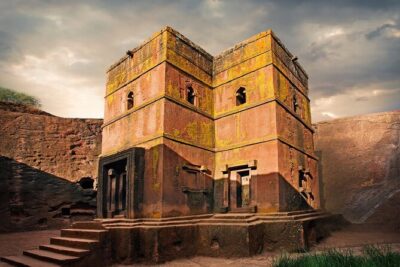
Browse the lists this tour appears in