

Reviewed · 2-DAY EXPERIENCES
Two Days Trip in Axum and its Surroundings
Axum keeps its biggest secrets in stone. This two-day trip gives you a strong introduction to Ethiopia’s ancient Aksumite center, pairing the UNESCO-listed ruins with the Gobo Dura quarry, rural views, old streets, and important religious sites. I like the private air-conditioned minivan, which keeps the schedule flexible, and I like that airport transfers, entrance fees, bottled water, and a local guide are included.
The main drawback is that food and accommodation are not part of the $105 price, so your real cost will be higher. You should also expect two full sightseeing days, with about nine hours on the first day and eight on the second. That is good value if you want serious historical coverage, but it may feel tiring if you prefer a slow holiday.
In This Review
- Key points to know before booking
- Why Axum deserves two full days
- Arriving in Axum at 11:00 am
- Day one among Axum’s royal ruins
- Gobo Dura and the making of the Great Stele
- Lunch, then a gentler walk through old Axum
- What the guide adds to the experience
- Is $105 a good value?
- Who should book this Axum trip?
- What to bring and how to prepare
- FAQ
- How long does the Axum tour last?
- What time does the tour start?
- Are entrance fees included?
- Are meals and accommodation included?
- Is transport included?
- Can I cancel for a full refund?
- Should you book it?
Key points to know before booking

- The Great Stele begins at Gobo Dura: You can see the quarry area, unfinished stonework, and marks linked to the movement of huge granite blocks.
- Day one covers Axum’s major historic core: The ruins connect the city’s ancient royal past with its place as an important center of Ethiopian Christianity.
- Airport pickup is included: A representative meets you on arrival, then helps with the transfer to your hotel.
- The guide can speak English or French: Guides named in past arrangements include Asgedom Tazeze and Muez Tewelede.
- The price covers transport and admission, not meals or lodging: That makes the tour easy to arrange, but you need to budget separately for those basics.
Why Axum deserves two full days
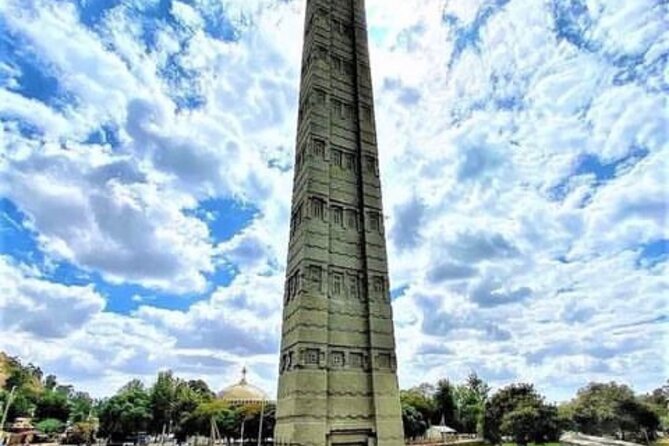
Axum is not simply a collection of old stones. It was the center of the Aksumite Kingdom, a major trading power that connected the Horn of Africa with wider maritime routes. Its influence reached back before the Roman-era accounts that later described it.
The city also matters because of its connection to Ethiopian Christianity. Around 356, the ruler of Axum converted to Christianity through the work of Frumentius. Later, during the reign of Kaleb, Axum was linked politically with the Byzantine Empire in opposition to Persia.
You will hear a mixture of archaeology, church tradition, and legend here. The Kebra Nagast, or Book of Kings, connects Axum with the Queen of Sheba and says that Menelik, the son of the Queen of Sheba and King Solomon, brought the Ark of the Covenant from Jerusalem to Axum. The Ark is said to remain in a sanctuary in the city.
That story is part of Ethiopian religious tradition, not a fact that archaeology can confirm. A good guide should help you separate what is documented from what is believed, while still explaining why the tradition matters so much to Ethiopian identity.
Two days gives you time to see both sides of Axum. You get the grand monuments and royal remains, but you also see a quarry, farming areas, rural life, and the older streets of the present-day town. That mix makes the trip more useful than a quick stop at the main stelae.
More two-day trips:
- 2 Days Private Tour in Addis Ababa Ethiopia
★ 5.0 · 36 reviews - 2 Days Wildlife Safari to Awash National Park
★ 4.5 · 21 reviews - 2 Days 1 night tour to Lalibela Rock-hewn churches
★ 5.0 · 12 reviews
Arriving in Axum at 11:00 am
The advertised meeting time is 11:00 am. On arrival, a representative from Gelila Ethiopia Tours meets you at Axum Airport and takes you to your hotel for check-in.
This airport transfer is a small but useful part of the package. You do not need to arrange a taxi after your flight or work out the hotel transfer on your own. Since the tour uses private transport, you also avoid being tied to a large coach schedule.
The vehicle is described as an air-conditioned minivan, with fuel and driver allowance included. The maximum group size is 15 people, though private transport may make the ride feel more personal than a standard sightseeing bus. Ask at booking how many people will be in your vehicle on your dates.
The timing deserves attention. A start around 11:00 am means day one is not a short afternoon walk. It is planned as roughly nine hours, so your arrival schedule should allow enough time for airport formalities, luggage, and the transfer to the hotel.
Day one among Axum’s royal ruins
The first day centers on the ruins of Aksum, within the UNESCO World Heritage Site. This is the essential introduction to the city and the place where the scale of the old kingdom becomes clear.
The ancient city was a political and commercial center long before modern Ethiopia took shape. You will encounter the remains of a civilization that used stonework, trade, royal power, and religious institutions to hold influence across the region.
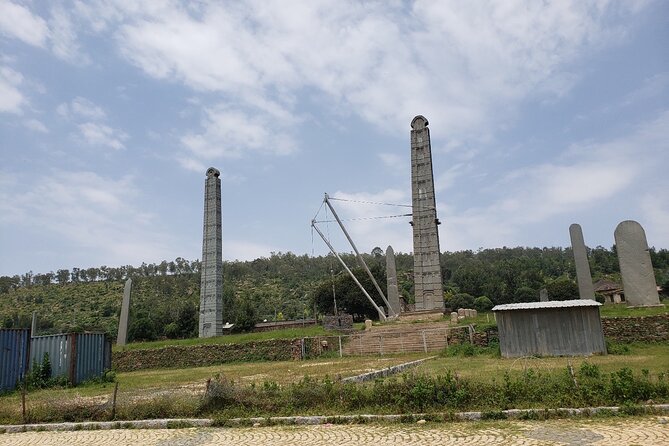
The great stelae are the visual stars of Axum. These tall carved stones were made from granite and transported from quarry sites before being raised in the city. Their size is impressive, but the details matter just as much. Carved doors, windows, and other architectural features give the monuments the appearance of tall buildings made from a single block.
The tour description connects the city monuments with the Gobo Dura quarry visited on day two. That pairing is valuable. You first see the finished work in Axum, then you visit the place where some of the stone was cut and prepared. It gives you a better idea of the labor involved than a monument visit alone.
The city tour also includes religious and royal associations tied to Axum’s long story. The Ark of the Covenant tradition is especially significant here. You should treat the sanctuary as a sacred place connected to Ethiopian belief, not as an ordinary museum attraction.
A local guide adds real value during this part of the trip. Asgedom Tazeze has been described as professional, energetic, and familiar with Ethiopian customs. Muez Tewelede has also been praised for explaining the historic sites in clear English and for helping visitors understand local religious practices and cultural norms.
Those details matter because Axum can be confusing without context. A stone monument tells you very little by itself. The guide’s explanation helps you understand why the site was built, how the city changed, and how ancient traditions still shape life here.
Gobo Dura and the making of the Great Stele
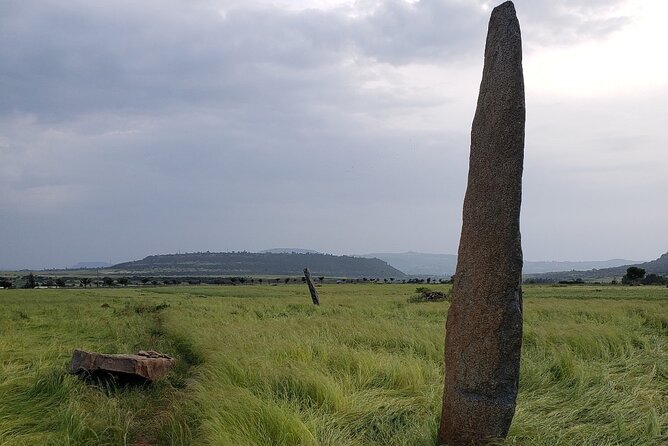
Day two begins with Gobo Dura, the quarry site associated with the Great Stele of Aksum. This is one of the most worthwhile parts of the trip because it shifts your attention from finished monuments to the work behind them.
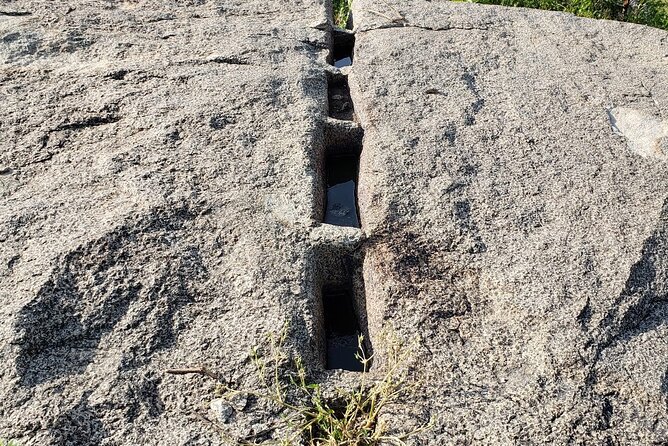
At the quarry, you can see an unfinished stele and marks that show how granite was cut. You can also consider how the enormous blocks were moved from this area to the city. The tour does not present the quarry as a polished attraction. Its appeal comes from seeing the working ground and the evidence left in the stone.
The site also offers a different view of life around Axum. You might see birds, seasonal monkeys, local vegetation, farming, and rural activity. These details help you understand that Axum is not only an archaeological zone. It is a living region where ancient remains share space with everyday work.
A carved lioness on a large granite stone is another unusual feature of the stop. It is the sort of detail that can be missed if you visit without a guide or rush through the area. Ask your guide to explain its meaning and date, since the supplied program does not give a firm explanation for the carving.
The quarry visit is about more than taking photographs. It lets you ask practical questions about stone cutting, transport, tools, and organization. How did workers shape such large blocks? How were they moved? What kind of political power was needed to direct that labor? Gobo Dura gives your guide a place to discuss these questions in a concrete way.
Wear practical shoes and expect outdoor walking. The exact walking conditions are not specified, so you should be prepared for uneven ground and sun exposure. Bottled water is included throughout the tour, but food is not.
Something different, still within Ethiopia:
- Full Day Tour of Addis Ababa with Hotel Pickup and Drop-off
★ 5.0 · 430 reviews - Taste of Ethiopia
★ 5.0 · 406 reviews - Day Trip From Addis Ababa See Historical Monastery,Stunning Nature,Animals,Birds
★ 5.0 · 303 reviews - Addis Ababa: Debre Libanos, Blue Nile Gorge, and Cave Tour
★ 4.5 · 256 reviews
Lunch, then a gentler walk through old Axum
After the quarry visit, the schedule allows a lunch break before continuing into Axum’s old town. The meal is not included, so you pay separately. Since this is a long sightseeing day, use the break to eat properly rather than treating it as a quick snack stop.
The old-town walk shows how Axum changed over time while remaining connected to its earlier identity. You will see the contrast between ancient royal and religious sites and the ordinary town around them.
This part of the program is useful for anyone who wants more than a checklist of monuments. A walk through old Axum can show how the city’s past is carried into daily life, local customs, and religious practice. The schedule refers to change and continuity through time, which is exactly the right way to approach the town.
Do not expect every moment to feel like a formal museum visit. The value is in the guide’s explanation and in the contrast between the old stones and the present-day streets. If you prefer a fast series of famous sights, this section may feel less dramatic. If you want to understand Axum as a living place, it may become one of the most memorable parts.
The second day lasts about eight hours. That gives you enough time for the quarry and the old town, but the day is still active. Anyone with current or previous medical problems should consider the physical demands carefully, since the activity is not recommended for people with those conditions.
What the guide adds to the experience
The strongest praise connected with this tour is directed at its guides and the quality of their help. Asgedom Tazeze has been singled out for professionalism and positive energy. Muez Tewelede has been described as attentive, thoughtful, and clear in English.
The company also offers French-speaking local guides. That can make a major difference when you are trying to understand church traditions, royal stories, and local etiquette. Axum’s history includes names, dates, and legends that are easy to muddle, so clear interpretation is worth paying for.
A guide can also help you handle small cultural details. One past description highlighted explanations of customs and cultural norms, not only monuments. That means you can ask how to behave at religious sites, what local traditions mean, and which parts of the city’s story come from church records rather than archaeological evidence.
The guide quality may vary by date, so ask who will lead your tour if having a particular language or guide matters to you. The names associated with the company include Asgedom and Muez, but the program does not guarantee a specific person.
Is $105 a good value?
At $105 per person, the tour offers solid value if you plan to see Axum properly over two days. The price includes private transportation, fuel, driver allowance, entrance fees, licenses required for the program, bottled water, and an English- or French-speaking local guide.
Airport transfers are also included in both directions. That removes several expenses and makes the arrival day easier to manage.
The price does not include accommodation, food, drinks, tips, personal expenses, or domestic and international flights. You should calculate those costs before booking. The headline price is best understood as the cost of guiding, transport, admission, and transfers, not as a complete holiday package.
The private minivan is particularly useful if you are traveling with family or a small group. It gives you transport for both the city sights and Gobo Dura without needing to arrange separate rides. The maximum group size of 15 keeps the tour from being unlimited in size, though you should confirm the expected group count.
For two long days of sightseeing, the value is strongest for visitors who want interpretation. If you only want a taxi to the stelae and a quick photograph, you could find a cheaper way to see part of Axum. If you want the quarry, old town, airport pickup, entrance fees, and historical explanation, the package is more practical.
Who should book this Axum trip?
I would recommend it to first-time visitors to Axum who want the main historic sites explained in context. It also suits people arriving by air who prefer to have pickup, hotel transfer, and local transport arranged in advance.
It is a good fit for history-minded visitors, photographers interested in ancient stonework, and anyone curious about Ethiopian Christianity. The quarry visit makes it especially useful for people who want to understand how Axum’s monuments were created, not simply look at them.
You should think twice if your schedule allows only a few hours, since the tour is built around two substantial days. You should also plan carefully if you have current or previous medical problems, as the activity is not recommended in that situation.
The trip requires good weather. If poor weather forces cancellation, you can receive a different date or a full refund. The same applies if the minimum number of participants is not reached. You can cancel for a full refund if you do so at least 24 hours before the local start time. Cancellations or changes made later are not accepted for a refund.
What to bring and how to prepare
Bring comfortable walking shoes, sun protection, and a little patience for a schedule that covers serious ground. The program includes outdoor quarry terrain and a town walk, but the precise conditions are not provided.
Carry money for meals, drinks, accommodation, tips, and personal purchases. Bottled water is supplied, which is helpful during the long sightseeing hours, but you should not assume that lunch or snacks are included.
I would also keep a notebook or phone handy for names and dates. Axum’s story includes the Aksumite Kingdom, Frumentius, King Kaleb, the Queen of Sheba tradition, and the Ark of the Covenant tradition. A few notes will help you remember which parts are historical evidence and which belong to religious tradition.
FAQ
How long does the Axum tour last?
The experience lasts approximately two days. The first day is scheduled for about nine hours, and the second day for about eight hours.
What time does the tour start?
The stated start time is 11:00 am. Airport pickup is offered, and a representative meets you on arrival.
Are entrance fees included?
Yes. Entrance fees and licenses required for the program are included.
Are meals and accommodation included?
No. Food, drinks, and accommodation are excluded from the price.
Is transport included?
Yes. The package includes private transportation in an air-conditioned minivan, fuel, driver allowance, and transfers to and from Axum Airport.
Can I cancel for a full refund?
Yes, if you cancel at least 24 hours before the experience start time. Poor weather or failure to reach the minimum number of participants can also lead to a different date or a full refund.
Should you book it?
Book this tour if you want a well-organized introduction to Axum with transport, admissions, airport pickup, and a local guide handled in one package. The best feature is the balance between the city’s major ruins and Gobo Dura, where you see how the great stone monuments began.
I would not choose it for a very relaxed visit, since both days are long and food and lodging are extra. For a serious two-day look at Axum, however, $105 is a sensible price, especially when clear historical explanation and private transport matter to you.
Just added around Ethiopia
- 10 Days in Northern Ethiopia Tours★ 4.5 · 3 reviews
- Lalibela 2-Day Eco Trekking Tour★ 5.0 · 3 reviews
- Day trek to Simeien Mountains★ 5.0 · 3 reviews
- Full Day Tour in Lalibela★ 5.0 · 3 reviews
- Day Trip to Tiya UNESCO Site & Melka Kunture Archaeological Site★ 4.5 · 3 reviews
- Two days Lake Wenchi and Menagesha Forest★ 5.0 · 3 reviews
- 4 Days tour in omo valley.★ 4.5 · 3 reviews
- 6 days 5 nights Addis Abeba sightseeing & Lalibela Rock-Hewn Churches★ 5.0 · 3 reviews
2-Day Experiences, compared.

2 Days 1 night tour to Lalibela Rock-hewn churches
Read our review →

Browse the lists this tour appears in